





What really moves hydraulic pump prices in Brazil
If you are comparing hydraulic pumps in Brazil, the quoted price is rarely just about displacement and pressure rating. Two pumps that look similar on paper can land very differently in total procurement cost once you factor in import exposure, tax structure, lead time, seal quality, local service, and the application itself. That is why buyers who focus only on the lowest initial quote often end up paying more through downtime, spare parts mismatch, or expensive emergency sourcing.
In the Brazilian market, this gets even more practical. Many hydraulic systems used in agriculture, construction, mining support, mobile equipment, and factory maintenance run under demanding conditions: heat, dust, pressure variation, inconsistent maintenance intervals, and sometimes long distances between the machine and the supplier. In that environment, price is not just a number. It is a signal of design level, supply chain structure, and risk allocation.
For teams using platforms like PCTS to compare hydraulic components, bearings, seals, transmission parts, and MRO options in one decision flow, the useful question is not “What is the cheapest pump in Brazil?” but “What is driving the difference between one offer and another, and which part of that difference matters for our operation?”
Pump type changes the price range more than many buyers expect
The first price driver is basic, but it is often underestimated during early sourcing: pump architecture. Gear pumps, vane pumps, piston pumps, and specialty units do not sit in the same cost logic. A simple external gear pump may be attractive for standard power packs or less demanding mobile applications, while axial piston pumps usually carry a much higher purchase price because of tighter internal tolerances, more complex control options, and higher pressure capability.
This matters in Brazil because buyers sometimes compare imported or locally stocked products across categories that are not functionally equivalent. If one quote is for a fixed-displacement gear pump and another is for a load-sensing piston pump with better efficiency and controllability, the price gap is not a market distortion. It reflects a different machine behavior, a different maintenance profile, and usually a different energy consumption pattern over time.
In procurement terms, the right comparison starts with duty cycle, pressure class, contamination sensitivity, control requirements, and expected operating hours. Without that, price benchmarking is misleading from day one.
Material quality and internal component grade quietly shape cost
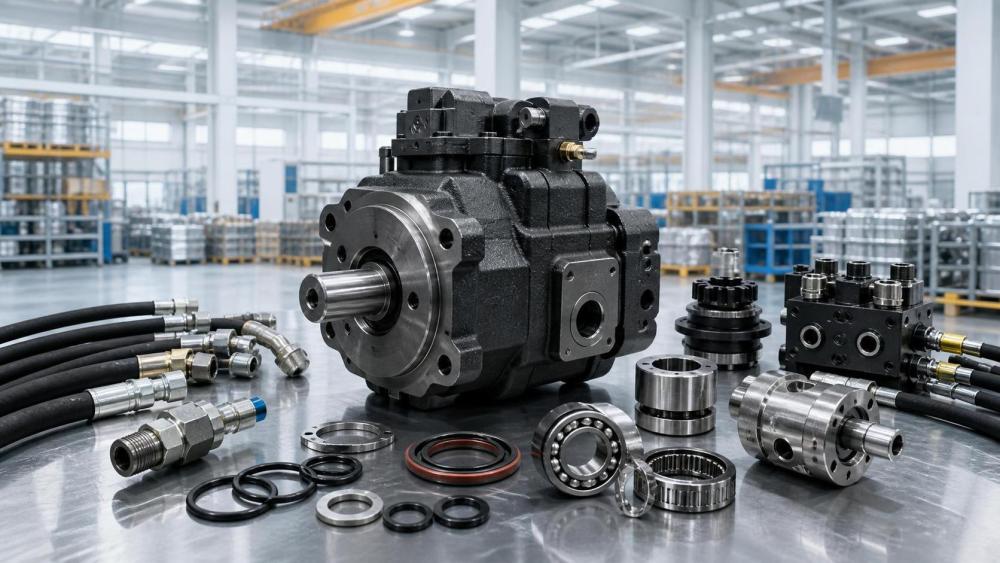
Hydraulic pump pricing is heavily affected by what the buyer does not immediately see: shaft hardness, housing material, machining accuracy, surface treatment, bearing arrangement, seal compound, and the quality of wear surfaces. Pumps designed for higher reliability usually cost more because they are less tolerant of shortcuts in manufacturing.
This is particularly relevant in Brazil where environmental conditions can be punishing. Dust ingress, fluid contamination, moisture, and temperature swings are common concerns in field equipment and industrial sites. A pump fitted with lower-grade seals or less robust internal bearings may still look competitive on a quote sheet, but if it is going into a loader, sugar processing line, forestry machine, or hydraulic press with unstable maintenance conditions, that saving can disappear quickly.
Experienced buyers usually ask a few uncomfortable questions before approving a low-cost offer: What seal materials are used? Are replacement kits available locally? How sensitive is the pump to oil cleanliness? Is the shaft interface standard? Those details often explain the real price difference better than a brand label alone.
Import dependence and exchange rates are major cost variables in Brazil
A large share of hydraulic pump pricing in Brazil is influenced by how much of the product or its critical components depend on international supply. Even when a pump is assembled or stocked locally, rotating groups, control modules, seals, castings, or precision-machined internals may still come from abroad. That means pricing can move with freight conditions, supplier country exposure, and exchange rate volatility.
For procurement teams, this is where timing matters. A quote valid for a short period may reflect concerns over currency movement rather than supplier opportunism. If a project has a long approval cycle, the initial price may not survive until purchase order release. In practice, some of the biggest surprises in hydraulic pumps Brazil sourcing come not from the technical side, but from a gap between quotation date and actual import replenishment date.
This is also why local inventory can carry a premium and still be worth it. When a supplier is holding stock inside Brazil, part of the price difference may represent reduced currency risk, faster recovery in case of failure, and less uncertainty around customs and inland logistics.
Taxes, duties, and transaction structure can distort simple quote comparisons
Brazil is not an easy market for “headline price” comparisons. The commercial structure behind the offer matters. Imported pumps, local distributors, OEM supply contracts, replacement market channels, and integrated hydraulic package sales can each produce a different apparent unit cost. Taxes, duties, and invoicing arrangements may change the landed value enough that two offers with a close factory price end up far apart at final purchase stage.
This is one reason procurement teams should ask for like-for-like commercial visibility: what is included, what is excluded, what lead time assumptions apply, and whether the quote is tied to stock, future import, or project-based assembly. Without that, a cheaper offer can later grow once freight, tax treatment, accessories, or commissioning support are added.
Local tax treatment is something that normally has to be checked with the supplier and the buyer’s own finance or compliance team. It should never be guessed during technical comparison.
Application severity has a direct effect on both purchase price and acceptable risk
One of the most common procurement mistakes is treating all hydraulic pump purchases as standard replacements. They are not. A pump used in intermittent workshop equipment is not exposed to the same risk profile as one running on a continuous-duty industrial line or in a remote mobile machine where failure stops revenue immediately.
In Brazil, operating conditions vary widely. Agricultural machinery may face seasonal pressure spikes and dirt contamination. Construction and mining-related equipment can see shock loads and long operating hours. Industrial power units may require stable flow and repeatability. As application severity rises, buyers usually need better internal efficiency, stronger contamination tolerance, more stable seals, and better support for parts interchangeability. That pushes price upward, but often for good reason.
A lower-cost pump may still be the right decision if the machine has low criticality, easy access for replacement, and broad spare availability. But on high-consequence equipment, the real price question is different: how much failure risk is the site actually buying?
Brand position matters, but support depth matters more
Brand premium exists in hydraulic pumps Brazil, but buyers should separate name recognition from support capability. Some suppliers charge more because they offer documented performance, established distribution, better parts continuity, and trained technical support. Others are simply trading on branding while relying on limited local backing.
For a procurement manager, the useful test is practical. Can the supplier provide dimensional and performance documentation? Are seal kits, shafts, controls, or cartridge parts available in a realistic timeframe? Can they support failure analysis if the pump sees early wear? If the answer is weak, the price premium may not be justified.
This is where broader industrial intelligence platforms add value. When buyers are reviewing pumps alongside bearings, seals, transmission elements, and maintenance strategy, a supplier’s real strength often becomes clearer. A pump is never operating alone. Reliability is tied to filtration, coupling alignment, sealing, lubrication discipline, and the quality of the surrounding hydraulic circuit.
Availability, not just price, can decide the winning option
Lead time has become one of the strongest hidden price drivers. A low quoted cost means very little if the pump takes too long to arrive and the equipment is down. In many Brazilian procurement situations, especially MRO replacement, stock position is almost as important as technical compliance.
Suppliers with local inventory, repair exchange options, or regional service networks often quote higher than pure order-based importers. That premium is not always waste. It can represent reduced downtime exposure, simpler warranty handling, and lower emergency freight risk. If the machine is critical, the cheapest unit cost may be the most expensive operational choice.
What buyers should compare before deciding
Notice that none of these points can be evaluated well from a one-line quotation. That is why disciplined buyers ask for technical and commercial clarification early, before internal approvals lock the team into a weak comparison.
A quick rule of thumb for procurement teams
If the pump is easy to replace, non-critical, and used in a forgiving duty cycle, price sensitivity can be higher. If it sits inside a critical hydraulic circuit, runs continuously, or supports revenue-generating equipment, the procurement model should shift from unit price to lifecycle exposure.
That is the practical way to read hydraulic pumps Brazil pricing. The biggest price factors are usually pump design, component quality, import and currency exposure, tax structure, application severity, and after-sales capability. Once those are clear, quote differences start to make sense. Until then, “cheap” and “expensive” are mostly labels without context.
Before issuing the final order, it is worth checking one last thing: whether the selected supplier can support the pump as part of the full reliability chain, including seals, couplings, filtration discipline, and maintenance planning. In hydraulic systems, that is often where the real cost is hiding.
Related News
- 00
0000-00
How load cycles affect the service life of slewing bearings for turbines - 00
0000-00
How export control regulations can delay international shipments - 00
0000-00
Which ISO standards apply to crane hydraulic systems? - 00
0000-00
How preload affects angular contact bearing stiffness and service life - 00
0000-00
Which documents are essential for seal export compliance?
Weekly Insights
Stay ahead with our curated technology reports delivered every Monday.