





Gear Transmission Efficiency: What Really Affects Power Loss?
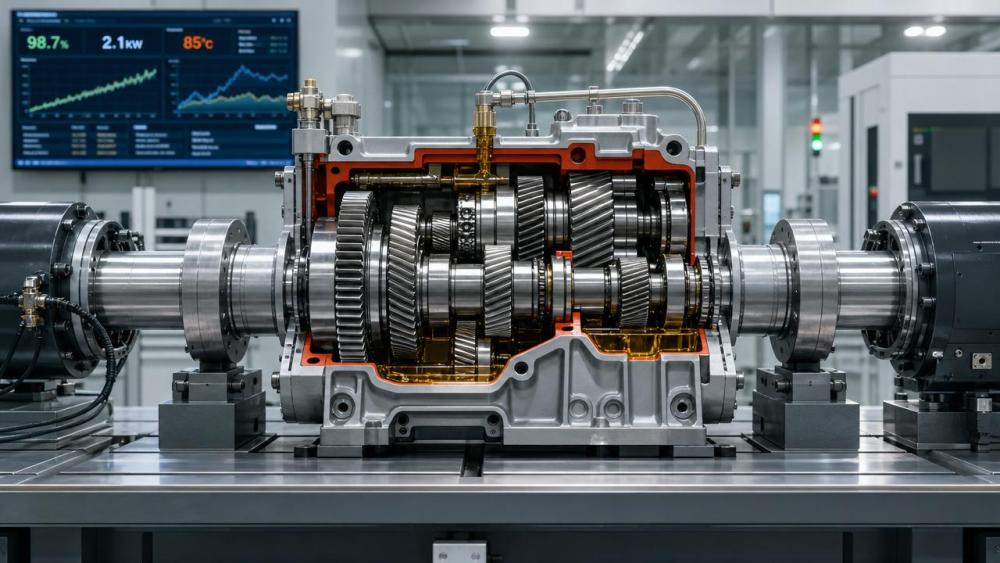
Gear transmission efficiency is not just a catalog number.
It shapes energy consumption, operating temperature, noise, wear, and service life.
In real machines, even small losses can become meaningful cost drivers.
That is especially true in high-duty systems running long hours.
For technical evaluation, the challenge is simple to describe but harder to solve.
A gearbox may show acceptable efficiency on paper, yet lose power in operation.
The reasons usually sit in geometry, lubrication, load profile, alignment, and manufacturing quality.
This is where a deeper look at gear transmission efficiency becomes practical.
It helps compare suppliers, validate design choices, and reduce lifecycle risk.
It also supports better decisions across bearings, seals, couplings, lubrication, and MRO planning.
What gear transmission efficiency really means
At its core, gear transmission efficiency is output power divided by input power.
But the useful engineering question is where the missing power goes.
Most losses turn into heat, vibration, oil churning, or sliding friction.
Those losses appear at the tooth contact, in bearings, through seals, and inside the lubricant itself.
This means gearbox efficiency is never controlled by gears alone.
A transmission system behaves like an integrated mechanical package.
That is why transmission efficiency analysis should include adjacent components and operating conditions.
Two kinds of losses matter most
- Load-dependent losses, mainly from tooth sliding and rolling contact friction.
- Load-independent losses, such as oil churning, windage, seal drag, and idle rotation losses.
In low-load conditions, non-load losses often become more visible.
In high-torque operation, tooth contact behavior usually dominates the result.
Gear geometry and contact pattern drive friction
The first major driver of gear transmission efficiency is gear geometry.
Not all tooth profiles create the same sliding conditions.
In involute gears, rolling and sliding happen together during meshing.
The amount of sliding changes across the contact path.
It is usually lower near the pitch point and higher toward the tooth ends.
More sliding generally means more friction and more power loss.
Geometry factors worth checking
- Pressure angle, helix angle, and module selection.
- Contact ratio and overlap ratio.
- Profile modification and crowning quality.
- Tooth flank contact distribution under load.
Helical gears often deliver smoother meshing than spur gears.
That can support better gear transmission efficiency in many applications.
Still, the axial load from helical designs raises bearing demands.
So the efficiency gain at the gear mesh may be reduced elsewhere.
This is a common evaluation mistake in supplier comparisons.
Lubrication quality often decides the real result
If one factor consistently changes gear transmission efficiency, it is lubrication.
The lubricant film separates surfaces, controls friction, and carries away heat.
When the film is too thin, mixed lubrication raises wear and energy loss.
When viscosity is too high, churning and drag losses increase.
So the best oil is not always the thickest oil.
Key lubrication variables
- Base oil viscosity at operating temperature.
- Additive package for anti-wear and extreme-pressure protection.
- Lubrication method, including splash, jet, or forced circulation.
- Oil level, aeration risk, contamination, and moisture control.
In high-speed drives, oil churning can become a serious hidden loss.
Excess oil depth may cool well, yet still reduce transmission efficiency.
Recent design trends therefore focus on controlled lubrication delivery.
That approach supports both thermal stability and lower parasitic losses.
For B2B evaluation, ask for oil recommendations tied to duty cycle, not generic labels.
Load, speed, and temperature change efficiency in operation
A quoted efficiency figure means little without operating context.
Gear transmission efficiency changes with torque, speed, temperature, and duty cycle.
This also explains why field performance may differ from bench data.
A lightly loaded gearbox can show disappointing efficiency because fixed losses stay constant.
A heavily loaded gearbox may lose efficiency from friction, heat, and elastic deformation.
Why temperature matters so much
Temperature changes oil viscosity, seal behavior, and material dimensions.
As oil thins, friction may drop at first.
But if viscosity falls too far, the protective film weakens.
That can quickly hurt wear resistance and long-term gearbox efficiency.
This is why thermal equilibrium matters more than startup readings.
Alignment, bearings, and seals can quietly consume power
Another real-world issue is that power loss often comes from supporting parts.
Misalignment changes tooth contact and creates uneven stress distribution.
That increases local sliding, noise, and heat.
Even a well-cut gear set can underperform inside a weak housing.
Shaft deflection and assembly tolerance stack-up are frequent causes.
Supporting components that affect gear transmission efficiency
- Bearing type, preload, internal clearance, and lubrication condition.
- Seal lip design, contact pressure, and material friction.
- Coupling accuracy and shaft concentricity.
- Housing stiffness and thermal deformation resistance.
Low-friction seals can improve overall transmission efficiency in continuous-duty equipment.
The same is true for properly selected rolling bearings.
This is where PCTS-style system thinking becomes useful.
Transmission parts, seals, bearings, and lubrication must be reviewed together.
Surface finish, manufacturing quality, and wear progression
Surface condition has a direct link to gear transmission efficiency.
Rough tooth flanks create more asperity contact during meshing.
That increases friction until surfaces run in or begin to fail.
Grinding quality, honing, isotropic finishing, and heat treatment all matter.
Better finishing often improves micropitting resistance as well.
What to request from suppliers
- Tooth profile inspection reports and flank finish values.
- Heat treatment consistency data and hardness depth records.
- Loaded contact pattern validation, not only unloaded blue checks.
- Efficiency test conditions with speed, oil, temperature, and torque clearly stated.
This is more useful than a single headline efficiency number.
In practice, wear progression also changes performance over time.
A gearbox may start efficiently, then lose stability as surfaces degrade.
That makes lifecycle evaluation more important than one-time acceptance testing.
How to evaluate gear transmission efficiency more accurately
A better evaluation process starts with the operating profile.
Do not compare gearbox efficiency values taken under unrelated conditions.
Instead, map the actual load spectrum, speed range, start-stop frequency, and ambient temperature.
A practical assessment checklist
- Confirm whether efficiency refers to mesh, stage, or total gearbox performance.
- Review lubricant grade at actual operating temperature.
- Check alignment strategy, bearing arrangement, and seal selection.
- Ask for efficiency curves, not one-point claims.
- Look for thermal test data and noise or vibration trends.
- Include maintenance intervals and oil cleanliness requirements in total cost analysis.
Standard references can help structure this review.
ISO and AGMA methods give a stronger basis for technical comparison.
Still, standards do not replace application-specific judgment.
The more realistic the duty definition, the more useful the efficiency result.
Final takeaway for better decisions
Gear transmission efficiency is shaped by a chain of engineering choices.
Gear geometry matters, but lubrication, alignment, bearings, seals, and temperature often decide the final outcome.
That is why power loss should be evaluated as a system issue, not a single-component issue.
In practical sourcing or design review, ask how efficiency is achieved and sustained.
Ask what conditions were tested, what losses were included, and how wear is managed over time.
That approach gives a more reliable view of transmission efficiency, operating stability, and lifecycle value.
When those questions are answered clearly, gear transmission efficiency becomes a decision tool, not just a specification line.
Related News
- 00
0000-00
How FFKM O-rings reduce seal failure in corrosive media - 00
0000-00
What global equipment manufacturing in the USA means for supply chain risk - 00
0000-00
How FFKM outgassing performance affects vacuum seal selection - 00
0000-00
When should heat resistant metallurgy belts be replaced? - 00
0000-00
When does a fluid power maintenance service reduce unplanned downtime?
Weekly Insights
Stay ahead with our curated technology reports delivered every Monday.