





On July 28, 2026, the European Commission formally issued Regulation (EU) 2026/1342, adding a new REACH Annex XVII restriction for polyurethane (PU) hydraulic seals: from January 1, 2027, residual N-methyl-2-pyrrolidone (NMP) must not exceed 0.1% w/w. For manufacturers exporting PU hydraulic seals to the EU, especially suppliers in China, this is not just a technical specification change. It directly affects production compliance, supplier documentation, and importer due diligence, making it a development that procurement, quality, and cross-border trade teams need to watch closely.
What the new restriction explicitly requires
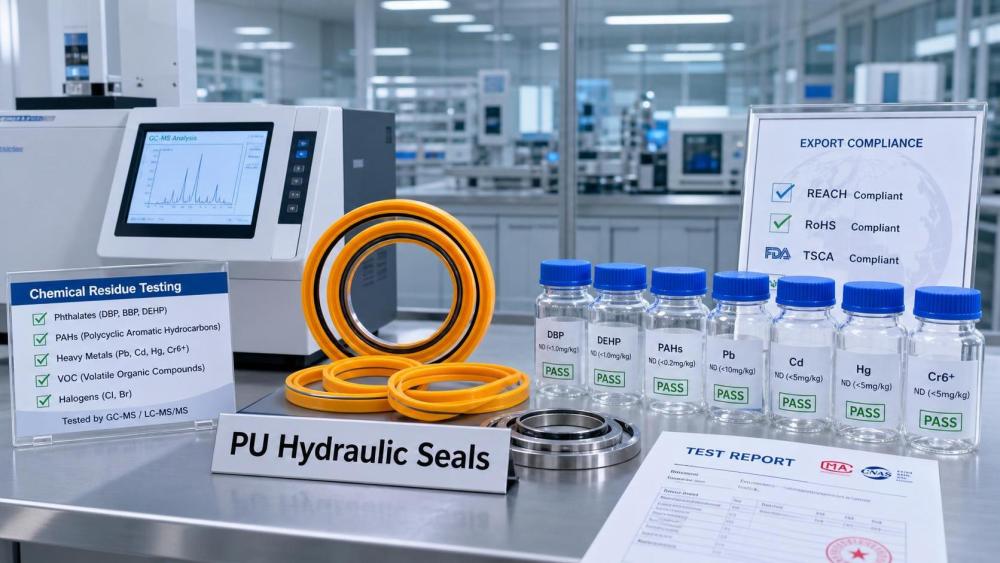
According to the information provided, the European Commission published Regulation (EU) 2026/1342 on July 28, 2026. The measure introduces a mandatory limit on residual NMP in PU hydraulic seals, setting the threshold at no more than 0.1% by weight. The restriction will apply from January 1, 2027.
The same information states that NMP is widely used in PU seal demolding and surface treatment processes. It also confirms that the new rule directly affects the compliance pathway for Chinese manufacturers exporting PU hydraulic seals to the EU. In practice, importers will need suppliers to provide a declaration of conformity and third-party SVHC test reports.
Where the impact is likely to surface first
Export manufacturing moves from process familiarity to residue control
From an industry perspective, PU hydraulic seal manufacturers shipping to the EU are the most directly affected group because the restriction is tied to residual content in the finished product. That means the impact is likely to show up in manufacturing control points, especially where NMP is used in demolding or surface treatment. What deserves closer attention is whether existing process steps, internal checks, and release documentation are sufficient to support the new limit before products enter EU-bound shipments.
Importers face a sharper documentation burden
EU importers are also directly exposed because the supplied information makes clear that they must request declarations of conformity and third-party SVHC test reports from suppliers. The practical effect is likely to be strongest in supplier onboarding, product file review, and shipment approval workflows. Importers will need to pay closer attention to whether documents are complete, current, and aligned with the specific PU hydraulic seal products being placed on the market.
Supply chain coordination becomes part of compliance execution
Observably, the rule may also affect supply chain service providers and commercial teams involved in scheduling, documentation transfer, and customer communication. Even where they are not the regulated party, they may be drawn into compliance timelines because incomplete testing records or missing declarations can interrupt order confirmation, customs preparation, or delivery planning. The immediate issue is less about market expansion and more about whether product and document readiness move together.
What companies should be checking now
Review which PU seal products may involve NMP-linked processes
Analysis shows that companies should first identify which exported PU hydraulic seal products are associated with demolding or surface treatment steps where NMP is used. The key point is not to assume all products carry the same exposure. Internal review should focus on the specific product lines and production stages that could influence residual NMP content.
Align testing and declarations with customer-facing requirements
The supplied information already points to two practical compliance items: declarations of conformity and third-party SVHC test reports. What deserves closer attention is whether these materials are prepared in a form that importers can actually use in procurement and compliance review. A document may exist internally but still fall short if it is not linked clearly to the relevant product, batch, or delivery scope.
Prepare for lead-time pressure before the 2027 effective date
From an industry perspective, the effective date of January 1, 2027 creates a defined transition window. Companies involved in EU business should pay attention to how compliance preparation could affect production scheduling, sample approval, and shipment planning. The issue is not only whether testing can be completed, but whether results, declarations, and customer confirmation can be synchronized without delaying deliveries.
Keep customer and supplier communication specific
Observably, this is a rule where vague assurances will not be enough in commercial discussions. Manufacturers, traders, and importers should focus communication on the affected product category, the stated NMP threshold, and the documents expected for verification. Clear communication matters because the regulation changes the compliance threshold in a defined product context, rather than creating a general policy signal with no immediate transaction impact.
Why this matters beyond a single rule update
Analysis shows that this development is best understood as an operational compliance change with wider signaling value. It is already a concrete requirement because the regulation has been formally issued and an application date has been set. At the same time, the broader significance lies in how process-related chemical residues in finished industrial components are moving closer to frontline trade compliance review.
It is more appropriate to understand this as both a short-term implementation issue and a longer-term compliance signal. Short term, companies must deal with product scope, documentation, and testing. Longer term, the rule suggests that chemical control expectations for industrial components can increasingly affect not only material selection, but also process management and proof-of-compliance practices.
How the industry should read the change now
At this stage, the most balanced reading is that the new REACH Annex XVII restriction creates a clear and time-bound compliance obligation for PU hydraulic seals placed on the EU market. The immediate consequence is practical: manufacturers and importers need to verify product status, documentation, and testing readiness before the January 1, 2027 effective date. The broader industry meaning is not a sweeping market conclusion, but a reminder that chemical residue control in finished components is becoming a more visible part of market access management.
Basis of this article and points for continued verification
This article is based on the user-provided news title, event date, and event summary concerning the new REACH Annex XVII restriction on NMP content in PU hydraulic seals. The specific official source link was not provided in the input, so the underlying text and any subsequent implementation details still require continued verification against materials such as official announcements, company disclosures, industry association updates, authoritative media coverage, and standard or regulatory documents typically relevant to this type of development.
Further attention should remain on any later official clarifications, product-scope interpretations, or documentation expectations connected to Regulation (EU) 2026/1342 and its application from January 1, 2027.
Want to dive deeper into these market dynamics, or need data-driven support for your next business move? Drop a line below and let the analysts at PCTS provide customized insights.
We respect your privacy. Your information is strictly confidential.
Related News
- 00
0000-00
How to check vibration analysis software for sensor compatibility - 00
0000-00
IndexBox Forecasts 3.8% Annual Growth for Global Radial Seals Market Through 2035 - 00
0000-00
How to assess the chemical compatibility of FFKM sealing sheets - 00
0000-00
IndexBox Forecasts 3.6% Annual Growth for Construction Bearings Market - 00
0000-00
When do hydraulic components require an export license?
Weekly Insights
Stay ahead with our curated technology reports delivered every Monday.