





Mining Reliability Engineering: Where Machinery Downtime Starts
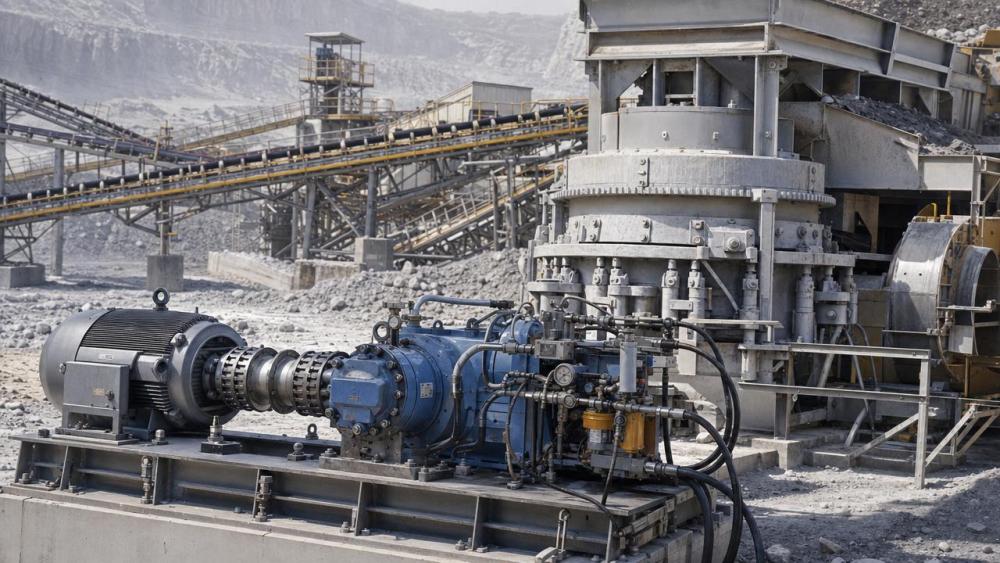
In mining, downtime usually starts long before a machine stops.
The first warning signs often appear in design choices, maintenance timing, and component quality.
That is why machinery reliability engineering for mining matters at the project level, not only inside maintenance departments.
In practical terms, it helps reduce unplanned shutdowns, stabilize production, and control lifecycle costs.
It also improves confidence when teams must justify equipment budgets, spare parts strategy, and supplier decisions.
Mining equipment operates under dust, vibration, shock loads, moisture, heat, and contamination.
Under those conditions, small weaknesses become expensive failures very quickly.
A bearing with poor lubrication planning, a seal with the wrong material, or a chain exposed to misalignment can trigger larger system losses.
So, machinery reliability engineering for mining is really about finding those starting points early and managing them before production suffers.
Why mining reliability problems begin upstream
Many operations still treat reliability as a repair issue.
But machinery reliability engineering for mining begins much earlier, often before equipment is installed.
The upstream stage includes machine selection, component specification, installation quality, lubrication planning, and maintenance access.
If those basics are weak, later maintenance becomes reactive and costly.
A common example is choosing heavy-duty rotating equipment without matching bearing protection to the site environment.
Dust ingress then damages raceways, increases friction, raises temperature, and shortens service life.
The visible failure happens later, but the reliability gap was built in at the start.
The same pattern appears in hydraulic and pneumatic systems.
If contamination control is underestimated, pumps, cylinders, and seals face premature wear.
Once leakage or pressure instability appears, downtime is only one consequence.
Energy loss, safety exposure, and repair complexity usually follow.
The components that shape machinery reliability engineering for mining
Reliable mining performance depends on more than one critical part.
Machinery reliability engineering for mining works best when teams evaluate the full component chain.
That means understanding how motion, force transfer, sealing, and fluid power affect each other.
Bearings and rotating stability
Bearings often sit at the center of mining reliability performance.
They must handle load, speed variation, contamination, and alignment stress at the same time.
When bearing selection ignores actual duty cycles, failure rates rise fast.
Smart machinery reliability engineering for mining includes lubrication intervals, sealing strategy, and vibration monitoring from day one.
Seals and contamination control
Seals rarely get top attention until leakage appears.
Yet in mining, sealing performance strongly influences uptime.
O-rings, mechanical seals, and high-temperature sealing materials prevent dirt ingress and fluid loss.
Poor material compatibility can turn a small leak into a repeated shutdown event.
Hydraulic, pneumatic, and transmission elements
Hydraulic pumps, motors, cylinders, chains, belts, couplings, and sprockets all carry reliability risk.
If just one link is underspecified, the whole machine can lose efficiency or fail unexpectedly.
This is where machinery reliability engineering for mining becomes a system discipline, not a spare-parts checklist.
What project decisions most often create downtime risk
From a project perspective, downtime risk usually comes from a small set of repeatable decisions.
These decisions seem minor during planning, but they shape long-term operating behavior.
- Selecting components by purchase price instead of lifecycle reliability.
- Ignoring contamination pathways in dusty and wet environments.
- Using generic seals, bearings, or belts without application-specific review.
- Underestimating alignment, tensioning, and installation quality.
- Building maintenance plans around calendar intervals only.
- Delaying condition monitoring until assets already show damage.
More noticeably now, mining projects are moving away from isolated procurement decisions.
They are asking how each component affects reliability, energy use, service intervals, and replacement cycles.
That shift is a practical sign that machinery reliability engineering for mining is becoming a strategic planning issue.
A practical framework for stronger mining reliability
A workable reliability framework does not need to be overly complex.
It needs to connect engineering, procurement, maintenance, and supplier quality into one operating logic.
In real operations, the following sequence works well.
1. Rank failure-critical assets
Start with conveyors, crushers, pumps, fans, mills, and mobile equipment that stop output when they fail.
Then map the bearings, seals, hydraulic units, chains, belts, and couplings that drive those assets.
2. Match components to site conditions
Use real load, temperature, contamination, speed, and duty cycle data.
This step is essential in machinery reliability engineering for mining because lab assumptions rarely reflect field reality.
3. Build condition-based visibility
Track vibration, temperature, leakage, pressure stability, and wear patterns.
Even simple monitoring can detect decline before catastrophic failure appears.
4. Align spare parts with failure modes
Do not stock parts based only on historical habit.
Stock the parts that shorten outage time on failure-critical systems.
5. Review suppliers on reliability outcomes
Good suppliers support application fit, technical traceability, and replacement consistency.
That matters just as much as unit price in machinery reliability engineering for mining.
How to measure whether reliability engineering is working
Reliability improvement should be visible in operations, not only in reports.
That means teams need a short list of indicators linked to downtime and cost.
These measures help separate random incidents from structural reliability issues.
They also make machinery reliability engineering for mining easier to defend in budget discussions.
Where PCTS intelligence supports better reliability decisions
Reliable mining assets depend on informed component choices.
That is where a focused industrial intelligence source becomes useful.
PCTS connects bearings, seals, hydraulic systems, pneumatic components, chains, belts, couplings, and MRO strategy within one decision framework.
For teams assessing machinery reliability engineering for mining, that cross-component view matters a lot.
It helps compare suppliers, evaluate application fit, understand wear mechanisms, and reduce procurement uncertainty.
It also supports smarter conversations about lifecycle cost rather than one-time purchase price.
In demanding mining environments, that perspective can prevent expensive mistakes before they show up in maintenance logs.
Final takeaway
Machinery downtime in mining rarely starts with the final breakdown event.
It usually starts with earlier decisions about components, contamination control, monitoring, maintenance access, and supplier quality.
That is the practical value of machinery reliability engineering for mining.
It shifts attention from reacting to failures toward preventing them at the source.
For operations that need stable output, better asset life, and lower disruption costs, this approach is no longer optional.
The next useful step is simple: review one critical asset line, trace its most common failure points, and check whether reliability decisions are being made early enough.
Related News
- 00
0000-00
How FFKM O-rings reduce seal failure in corrosive media - 00
0000-00
What global equipment manufacturing in the USA means for supply chain risk - 00
0000-00
How FFKM outgassing performance affects vacuum seal selection - 00
0000-00
When should heat resistant metallurgy belts be replaced? - 00
0000-00
When does a fluid power maintenance service reduce unplanned downtime?
Weekly Insights
Stay ahead with our curated technology reports delivered every Monday.