





When to Replace Spare Parts: A Practical Cycle Planning Guide
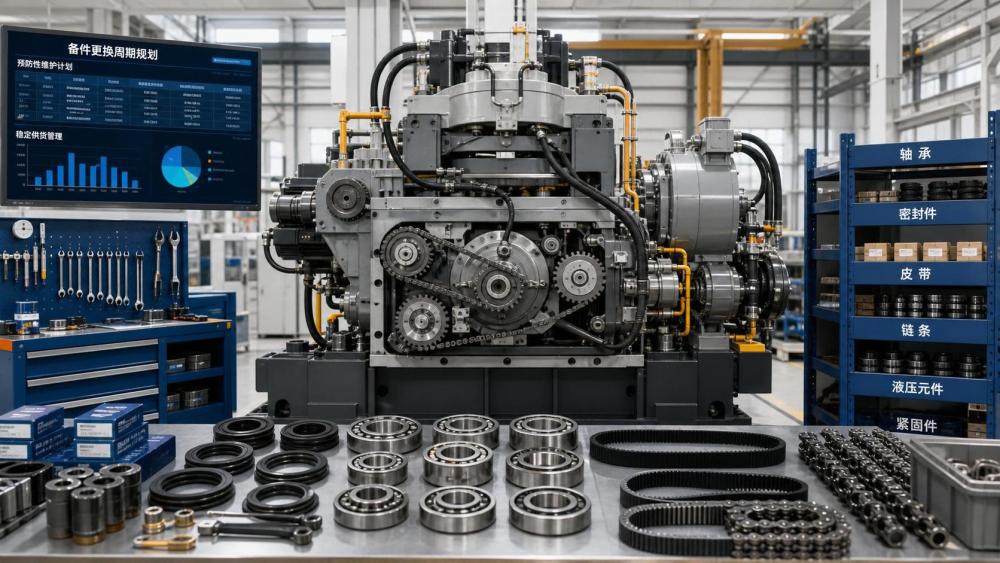
Unplanned failures rarely start with one bad part. They usually begin with weak timing, delayed action, and poor visibility across maintenance and purchasing decisions.
That is why spare parts replacement cycles matter. They help teams decide when to replace parts before performance loss turns into downtime, safety issues, or emergency buying.
In practical operations, cycle planning is not just a maintenance task. It also affects budgeting, supplier coordination, inventory pressure, and project delivery confidence.
A useful plan balances equipment condition, operating load, component criticality, and procurement lead time. It avoids replacing too early, but also avoids waiting too long.
For rotating equipment, hydraulic systems, pneumatic assemblies, chains, belts, seals, and bearings, the right replacement interval often determines lifecycle cost more than unit price does.
This guide explains how to build smarter spare parts replacement cycles, using real operating signals and business priorities instead of fixed calendar habits alone.
Why Spare Parts Replacement Cycles Fail in Real Operations
Many replacement plans look reasonable on paper. Problems appear when actual duty cycles, contamination levels, vibration, temperature swings, and maintenance access differ from original assumptions.
A common mistake is using one fixed interval for every site. Two identical machines can wear very differently because lubrication quality, operator behavior, and load variation are not the same.
Another weak point is focusing only on failure history. Past breakdowns are useful, but they do not always show hidden degradation in seals, couplings, bearings, or hydraulic components.
Procurement timing also distorts decisions. If a critical bearing or seal kit has a long lead time, teams may stretch use beyond safe limits simply because replacements are not available.
This is where better spare parts replacement cycles create value. They connect maintenance evidence with supply risk, cost exposure, and operational consequences.
Start with Part Criticality, Not Just Part Age
The best starting point is criticality. Not every spare part deserves the same replacement logic, even if the parts belong to the same machine.
Group components into practical categories based on failure impact. This makes spare parts replacement cycles easier to defend and easier to maintain over time.
- Critical parts: failure stops production, creates safety risk, or damages connected systems.
- Important parts: failure reduces output, accuracy, or energy efficiency.
- Consumable parts: wear is expected and replacement is routine.
- Low-impact parts: failure is manageable and replacement can be flexible.
For example, spindle bearings, hydraulic pump seals, high-load chains, and drive belts often need tighter control than general fasteners or non-critical fittings.
Once criticality is clear, spare parts replacement cycles can reflect business reality instead of generic maintenance intervals.
Use Four Inputs to Set Better Replacement Intervals
Reliable cycle planning usually comes from four inputs working together. Relying on only one signal makes the schedule unstable.
1. Operating Hours and Load Profile
Track actual hours, starts and stops, torque demand, pressure range, and speed variation. A part running near design limits ages faster than calendar dates suggest.
2. Condition Monitoring Data
Use vibration trends, oil analysis, leakage checks, temperature shifts, noise changes, and wear particle data. These signals make spare parts replacement cycles more evidence-based.
3. Failure Consequence
Ask what happens if the part fails. Production delay, contamination, safety shutdown, and secondary damage should all influence the interval.
4. Supply and Replacement Constraints
Lead time, supplier reliability, certification needs, and installation windows matter. A replacement cycle is only practical if the part can be sourced and installed on time.
In real planning, these four inputs often reveal why one seal set can wait, while one bearing set should be replaced earlier.
A Simple Framework for Spare Parts Replacement Cycles
A practical framework keeps decisions consistent across assets and teams. It does not need to be complex to be useful.
Start by documenting each part against a short decision table. This gives maintenance and procurement a shared basis for action.
This structure is especially useful for spare parts replacement cycles involving imported bearings, hydraulic kits, custom seals, and transmission components with long approval chains.
How Different Components Require Different Cycle Logic
Replacement timing should match failure behavior. Bearings, seals, belts, and pneumatic parts do not degrade in the same way.
Bearings and Rotating Parts
Focus on lubrication condition, vibration growth, alignment, and thermal drift. Waiting for visible damage is usually too late for critical rotating systems.
Hydraulic and Pneumatic Components
Monitor pressure stability, leakage, cycle frequency, contamination, and seal wear. Spare parts replacement cycles here should account for fluid cleanliness and duty intensity.
Chains, Belts, and Transmission Elements
Track elongation, slip, tooth wear, tension stability, and shock loading. These parts often show warning signs before complete failure, which helps planning.
Seals and O-Rings
Chemical exposure, temperature cycling, and installation quality matter as much as operating hours. In harsh media, replacement intervals should be conservative.
Signs Your Current Replacement Cycle Needs Adjustment
From recent operating changes, the clearest signal is growing inconsistency. If identical assets need different attention, the current cycle may no longer match real conditions.
- Emergency orders are increasing.
- Inspection data shows repeated early wear.
- Inventory sits too long for some parts and runs short for others.
- Maintenance windows are missed because parts arrive late.
- Secondary failures appear after one component degrades.
These patterns usually mean spare parts replacement cycles need recalibration, not just stronger execution.
How to Build a More Actionable Planning Routine
A workable routine should be simple enough to update, but detailed enough to guide replacement decisions across teams and sites.
- List critical parts by asset, including bearings, seals, belts, chains, and fluid power assemblies.
- Set a base interval using supplier guidance, operating history, and design duty.
- Add condition triggers that can accelerate replacement.
- Map sourcing lead times and minimum stock needs.
- Review intervals after every major shutdown, load change, or repeated failure event.
This approach makes spare parts replacement cycles easier to adjust when equipment ages, applications shift, or supplier conditions change.
It also improves communication. Maintenance can explain technical risk, while procurement can act earlier on long-lead items without overbuying.
Final Takeaway
Effective spare parts replacement cycles are not static schedules. They are decision tools built around operating reality, failure consequence, and supply timing.
The strongest plans combine part criticality, condition evidence, duty severity, and procurement visibility. That mix supports better uptime without creating unnecessary inventory cost.
In day-to-day industrial work, replacing a part at the right time is more valuable than replacing it at a familiar time. That is the core logic behind stronger lifecycle control.
Review your current spare parts replacement cycles against actual wear patterns, operating stress, and lead-time risk. That single step often reveals the fastest path to fewer surprises.
Related News
- 00
0000-00
How FFKM O-rings reduce seal failure in corrosive media - 00
0000-00
What global equipment manufacturing in the USA means for supply chain risk - 00
0000-00
How FFKM outgassing performance affects vacuum seal selection - 00
0000-00
When should heat resistant metallurgy belts be replaced? - 00
0000-00
When does a fluid power maintenance service reduce unplanned downtime?
Weekly Insights
Stay ahead with our curated technology reports delivered every Monday.