





How to Evaluate a Chemical Resistant Sealing Supplier in 2026
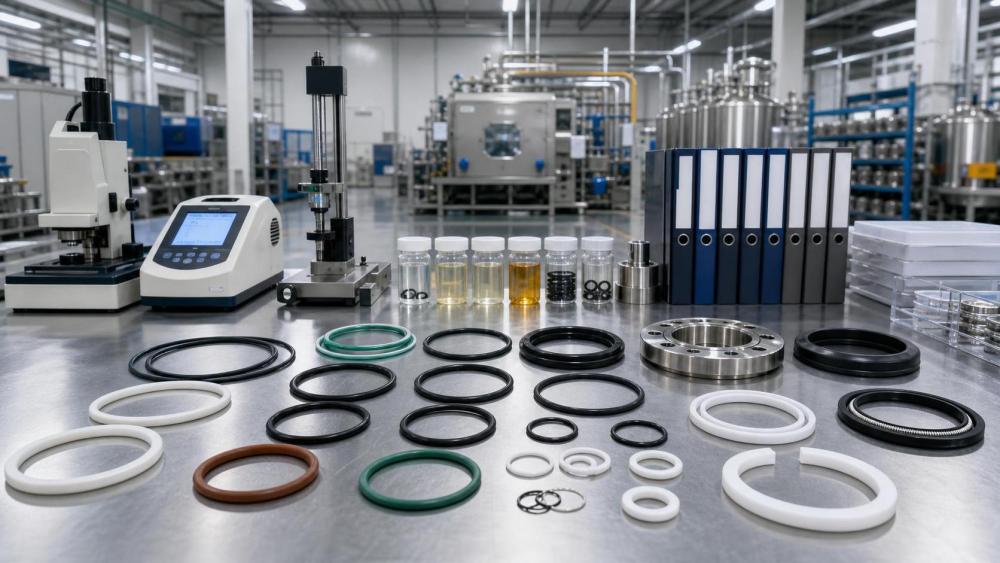
Choosing the right chemical resistant sealing supplier in 2026 is no longer just about price. It now touches uptime, compliance, maintenance cost, and asset reliability.
That shift is easy to understand. Chemical exposure is getting harsher, audit pressure is rising, and unplanned leakage is more expensive than before.
A capable chemical resistant sealing supplier should help reduce failure risk, not simply quote a part number. In practical buying decisions, that difference matters.
Across process industries, buyers now compare suppliers on material science, batch consistency, traceability, and technical response speed. Unit price remains important, but it rarely tells the whole story.
This guide breaks down how to evaluate a chemical resistant sealing supplier in a way that supports cost control and long-term performance.
Why Supplier Evaluation Changed in 2026
Recent market signals are clear. End users want longer service intervals, fewer shutdowns, and more predictable spare parts planning.
That means a chemical resistant sealing supplier is judged by total support capability. Material fit alone is no longer enough.
More buyers also face stricter internal approval rules. They need evidence on chemical compatibility, certification readiness, and manufacturing control before issuing repeat orders.
In sectors like chemical processing, pharmaceuticals, water treatment, and semiconductor equipment, one weak seal can trigger contamination, safety incidents, or expensive line stoppages.
So the evaluation process has become broader. Buyers now ask how the supplier performs before, during, and after delivery.
Start with Material Competence, Not Catalog Breadth
The first test for any chemical resistant sealing supplier is technical depth in materials. A large catalog does not prove application fit.
Ask which compounds are recommended for your actual media, temperature range, pressure profile, and cleaning cycle. Generic answers are a warning sign.
High-value suppliers should explain tradeoffs between FFKM, FKM, EPDM, PTFE, NBR, and other engineered materials. They should also discuss swelling, compression set, permeation, and aging behavior.
In many cases, failure comes from partial compatibility. A seal may survive short exposure, yet degrade under cycling, cleaning chemicals, or mixed media.
A reliable chemical resistant sealing supplier should provide:
- Material data tied to real operating conditions
- Compatibility guidance for specific acids, solvents, alkalis, or gases
- Limits for temperature spikes and pressure variation
- Recommendations for static and dynamic sealing use
- Clear notes on expected service life and failure modes
If the supplier cannot explain why one material works better than another, the risk shifts back to the buyer.
Check Manufacturing Control and Batch Consistency
The next issue is consistency. Even a strong compound can underperform when molding, curing, finishing, or inspection is unstable.
This is where a serious chemical resistant sealing supplier separates itself from a trading-only source. Process discipline affects leakage risk directly.
Review whether the supplier can document raw material control, batch coding, dimensional inspection, hardness testing, and defect screening.
It also helps to ask about flash control, surface finish, mold maintenance, and post-curing procedures. These details influence sealing integrity more than many buyers expect.
A practical supplier audit can focus on five questions:
- Can each lot be traced to raw material and production date?
- Are incoming and final inspections documented?
- Does the supplier control compound variation across repeat orders?
- Can nonconformance reports be issued quickly?
- Is corrective action handled with root-cause discipline?
A chemical resistant sealing supplier that answers these well usually delivers more predictable field performance.
Evaluate Compliance, Documentation, and Market Readiness
Compliance now has direct purchasing value. Delays often come from missing documents, not only from production capacity.
A qualified chemical resistant sealing supplier should know which standards matter for the target market and application.
Depending on the project, that may include REACH, RoHS, FDA, USP, ISO-related quality systems, or customer-specific material declarations.
The point is not to collect every certificate. The point is to confirm relevance, validity, and response speed.
Useful document checks include:
- Certificate availability before order release
- Updated test reports for key materials
- Declaration format accepted by your customers
- Traceable revision control on technical files
- Fast support during audits or qualification reviews
When documentation is weak, buying cost rises through internal rework, longer approval cycles, and avoidable shipment holds.
Compare Lead Time, Supply Stability, and Service Flexibility
Price discussions often get attention first. But supply stability usually determines the real cost outcome over twelve months.
A chemical resistant sealing supplier should be evaluated on standard lead time, emergency response, safety stock options, and minimum order flexibility.
This matters even more for custom profiles, molded parts, and low-volume critical seals. Replacement delays can stop production lines outright.
In actual sourcing work, ask for service data instead of promises. On-time delivery history and expedite success rates are far more useful.
A strong chemical resistant sealing supplier can usually support both stable contracts and urgent maintenance demand.
Measure Total Cost, Not Quoted Price Alone
This is where many sourcing decisions go wrong. A lower unit price can create a much higher lifecycle cost.
When comparing a chemical resistant sealing supplier, include replacement frequency, downtime exposure, inspection labor, scrap risk, and freight for urgent replenishment.
For critical applications, a higher-grade seal often pays back quickly through fewer failures and better equipment protection.
A useful cost review should cover:
- Purchase price per unit
- Average service life in the actual application
- Maintenance labor per replacement cycle
- Failure cost in lost production time
- Warranty handling and claims responsiveness
That broader view turns supplier evaluation into a business decision, not just a buying transaction.
Use a Practical Scorecard Before Final Approval
A structured scorecard keeps evaluation consistent across teams. It also makes internal approvals easier to defend.
The simplest approach is to score each chemical resistant sealing supplier across technical fit, quality control, compliance, delivery, and total cost.
For higher-risk applications, assign more weight to material validation and field reliability. For stable MRO demand, delivery flexibility may carry more weight.
Before final selection, it is smart to request samples, small-batch trials, or a pilot order. Real operating feedback often reveals what datasheets cannot.
The best chemical resistant sealing supplier is usually the one that combines technical honesty, process stability, and dependable support over time.
In 2026, better sourcing outcomes come from better questions. Start with application risk, verify supplier capability, and let total ownership cost guide the final decision.
Related News
- 00
0000-00
How FFKM O-rings reduce seal failure in corrosive media - 00
0000-00
What global equipment manufacturing in the USA means for supply chain risk - 00
0000-00
How FFKM outgassing performance affects vacuum seal selection - 00
0000-00
When should heat resistant metallurgy belts be replaced? - 00
0000-00
When does a fluid power maintenance service reduce unplanned downtime?
Weekly Insights
Stay ahead with our curated technology reports delivered every Monday.