





Why leak prevention starts with the real operating scene
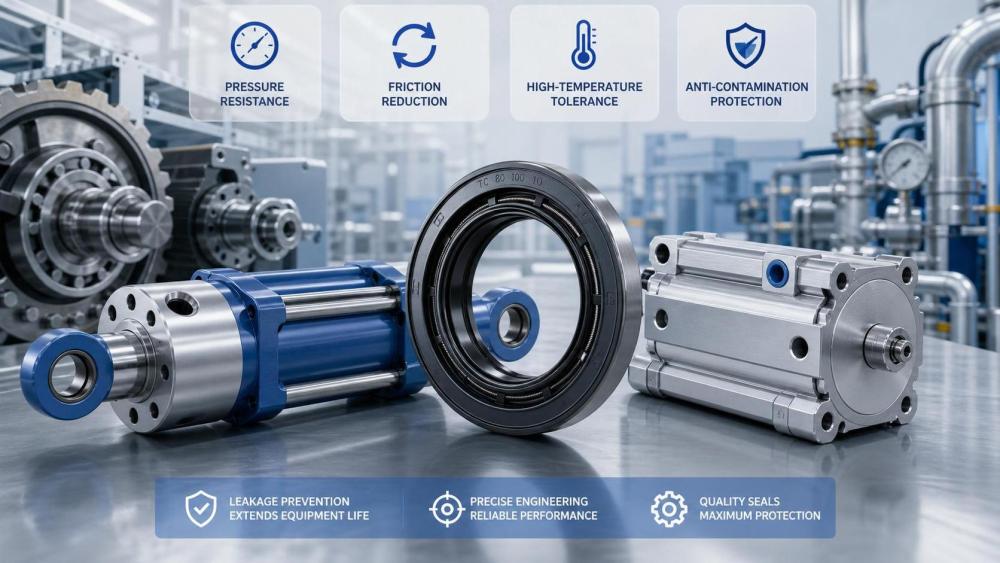
Leakage rarely begins as a simple seal defect. It usually starts where pressure, motion, heat, fluid chemistry, and installation habits meet.
That is why sealing tech fellows leak prevention advice matters most in field conditions, not only in catalog specifications.
In aftermarket maintenance, a small leak can quickly become contamination, bearing damage, unstable pressure, and costly stoppage across connected equipment.
Within the broader PCTS component landscape, seals are linked to pumps, cylinders, bearings, couplings, belts, chains, and monitored reliability systems.
A rotary shaft seal in a dusty transmission line fails differently from an O-ring in a hot hydraulic manifold.
A static gasket exposed to cleaning chemicals also needs a different judgment than a pneumatic piston seal cycling all day.
The useful question is not only which seal looks stronger. The better question is which leak prevention method fits the service pattern.
Different equipment creates different leak risks
More failures happen because similar-looking applications are treated as identical. In practice, the leakage path changes with motion type and media behavior.
Sealing tech fellows leak prevention methods usually begin by separating static, reciprocating, and rotary sealing points before discussing materials.
Hydraulic circuits under pressure spikes
Hydraulic pumps, motors, and cylinders often fail seals during pressure fluctuation, not during steady-state operation.
When pressure spikes combine with poor surface finish or extrusion gaps, even a chemically suitable seal can deform and leak.
Here, leak prevention depends on backup rings, groove control, fluid compatibility, and temperature stability during repeated load changes.
Pneumatic systems with dry running and fast cycling
Air cylinders and actuators create another pattern. Lubrication is lighter, speeds are higher, and wear can be subtle before leakage becomes visible.
In these cases, sealing tech fellows leak prevention work focuses on friction balance, low breakaway force, and resistance to particulate ingress.
Rotary transmission points exposed to dirt
Gearboxes, conveyor drives, and bearing housings often leak because contamination damages the sealing lip before fluid loss gets attention.
Once abrasive particles score the shaft or harden the lip contact zone, leak prevention turns into repeated replacement without solving the root cause.
Where sealing tech fellows leak prevention changes by application
The table below shows why one leak prevention method rarely covers every industrial sealing point.
This is where sealing tech fellows leak prevention thinking becomes useful. It compares service conditions, not just seal names.
Material choice only works when the failure mode is clear
Teams often jump straight to FKM, PTFE, or FFKM because higher-spec materials sound safer. That can help, but it is not a universal fix.
If leakage comes from shaft eccentricity, groove damage, or thermal cycling, premium compounds may still fail early.
Sealing tech fellows leak prevention recommendations usually map material selection to the dominant stress.
- For hot oils, focus on heat aging, compression set, and fluid additive compatibility.
- For aggressive chemicals, verify swelling behavior during cleaning and shutdown periods.
- For abrasive dust, prioritize exclusion and wear resistance over chemical overengineering.
- For vacuum or clean process systems, outgassing and contamination control may matter more than pressure rating.
In rotating equipment, seal material must also match shaft surface speed and lubrication film behavior.
In static joints, clamp load retention and flange flatness can matter more than elastomer hardness alone.
The common leak prevention mistakes that distort decisions
Several repeat mistakes appear across industrial MRO work, especially when leakage is treated as an isolated replacement task.
Using nominal pressure instead of real pressure behavior
Catalog pressure values do not show shock events, cold starts, trapped pressure, or line pulsation.
Sealing tech fellows leak prevention reviews often uncover short spikes far above normal system labels.
Ignoring the hardware around the seal
A worn rod, rough bore, bent shaft, or poor groove corner can trigger persistent leakage even after careful seal replacement.
This is especially common in hydraulic repair, rotary drives, and aging housings with repeated service history.
Comparing purchase price without lifecycle exposure
A cheaper seal may increase fluid loss, cleanup time, product rejection, and secondary damage to bearings or friction surfaces.
Good leak prevention decisions measure replacement frequency, shutdown cost, and contamination risk together.
Treating similar environments as equivalent
Dusty mining conveyors, washdown food lines, and chemical transfer skids may all leak, but the root conditions are not interchangeable.
A practical way to match leak prevention methods to field conditions
A useful workflow starts with the leak path, then checks operating evidence, then confirms whether the seal or the hardware caused the failure.
- Define whether the point is static, reciprocating, or rotary.
- Record medium, temperature range, cycle rate, pressure peaks, and contamination sources.
- Inspect counterfaces for wear, eccentricity, scratches, corrosion, and assembly marks.
- Review material aging signs, including hardening, swelling, flattening, or lip cracking.
- Adjust seal design, support elements, and maintenance interval together.
This approach aligns with the PCTS view of reliability, where seals are evaluated alongside bearings, fluid power parts, transmission elements, and monitoring data.
When condition monitoring shows vibration growth, heat rise, or pressure instability, leak prevention should be reviewed before visible leakage expands.
That is often the point where sealing tech fellows leak prevention insight saves more than a seal change alone.
Before the next replacement, clarify what the application is really asking for
Effective sealing tech fellows leak prevention is less about choosing the most impressive material and more about reading the application honestly.
Some sites need chemical stability first. Others need dirt exclusion, low friction, pressure resistance, or better hardware control.
Before the next decision, sort equipment by motion type, media, thermal range, contamination exposure, and maintenance access.
Then compare failure history against those conditions, not against generic product claims.
That process usually makes the right leak prevention method clearer, reduces repeat leakage, and supports longer service life across connected industrial systems.
Related News
- 00
0000-00
Where are axial piston pumps used in mining equipment? - 00
0000-00
Embodied AI Robotics and Drive Control Forum Held in Shanghai - 00
0000-00
How does seal service life affect the total cost of ownership? - 00
0000-00
Schaeffler to Cut 3,460 Jobs and Close Five European Plants - 00
0000-00
How does system size affect the price of a belt drive system?
Weekly Insights
Stay ahead with our curated technology reports delivered every Monday.