





Choosing mining components for conveyors is rarely a matter of replacing one part with another. In mining, every roller, bearing, belt, seal, and drive element sits inside a harsh operating chain where dust, shock loading, moisture, misalignment, and variable throughput combine to accelerate wear.
That is why mining components for conveyors deserve closer technical evaluation. A weak component may not fail immediately, yet it can shorten service intervals, raise energy use, damage adjacent parts, and turn routine maintenance into unplanned stoppage.
For teams comparing options across industrial transmission, bearing, sealing, and MRO categories, the better question is not simply which part fits. The better question is which component package keeps the conveyor stable, maintainable, and predictable over its real duty cycle.
Why component choice has become a downtime issue
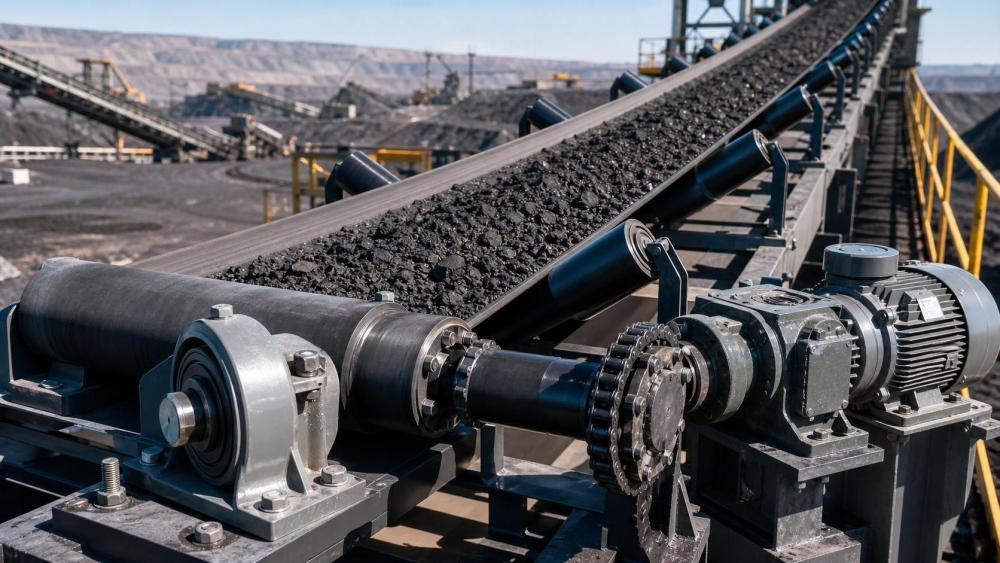
Conveyors in mining now run under tighter production targets and leaner maintenance windows. At the same time, ore characteristics, operating speeds, and environmental exposure often vary more than catalog conditions suggest.
This creates a common gap between nominal specification and actual field performance. A bearing rated for load may still underperform if contamination control is poor. A belt may meet tensile requirements yet suffer premature edge damage because transition zones were overlooked.
Across the broader industrial components market, this is also why platforms such as PCTS matter. Downtime reduction increasingly depends on seeing bearings, chains, seals, couplings, and monitoring devices as one reliability system rather than isolated purchase lines.
What mining components for conveyors usually include
In practical terms, mining components for conveyors cover all parts that support material movement, transfer force, control friction, and protect against contamination.
The list changes by conveyor type, but the most failure-sensitive elements are usually concentrated in a few areas.
- Rollers and idlers that carry load and influence belt tracking.
- Bearings that manage radial load, speed, shock, and contamination.
- Belts, chains, and sprockets that transmit motion or handle conveyed material.
- Drive assemblies, couplings, and gear interfaces that affect torque stability.
- Seals and O-rings that keep dust, water, slurry, and fines out of critical cavities.
- Condition monitoring devices that detect vibration, heat, drift, or lubrication issues early.
Selecting these parts separately can create hidden incompatibilities. Selecting them as a coordinated operating set usually produces better uptime and more realistic lifecycle cost control.
The conditions that should drive selection
Many conveyor failures can be traced back to incomplete duty definition. Technical evaluation is stronger when the environment is described in operating terms, not just in dimensions.
Start with the real load profile
Average tonnage is useful, but peak loading matters more for fatigue-sensitive parts. Look at startup torque, surge events, impact at loading points, and short-term overload frequency.
Map the contamination pathway
Dust ingress, washdown exposure, abrasive fines, and chemical contact directly affect bearing life and seal performance. In mining, contamination resistance often determines service life more than pure load rating.
Consider alignment and structure
Frame deflection, pulley geometry, installation tolerance, and shaft runout can turn a correctly sized part into an early failure point. This is especially relevant for rollers, couplings, and belt tracking behavior.
Review maintenance accessibility
A component with excellent laboratory life may still be a poor choice if lubrication, inspection, or replacement is difficult during shutdown windows. Maintainability is part of performance, not a separate issue.
Where downtime risk usually concentrates
Not every part contributes equally to conveyor reliability. The highest-value decisions usually sit where wear, contamination, and misalignment overlap.
This is where mining components for conveyors should be evaluated with the most discipline. Small improvements in these zones often reduce the largest share of avoidable stoppages.
How to compare options beyond catalog ratings
Catalog data remains necessary, but it is rarely enough for mining applications. Better comparison comes from linking component data to failure modes already seen in service.
Check how the part handles contamination
For bearings and seals, ask how the design performs under fine dust, slurry splash, and pressure washing. Barrier design, sealing geometry, and lubricant retention deserve direct attention.
Review material and heat treatment choices
Hardness, corrosion resistance, fatigue properties, and surface finish all affect wear behavior. In chains, sprockets, rollers, and bearing raceways, material detail often predicts replacement frequency.
Look for evidence from similar duty conditions
Field data from comparable throughput, ore type, incline angle, and climate is more useful than broad claims. This is one area where application analysis and supplier visibility become especially valuable.
Measure total cost, not unit price
Low purchase cost can hide higher replacement labor, spares inventory, lost production, and collateral damage. Mining components for conveyors should be judged on operating life per shutdown cycle, not invoice price alone.
Why bearings, seals, and transmission elements should be reviewed together
A conveyor is a connected mechanical system. Bearing life depends on sealing quality. Seal life depends on shaft condition and alignment. Drive stability depends on couplings, belt tension, and the condition of rotating supports.
That interconnected view matches the broader PCTS framework, which links tribology, sealing materials, transmission design, smart sensing, and maintenance economics. It is a more realistic way to assess mining components for conveyors.
For example, a higher-grade seal may justify its cost only when paired with better shaft finish and correct lubrication practice. A premium bearing may show limited benefit if the housing allows persistent contamination ingress.
This is why downtime reduction usually comes from system matching, not from one premium part inserted into an unchanged failure environment.
Practical checkpoints before final selection
Before approving mining components for conveyors, it helps to turn selection into a short, evidence-based checklist.
- Define actual load cases, including transient spikes and startup conditions.
- Document contamination sources and required sealing strategy.
- Confirm shaft, housing, and mounting tolerances against component limits.
- Compare lubrication intervals with planned maintenance windows.
- Review compatibility across bearings, seals, belts, chains, and couplings.
- Ask for service evidence, failure history, and replacement cycle expectations.
- Include condition monitoring where early warning can prevent secondary damage.
Simple documentation at this stage often prevents expensive ambiguity later. It also creates a stronger basis for supplier comparison and future root-cause review.
A better next step than buying by specification alone
The best mining components for conveyors are not necessarily the heaviest, newest, or most expensive. They are the parts that fit the conveyor’s real duty, resist its actual failure environment, and support predictable maintenance planning.
A useful next step is to rank component decisions by downtime consequence, then compare options through lifecycle evidence, sealing performance, transmission stability, and maintainability. That approach usually reveals where a specification should be tightened, where a standard part is adequate, and where monitoring should be added.
When the evaluation process connects bearings, seals, belts, chains, couplings, and MRO planning in one view, conveyor reliability becomes easier to improve and much harder to leave to chance.
Want to dive deeper into these market dynamics, or need data-driven support for your next business move? Drop a line below and let the analysts at PCTS provide customized insights.
We respect your privacy. Your information is strictly confidential.
Related News
- 00
0000-00
How sealing technology reduces contamination in semiconductor manufacturing - 00
0000-00
Where to install vibration sensors on rotating machinery - 00
0000-00
NTSB Probe Finds Boeing Warned of MD-11 Engine Bearing Risk Years Earlier - 00
0000-00
How to size pneumatic grippers for packaging system integration - 00
0000-00
How to size alloy steel power transmission chains for heavy loads
Weekly Insights
Stay ahead with our curated technology reports delivered every Monday.