





When Packaging Automation Systems Retrofit Delivers Better ROI Than Replacement
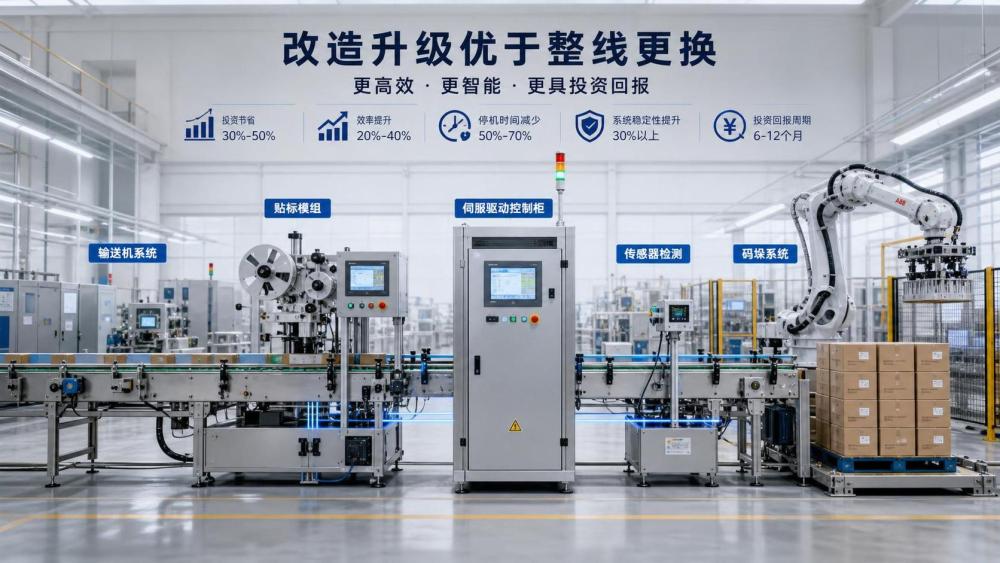
For many manufacturers, the real question is not whether to modernize, but how to do it without damaging cash flow.
That is where a packaging automation systems retrofit often becomes the more practical investment path.
Instead of removing an entire line, companies upgrade the controls, drives, sensors, safety systems, and motion hardware already in place.
The result can be faster payback, lower disruption, and measurable gains in throughput, reliability, and maintenance efficiency.
In procurement terms, retrofit works when the mechanical base remains sound but the automation layer is holding performance back.
That pattern is common across filling, cartoning, labeling, conveying, palletizing, and secondary packaging operations.
Why Replacement Is Not Always the Smartest Financial Move
A full line replacement promises new capabilities, but it also brings hidden costs that budget models often underestimate.
These costs usually include installation downtime, utility modifications, operator retraining, validation work, and spare parts transitions.
Lead times have also become less predictable, especially for imported automation hardware and specialized packaging modules.
A packaging automation systems retrofit avoids much of that disruption because the core machine structure stays in service.
From a cost control perspective, that can preserve productive assets while targeting only the weakest performance points.
More importantly, retrofit decisions can be staged by priority rather than funded as one large capital event.
Typical hidden replacement costs
- Line shutdown that affects order fulfillment and customer service levels
- New guarding, floor layout, or electrical infrastructure changes
- Long commissioning periods before stable output is reached
- Duplicate inventory during switchover and spare parts overlap
- Training costs for operators, technicians, and maintenance planners
When a Packaging Automation Systems Retrofit Makes the Most Sense
A packaging automation systems retrofit is usually the better choice when the machine frame and major mechanics remain structurally reliable.
The signal is clear when output losses come from obsolescent controls, unstable motion, poor sensing, or repetitive stoppages.
This also applies when replacement parts are difficult to source, but the line still fits production needs.
In actual operations, many packaging assets fail economically before they fail mechanically.
That distinction matters because procurement teams should not pay for new steel when the problem sits in aging automation architecture.
Good retrofit candidates usually show these signs
- Frequent sensor faults or wiring issues causing short stoppages
- Legacy PLCs or HMIs with limited support availability
- Servo or drive instability reducing speed consistency
- Safety compliance gaps that can be corrected without a full rebuild
- Mechanical assemblies still capable of accurate repeatable motion
- Demand for basic productivity gains rather than a new process design
What Upgrades Usually Deliver the Best ROI
Not every retrofit scope produces the same financial return.
The strongest returns usually come from components that directly affect uptime, speed control, and maintenance predictability.
A packaging automation systems retrofit should therefore begin with a performance bottleneck review, not a general equipment wish list.
Control modernization is often the first step because obsolete PLCs and HMIs slow diagnosis and increase support risk.
Drive upgrades can then stabilize motion profiles, reduce positioning errors, and improve repeatability across different package formats.
Sensor improvements matter just as much, especially where dirty environments, reflective materials, or variable products confuse older devices.
In many lines, replacing selected bearings, couplings, belts, chains, seals, and pneumatic components also protects the automation investment.
High-impact retrofit elements
- PLC, HMI, and industrial communication upgrades
- Servo drives, motors, and motion controller integration
- Photoelectric, proximity, vision, and position sensing improvements
- Safety relays, light curtains, and guarding control updates
- Condition monitoring for bearings, vibration, temperature, and air quality
- Hydraulic or pneumatic circuit refresh where actuation performance has drifted
How to Compare Retrofit ROI Against Replacement
A serious buying decision needs more than a capital cost comparison.
The right model compares cash outlay, downtime risk, expected performance lift, and ongoing maintenance economics.
For a packaging automation systems retrofit, the most useful question is how quickly the upgrade removes current business pain.
That pain may be labor dependency, scrap, missed output, service delays, or recurring breakdowns during peak demand.
Replacement can still win when capacity must jump sharply or the existing machine no longer meets product or compliance requirements.
But where the need is speed, reliability, and life extension, retrofit often reaches payback much sooner.
A practical ROI checklist
- Measure current OEE losses by root cause, not by general downtime totals.
- Estimate output gains after controls, drives, and sensing improvements.
- Calculate shutdown duration for retrofit versus full replacement.
- Review spare parts availability across bearings, belts, chains, seals, and electronics.
- Include validation, training, integration, and support costs in both options.
- Test whether phased retrofit can spread cost across multiple budget cycles.
Risk Areas That Should Be Checked Before Approval
A packaging automation systems retrofit is not automatically the right answer.
Poorly scoped projects can create compatibility issues between old mechanics and new control logic.
That is why technical due diligence matters before procurement commits funds.
The mechanical condition of shafts, guide systems, bearings, couplings, chains, and seals must be verified first.
Electrical documentation should also be reviewed because incomplete drawings can delay commissioning and service support.
From a supplier perspective, integration capability is as important as hardware quality.
Pre-approval questions worth asking
- Can the existing machine frame hold required tolerances at higher operating speeds?
- Are critical wear components already near end of life?
- Will the retrofit improve data visibility for maintenance and production planning?
- Is local technical support available after commissioning?
- Can the upgrade path support future format changes or digital monitoring expansion?
Where Component Quality Changes the Retrofit Outcome
A packaging automation systems retrofit succeeds faster when upgraded controls are matched with dependable mechanical components.
This is often underestimated during sourcing.
For example, unstable bearings can undermine servo accuracy, while worn belts or couplings can distort motion performance.
Seal failure can expose sensors and actuators to dust, moisture, washdown chemicals, or air leakage.
That is why many retrofit projects now combine automation upgrades with selected reliability components from trusted industrial suppliers.
For teams comparing vendors, this is where a platform such as PCTS adds value.
It helps connect automation needs with bearings, transmission parts, fluid power hardware, seals, and MRO considerations in one decision framework.
The Practical Decision Path
A packaging automation systems retrofit delivers better ROI than replacement when the business needs focused improvement, not total reinvention.
If the line is mechanically healthy, modernization can unlock meaningful gains at lower cost and with less operational disruption.
The strongest decisions usually come from three actions.
- Audit the real causes of downtime and performance loss
- Match retrofit scope to measurable business outcomes
- Source both automation and reliability components with lifecycle support in mind
That approach keeps capital disciplined while improving throughput, maintainability, and long-term equipment value.
In many cases, that is exactly where packaging automation systems retrofit creates the clearest procurement advantage.
Related News
- 00
0000-00
When do fluid power systems need closed-loop control? - 00
0000-00
How to vet an industrial sealing solutions supplier for critical equipment - 00
0000-00
When wireless intelligent condition monitoring justifies retrofit costs - 00
0000-00
When does an export compliance service reduce shipment delays? - 00
0000-00
How to assess a mechanical seal solutions supplier’s quality control
Weekly Insights
Stay ahead with our curated technology reports delivered every Monday.