





On August 10, 2026, Standard Bank Namibia began offering Cross-Border Interbank Payment System (CIPS) services, making it the first bank in Namibia to do so. For exporters and buyers involved in precision mechanical components such as wind turbine bearings, electro-hydraulic pumps, and FFKM seals, this is not just a banking update. It signals a practical change in how cross-border settlement can be arranged for trade into Namibia and the wider Southern African market, with implications for payment timing, exchange exposure, transaction costs, and procurement certainty.
A settlement channel now in live use
The confirmed event is that Standard Bank Namibia formally activated CIPS on August 10, 2026. Based on the information provided, it is the first bank in Namibia to provide this service.
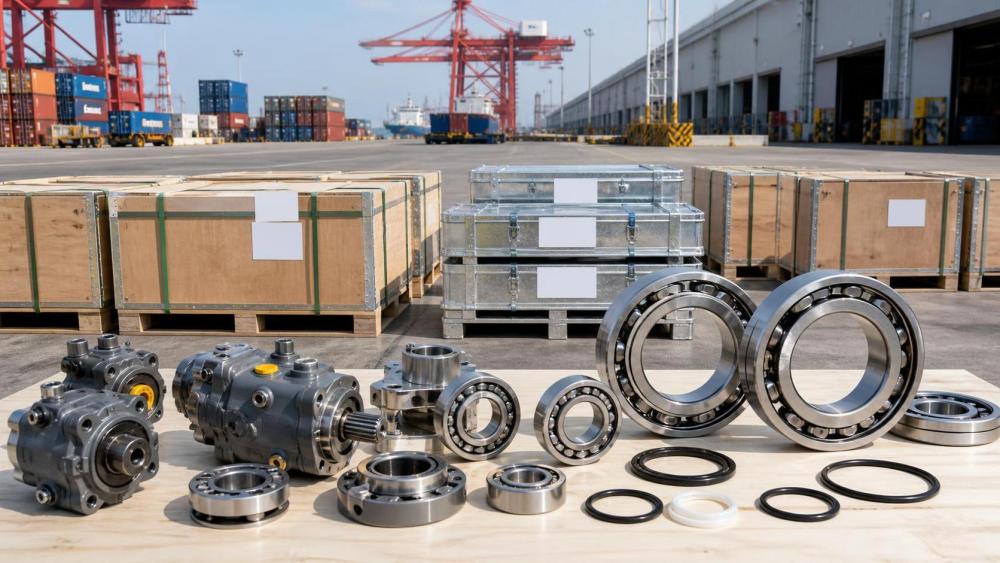
The stated commercial effect is a shorter settlement cycle for Chinese exports of precision mechanical components to Namibia and Southern Africa. The products explicitly referenced include wind turbine bearings, electro-hydraulic pumps, and FFKM sealing components.
The provided summary also states that the use of CIPS can reduce foreign exchange risk and intermediary bank charges. For overseas importers, the arrangement allows T+0 direct payment in RMB, with the expected result of improving procurement certainty and financial predictability.
Where the operational effect is likely to be felt
Export contracts tied to mechanical component supply
From an industry perspective, exporters of bearings, hydraulic parts, and related precision components may be affected first because settlement terms are closely tied to shipment release, invoice timing, and price confirmation. A faster RMB settlement route may change how payment clauses are drafted, especially where suppliers and buyers want clearer expectations on receipt timing and currency handling. What deserves closer attention is whether commercial documents, pro forma invoices, and final invoices are aligned with the payment method being used.
Import-side procurement and budget control
For overseas buyers, the main effect is likely to appear in purchasing operations rather than in product specification itself. Analysis shows that when T+0 RMB payment becomes available, procurement teams may gain more certainty in cash planning and order scheduling. They should still pay attention to bank-side execution requirements, internal approval workflows, and whether purchase documentation clearly reflects settlement currency, payment timing, and supplier details.
Supply chain and delivery coordination
Supply chain service providers and export operations teams may also see practical changes in order coordination. If settlement time is shortened, the timing relationship between payment confirmation, dispatch preparation, and delivery commitments may tighten. Observably, that makes document accuracy more important across purchase orders, shipping paperwork, and after-sales records, even though the provided information does not yet define a detailed operating standard for each step.
What companies should check now
Review whether trade paperwork is ready for RMB settlement
Companies involved in exports to Namibia or the wider Southern African market should review whether their quotations, contracts, invoices, and internal payment instructions can support RMB-denominated settlement without ambiguity. This is a practical point because the announced benefit depends on operational readiness, not only on the availability of the payment channel.
Watch for execution language from banks and counterparties
Analysis shows that the market should pay close attention to how banks and trading counterparties describe eligibility, documentation, and processing steps in practice. The provided information confirms service launch and the intended settlement benefits, but it does not provide detailed execution rules. That means companies should treat implementation language as an active area to monitor.
Reassess delivery planning for time-sensitive components
For products such as wind turbine bearings, electro-hydraulic pumps, and FFKM seals, procurement and delivery planning may need adjustment if payment confirmation becomes faster and more predictable. What deserves closer attention is whether shorter settlement cycles affect order batching, shipment release timing, or replenishment planning. At this stage, those effects should be monitored rather than assumed.
Keep traceability and after-sales records aligned
Where cross-border component supply involves technical documents, inspection records, or after-sales follow-up, companies should keep those materials consistent with updated trade and payment arrangements. This is not a new certification rule in the information provided, but it is a compliance and execution point that can matter when payment, delivery, and product responsibility need to be matched clearly.
Why this matters beyond a single banking launch
Observably, this development is better understood as an execution signal in cross-border trade settlement rather than as a broad policy conclusion on its own. The confirmed change is concrete: a CIPS service is now available through a bank in Namibia, and the summary links that change directly to faster settlement, lower exchange-related friction, and lower intermediary costs for relevant trade flows.
Analysis shows that the industry should not overstate the scope of the event. The information provided does not establish a full market-wide shift, nor does it set out detailed regulatory implementation across every participant. What it does show is that settlement infrastructure can begin to influence how exporters, importers, and supply chain teams structure transactions for mechanical component trade into Southern Africa.
How this update is best understood for now
At this stage, the news is best read as a live operational change with immediate relevance to payment arrangements for certain export transactions, especially those involving precision mechanical components. It is more appropriate to understand this as a practical settlement development with trade and procurement implications, while continuing to watch how execution standards, counterparty adoption, and market feedback develop in actual transactions.
Basis of this article and points still requiring verification
This article is based on the user-provided news title, event date, and event summary. For developments of this kind, commonly relevant source types may include official bank announcements, regulatory releases, customs or trade authority information, industry association updates, standard-setting documents, and reporting by established business media.
No specific official source link was provided in the input, so the underlying announcement and any follow-up implementation wording still require ongoing verification. Observably, the next points worth monitoring include any further official clarification, market execution language, tender or procurement document changes, industry feedback, and how companies actually adopt the new settlement route in export operations.
Want to dive deeper into these market dynamics, or need data-driven support for your next business move? Drop a line below and let the analysts at PCTS provide customized insights.
We respect your privacy. Your information is strictly confidential.
Related News
- 00
0000-00
IndexBox Forecasts 3.8% Annual Growth for Global Radial Seals Market Through 2035 - 00
0000-00
How to assess the chemical compatibility of FFKM sealing sheets - 00
0000-00
IndexBox Forecasts 3.6% Annual Growth for Construction Bearings Market - 00
0000-00
When do hydraulic components require an export license? - 00
0000-00
How to size modular pneumatic valve systems for adequate airflow
Weekly Insights
Stay ahead with our curated technology reports delivered every Monday.