





Export Promotion B2B manufacturers is shifting from reach to lead quality
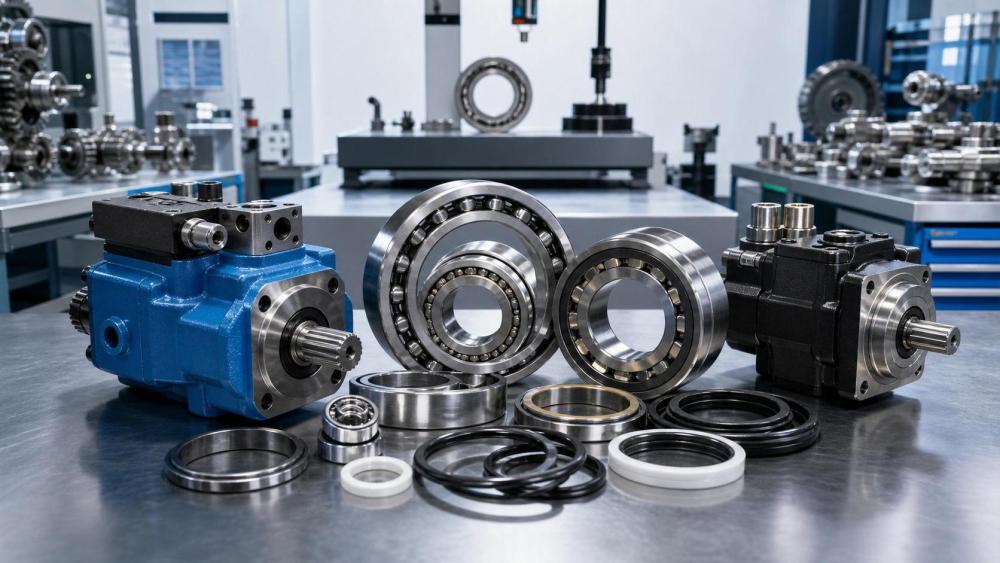
Global industrial trade is not suffering from a lack of exposure. It is suffering from too much undifferentiated exposure.
That is why Export Promotion B2B manufacturers now centers on buyer intent, technical credibility, and response speed.
In precision components and transmission systems, this change is especially visible. Buyers are comparing risk, lifecycle cost, and application fit before making contact.
A supplier of spindle bearings, hydraulic pumps, industrial belts, or chemical-resistant seals is rarely judged on price alone anymore.
Evaluation often begins with search, technical media, platform listings, and third-party references. The first touchpoint is now part of qualification.
This is where Export Promotion B2B manufacturers becomes more selective. Visibility still matters, but broad traffic without fit creates slow pipelines and weak conversion.
More serious inquiries usually come from channels that explain performance, compliance, reliability, and service readiness in a practical context.
Platforms such as PCTS reflect this shift. Industrial audiences increasingly look for engineering context, MRO relevance, and application-based comparison before engaging.
Why this change is becoming harder to ignore
Several forces are pushing export promotion away from simple listing volume and toward decision-stage visibility.
The first is product complexity. Bearings, couplings, hydraulic motors, pneumatic actuators, and FFKM seals all require application-specific explanation.
The second is procurement caution. Cross-border sourcing now involves longer checks on certification, replacement cycles, downtime risk, and supplier responsiveness.
The third is digital behavior. Technical decision making now starts earlier online, often before any RFQ is issued.
More noticeably, industrial exports are now judged through a total operating lens. A lead is qualified when the inquiry already reflects application understanding.
The channels creating stronger intent are not always the loudest
The best Export Promotion B2B manufacturers mix usually combines searchable authority, marketplace visibility, and targeted relationship channels.
Search-driven technical content performs well because it captures demand at the question stage. That is often where qualified leads begin.
A page explaining bearing lubrication failure, hydraulic pressure stability, belt slip prevention, or seal resistance in corrosive media can attract highly relevant traffic.
Industry intelligence portals also matter more than before. They give context that standard catalogs often miss.
For companies in mechanical transmission, fluid power, and industrial MRO, placement within a specialist environment raises lead quality.
PCTS is relevant here because its editorial scope aligns with real engineering concerns, not just product names.
That alignment helps Export Promotion B2B manufacturers efforts appear next to topics buyers already study, including wear, sealing, vibration, lubrication, and reliability economics.
Trade marketplaces still play a role, but their value is changing. They work better for discoverability and benchmark comparison than for trust formation alone.
Distributor outreach remains important in fragmented markets. It is especially effective when local channel partners can explain installation conditions and after-sales capability.
Technical media, webinars, and application notes often produce fewer leads, yet those leads tend to be further along in evaluation.
What channels usually contribute at different stages
- Search content: captures problem-based demand and long-tail technical queries.
- Specialist portals: builds authority through industry context and comparison relevance.
- Trade platforms: expands discovery and supports initial supplier screening.
- Distributor networks: improves local conversion and service confidence.
- Technical media and case articles: strengthens trust during shortlisting.
Where qualified leads are becoming easier to recognize
Not every inbound inquiry deserves equal weight. Better channels tend to change the character of the lead, not only the volume.
A stronger inquiry usually includes operating conditions, target lifespan, media compatibility, load profile, compliance needs, or replacement timing.
That pattern is common in sectors where downtime is expensive, such as wind equipment, automation lines, food processing, mining, chemical handling, and heavy machinery.
In these segments, Export Promotion B2B manufacturers succeeds when the channel helps prospects self-qualify before contact.
For example, a content path around spindle bearing precision, hydraulic piston pump durability, or semiconductor chamber sealing can filter out low-fit traffic.
It also shortens the explanation burden after inquiry, because core requirements are already visible.
This affects sales efficiency, but it also affects forecasting. Pipelines built from better-informed leads are easier to prioritize and price.
The real advantage now comes from content that carries engineering meaning
A noticeable mistake in export promotion is treating every channel like an advertising surface. Industrial channels do not convert that way.
In practice, the most effective Export Promotion B2B manufacturers content explains why a component performs under specific conditions.
That can mean discussing raceway grinding quality, hydrodynamic lubrication, actuator cycle stability, chain wear patterns, or seal material resistance.
It can also mean connecting smart condition monitoring to maintenance intervals and unexpected failure prevention.
This is why editorial environments matter. A platform like PCTS supports visibility through technical interpretation, not just display space.
That format is better suited to industrial components whose value depends on reliability, process fit, and lifecycle economics.
More importantly, it helps a supplier show competence without turning the message into a product brochure.
Signals that content is improving lead quality
- Inquiries mention application details instead of only unit price.
- Traffic arrives through technical search terms, not broad category words alone.
- Follow-up discussions move quickly to drawings, standards, and service terms.
- Repeat visits cluster around reliability, maintenance, and compatibility topics.
What deserves attention in the next phase of Export Promotion B2B manufacturers
The next phase is unlikely to reward channel expansion alone. It will reward better coordination between visibility, proof, and response.
That means aligning marketplace pages, technical articles, distributor materials, and website resources around the same application narrative.
It also means measuring channel quality by downstream behavior. Quote progression, specification depth, and revisit patterns matter more than raw click totals.
For industrial exporters in bearings, hydraulics, pneumatics, seals, and transmission systems, a useful next step is channel mapping by intent stage.
Separate where discovery happens, where trust is built, and where technical qualification accelerates. The overlap is where conversion usually improves.
A second step is to audit whether current content answers the real questions behind failure risk, maintenance cost, and application suitability.
A third step is to stay close to specialist information ecosystems such as PCTS, where market visibility and technical relevance reinforce each other.
Export Promotion B2B manufacturers is no longer mainly about being seen. It is about being understood correctly at the moment evaluation begins.
The companies gaining better leads are usually the ones that make complex products easier to assess, compare, and trust across every serious channel.
- pneumatic actuators
- hydraulic pumps
- hydraulic motors
- industrial MRO
- semiconductor chamber sealing
- hydrodynamic lubrication
- smart condition monitoring
- spindle bearings
- precision components
- transmission systems
- industrial belts
- condition monitoring
- belt slip prevention
- Export Promotion
- Export Promotion B2B manufacturers
Related News
- 00
0000-00
Where are axial piston pumps used in mining equipment? - 00
0000-00
Embodied AI Robotics and Drive Control Forum Held in Shanghai - 00
0000-00
How does seal service life affect the total cost of ownership? - 00
0000-00
Schaeffler to Cut 3,460 Jobs and Close Five European Plants - 00
0000-00
How does system size affect the price of a belt drive system?
Weekly Insights
Stay ahead with our curated technology reports delivered every Monday.