





Why belt slip prevention methods matter in real operating conditions
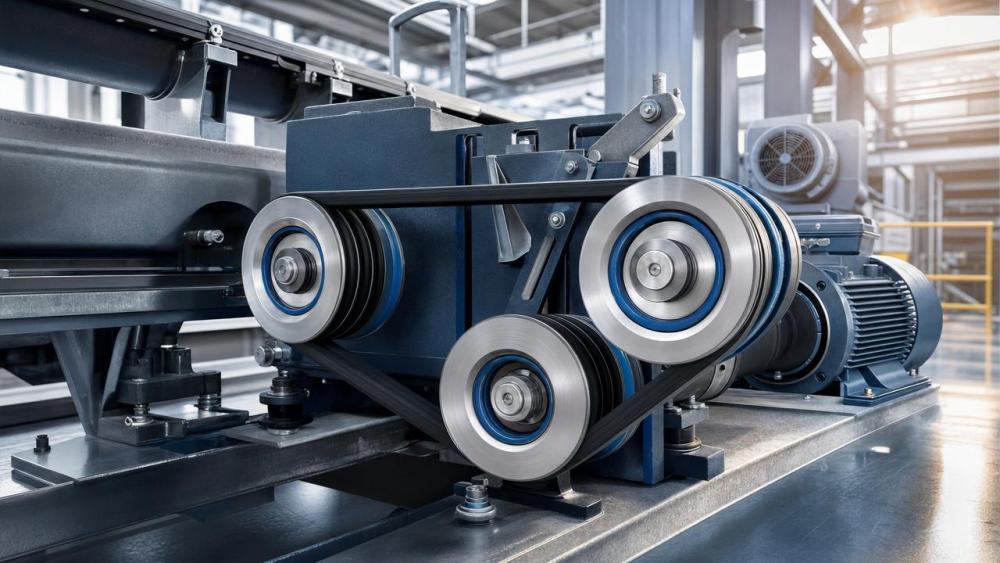
Belt slip rarely starts as a dramatic failure. It usually appears as heat, dust, unstable speed, or a drive that suddenly feels less responsive under load.
That is why effective belt slip prevention methods are closely tied to drive reliability, maintenance planning, and total operating cost.
In conveyors, packaging lines, fans, pumps, agricultural machinery, and general industrial equipment, the same symptom can come from very different causes.
A lightly loaded fan in a dusty workshop does not need the same correction as a shock-loaded crusher or a variable-speed process line.
This is where practical belt slip prevention methods become more than a maintenance checklist. They become a way to match transmission behavior to real service conditions.
Within the wider PCTS view of transmission systems, slip is rarely an isolated belt issue. It often connects with pulley condition, bearing alignment, load variation, contamination, and replacement discipline.
The most reliable approach is to judge the operating scene first, then choose the correction method that fits the actual risk pattern.
Different applications create different slip risks
Before applying any belt slip prevention methods, it helps to identify what kind of drive behavior is causing the problem.
Continuous-duty equipment usually shows slip through temperature rise and gradual efficiency loss. Intermittent machines often reveal it during startup peaks or sudden product accumulation.
Wet or oily environments reduce friction. High-dust areas polish grooves and carry abrasive particles into the contact zone.
Variable-speed systems add another layer. A belt that runs well at one speed may slip at low-speed, high-torque points or during repeated acceleration cycles.
The table below shows why the same symptom should not always trigger the same fix.
In practice, belt slip prevention methods work best when they are selected after this kind of scene-based review.
Method 1 and 2: start with tension control and pulley alignment
The first two belt slip prevention methods are often the most effective because they address the basic mechanics of power transmission.
Set belt tension for the load pattern, not just the catalog value
Insufficient tension is a direct cause of slip, but over-tension creates its own problems through bearing overload and accelerated belt fatigue.
For stable fan drives, a moderate and consistent setting may be enough. For conveyors or mixers, tension must survive startup torque and load fluctuation.
A useful check is whether the belt slips only at startup, only when hot, or throughout the duty cycle. Each pattern points to a different tension issue.
Correct pulley alignment before replacing parts
Misalignment reduces effective contact, increases sidewall wear, and makes a good belt behave like a poor one.
This is especially common after fast maintenance interventions, shaft replacement, or base movement caused by vibration.
In high-speed lines, even small angular errors can become recurring slip events. In lower-speed equipment, the damage appears more slowly but lasts longer.
Among all belt slip prevention methods, alignment is often underestimated because the belt may still run, just less reliably.
Method 3: choose belt and pulley surfaces for the actual environment
Some drives slip even when tension and alignment look acceptable. In those cases, the environment is often the missing factor.
Oil mist, water spray, abrasive dust, and temperature extremes change friction behavior and belt material performance.
One of the more practical belt slip prevention methods is to review whether the selected belt profile, compound, and pulley groove condition still match the site.
A standard belt may perform well in dry indoor service, yet struggle in humid food handling or dusty aggregate transfer.
- Use belts with suitable cover and compound properties for oil, heat, or moisture exposure.
- Inspect pulley grooves for polishing, corrosion, or wear that reduces grip.
- Remove contamination instead of relying on higher tension to compensate.
- Check whether the belt section still matches pulley geometry after replacement history changes.
This matters across the broader transmission ecosystem covered by PCTS, where belts, bearings, seals, and monitoring practices affect each other over time.
Method 4 and 5 become critical when loads change during operation
In more demanding applications, basic correction may not be enough. Belt slip prevention methods then need to address dynamic conditions.
Use drive design changes when torque peaks are the real problem
Repeated slip during startup or impact loading can indicate that the drive layout is undersized for the process, not badly maintained.
Possible responses include larger wrap angle, different pulley diameters, additional idlers, or a move to a more suitable belt type.
This is common in bulk handling, crushers, and stop-start packaging lines, where operating demand changes faster than friction reserve.
Add inspection discipline and condition monitoring
The fifth of these belt slip prevention methods is procedural rather than mechanical, but it often prevents repeat failures.
Trend checks on temperature, vibration, belt dust, and motor current can reveal early slip before production loss becomes obvious.
Where smart monitoring is already used for bearings or rotating assets, adding belt-related checkpoints creates a more complete reliability picture.
This supports a lifecycle view rather than a replace-after-failure habit.
What often gets misjudged before belt slip is solved
Several recurring mistakes make belt slip prevention methods less effective than they should be.
- Treating all slip as a tension problem, while ignoring contamination or pulley wear.
- Replacing the belt only, even though alignment, bearings, or shaft movement caused the failure pattern.
- Comparing purchase price without considering retension intervals, downtime exposure, and service life.
- Assuming two similar conveyors need the same solution, although one sees shock loading and the other runs evenly.
- Ignoring how heat buildup changes grip and accelerates compound aging during long duty cycles.
These points matter because belt slip prevention methods are only reliable when site conditions, drive geometry, and maintenance behavior are evaluated together.
How to match belt slip prevention methods to the next maintenance decision
A practical next step is to review one slipping drive through five questions rather than jumping to parts replacement.
- When does slip occur: startup, full load, hot running, or wet conditions?
- Has alignment changed after maintenance, vibration, or base movement?
- Do belt material and pulley condition still suit the environment?
- Is the drive being asked to absorb higher torque than it was designed for?
- Are inspection records detailed enough to catch early slip indicators?
The best belt slip prevention methods are rarely the most complicated. They are the ones matched to actual service conditions, long-term reliability targets, and realistic maintenance capability.
For transmission systems across general industry, the strongest results usually come from combining mechanical correction with better operating judgment.
That approach reduces repeat slip, stabilizes power transmission, and creates a clearer basis for future component and MRO decisions.
Related News
- 00
0000-00
How FFKM O-rings reduce seal failure in corrosive media - 00
0000-00
What global equipment manufacturing in the USA means for supply chain risk - 00
0000-00
How FFKM outgassing performance affects vacuum seal selection - 00
0000-00
When should heat resistant metallurgy belts be replaced? - 00
0000-00
When does a fluid power maintenance service reduce unplanned downtime?
Weekly Insights
Stay ahead with our curated technology reports delivered every Monday.