





Predictive Maintenance Technologies Germany Is Moving Into the Core of Operations
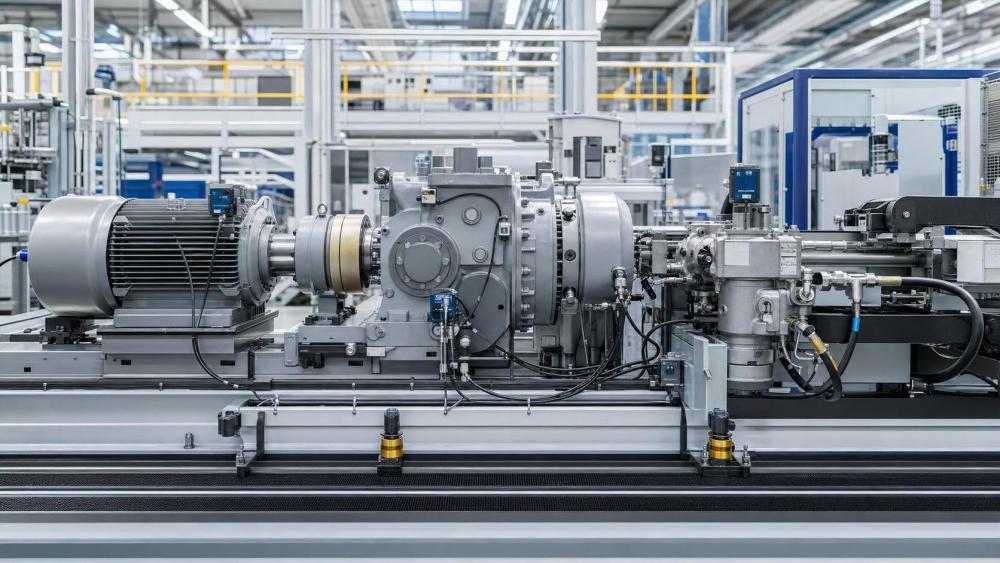
Germany is entering a new stage of industrial reliability management.
What stood as isolated pilots a few years ago is becoming part of operating discipline in 2026.
That shift matters because predictive maintenance technologies Germany is adopting are no longer evaluated only as digital experiments.
They are being judged by uptime, maintenance timing, spare-parts exposure, and energy stability across production assets.
The strongest momentum appears in equipment where failure spreads quickly through the line.
Bearings, hydraulic pumps, gearboxes, motors, seals, chains, belts, and pneumatic assemblies sit at the center of this change.
In practical terms, predictive maintenance technologies Germany is prioritizing now connect condition data with maintenance economics.
The conversation is less about collecting signals and more about deciding what action follows, when, and at what cost.
That is why industrial intelligence platforms such as PCTS increasingly frame maintenance around components, failure modes, and total lifecycle performance.
The clearest change is the move from monitoring to diagnosis
The market signal is not simply more sensors.
The more important signal is that monitoring systems are expected to interpret asset behavior with enough confidence to shape maintenance windows.
This is where predictive maintenance technologies Germany is adopting in 2026 become more selective and more technical.
AI-assisted vibration analysis remains a leading investment area, especially for rotating equipment and spindle-heavy operations.
Acoustic monitoring is gaining attention where bearing defects or lubrication issues appear before temperature trends become obvious.
Oil condition sensing is also moving up the priority list in hydraulic and transmission systems.
That includes particle counting, moisture tracking, and viscosity-related alerts tied to actual operating conditions.
Another noticeable shift is toward edge computing.
Instead of sending every raw signal to the cloud, more sites are processing fault indicators locally for faster response and lower network load.
For assets such as pumps, couplings, conveyors, and wind-related drive components, this architecture is becoming more attractive.
Where adoption is becoming more visible
- Rotating assets with costly stoppages, especially bearings, motors, and gearboxes.
- Hydraulic systems where contamination or pressure instability can cascade into broader failures.
- Transmission assemblies exposed to shock loads, misalignment, or harsh duty cycles.
- Sealing environments where leakage risk affects quality, safety, and maintenance intervals.
Why this trend is accelerating now
Several pressures are converging at once.
Energy costs remain under scrutiny, labor availability is tighter, and production planning leaves less room for reactive stoppages.
In that setting, predictive maintenance technologies Germany is scaling answer a very operational question.
How can sites preserve reliability without overservicing healthy equipment or carrying excessive critical spares?
Another driver is the growing maturity of component-level data.
Machine owners increasingly want models that distinguish bearing wear from imbalance, seal degradation from pressure fluctuation, or chain wear from lubrication failure.
That requires domain-specific understanding, not generic dashboards.
This is also why technical content ecosystems matter more than before.
PCTS reflects this wider shift by linking tribology, fluid power, transmission behavior, smart sensing, and MRO planning into one intelligence framework.
The result is a more realistic view of failure prediction, where data quality, component physics, and maintenance action all need to align.
Impact is spreading across bearings, hydraulics, seals, and power transmission
One reason predictive maintenance technologies Germany is attracting attention is their cross-component relevance.
The value is not limited to one machine category or one industry niche.
For high-precision bearings, the priority is earlier detection of lubrication breakdown, raceway damage, and mounting-related vibration signatures.
For hydraulic systems, the discussion often starts with contamination, cavitation, leakage, and thermal stress.
For chains, belts, couplings, and sprockets, wear progression and tension behavior are becoming more measurable than before.
Sealing systems are also entering the predictive maintenance conversation.
This is especially true in chemically aggressive or temperature-sensitive environments where failure is costly but not always visually obvious.
More interestingly, adoption is changing maintenance planning itself.
Sites are combining component condition data with spare-parts strategy, lubrication routines, and scheduled shutdown logic.
That broadens the role of predictive maintenance technologies Germany is implementing from a technical tool into a planning mechanism.
The operational effects are becoming easier to measure
- Maintenance intervals are adjusted by real wear patterns rather than fixed assumptions.
- Critical spare holdings can be narrowed when condition visibility improves.
- Root-cause analysis becomes more precise for repeat failures in bearings and hydraulics.
- Asset replacement discussions shift from age-based logic to performance-based timing.
Not every technology is winning in the same way
It would be misleading to treat all predictive tools as equally mature.
Some technologies are advancing because they solve immediate plant-level problems.
Others still struggle with messy data, inconsistent labeling, or unclear maintenance follow-through.
Vibration monitoring remains one of the strongest options because failure signatures in rotating systems are well understood.
By contrast, AI models that promise universal prediction across mixed assets often face trust barriers.
Actual deployment tends to work better when models are tuned to application context, load profile, and component class.
This matters for predictive maintenance technologies Germany because industrial users are becoming less patient with abstract digital claims.
The technologies that gain traction are the ones that explain why a failure risk is rising and what intervention is justified.
That creates opportunities for solutions built around technical specificity, especially in bearings, fluid power, sealing, and transmission applications.
What deserves closer attention over the next planning cycle
The next phase will not be defined only by more data collection.
It will be shaped by how effectively predictive maintenance technologies Germany can connect maintenance insight with business timing.
Three areas deserve especially close attention.
- Data-to-action discipline, including who validates alerts and how response thresholds are defined.
- Component-level model quality, especially for bearings, hydraulic pumps, seals, and drive systems.
- Integration with MRO strategy, including replacement cycles, lubricant policy, and supplier traceability.
From recent market behavior, one useful test is whether a program reduces uncertainty, not just whether it adds dashboards.
Another useful test is whether maintenance teams can separate normal process variation from early fault patterns.
Where that discipline exists, predictive maintenance technologies Germany is adopting can support faster maintenance decisions and better cost control.
Where it does not, sensor expansion alone rarely delivers a durable return.
The more practical outlook for 2026
The 2026 outlook is less about dramatic disruption and more about operational normalization.
Predictive maintenance technologies Germany is embracing are becoming standard where component failure has clear economic consequences.
The strongest results are likely to come from focused deployment, better component intelligence, and disciplined maintenance response.
For that reason, the next sensible step is to review which assets already show measurable failure patterns.
Then compare available sensing, analytics, and service models against actual reliability risks, not digital ambition alone.
It is also worth tracking how technical knowledge sources, including platforms such as PCTS, connect condition monitoring with bearings, hydraulics, sealing, transmission systems, and lifecycle cost decisions.
That broader view will be increasingly important as predictive maintenance technologies Germany continues to shift from innovation topic to core industrial practice.
Related News
- 00
0000-00
How to select PU timing belts for automation with high positioning accuracy - 00
0000-00
How to size power transmission systems for steel mill loads - 00
0000-00
How to select heavy duty metallurgy belts for high-temperature loads - 00
0000-00
When does a pneumatic system integrator reduce project risk? - 00
0000-00
When edge computing diagnostics reduce unplanned downtime
Weekly Insights
Stay ahead with our curated technology reports delivered every Monday.