





Condition Based Reliability Engineering for Maintenance Planning
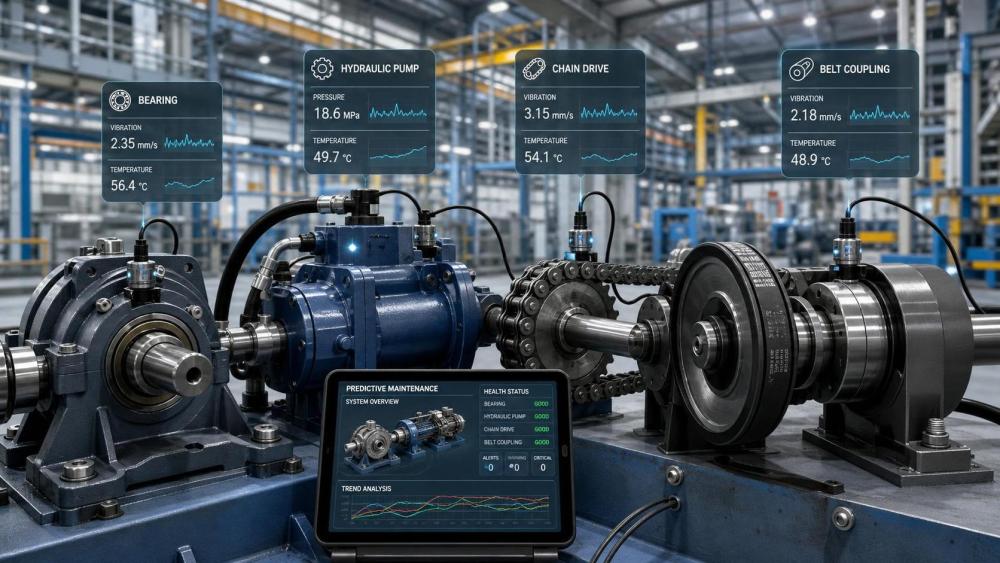
Condition based reliability engineering is changing how maintenance planning works in modern industry.
Instead of following fixed intervals, teams monitor actual asset condition and respond to real failure signals.
That shift matters when bearings, seals, pumps, chains, belts, and couplings operate under variable loads and harsh environments.
A calendar cannot see contamination, lubrication breakdown, belt slip, hydraulic instability, or rising vibration.
Condition based reliability engineering can.
For maintenance planning, the goal is simple.
Do the right work, on the right asset, at the right time, with the right parts.
In practice, that means fewer unnecessary interventions and fewer unexpected failures.
It also means stronger spare parts control and better lifecycle cost decisions.
From recent industry changes, a clearer signal is emerging.
Reliability is no longer only a design issue.
It is now a live operating discipline supported by data, inspection logic, and risk-based action.
What condition based reliability engineering really means
Condition based reliability engineering combines condition monitoring with reliability thinking and maintenance planning discipline.
It does not just ask whether a component is healthy today.
It asks how quickly that condition is changing and what risk it creates for production.
This is why simple inspection routines are not enough.
The method needs engineering thresholds, failure mode knowledge, and decision rules.
For example, rising bearing vibration means little without trend history, load context, and lubrication status.
A hotter hydraulic pump may reflect normal demand, or it may signal internal leakage.
A leaking seal may be a local problem, or evidence of shaft misalignment and broader system stress.
That is where condition based reliability engineering becomes valuable.
It turns scattered symptoms into prioritized maintenance planning actions.
- Identify critical assets and dominant failure modes.
- Monitor condition indicators linked to those failure modes.
- Set action thresholds based on risk and operating context.
- Plan intervention windows before functional failure occurs.
- Align spare parts decisions with real degradation trends.
Why fixed schedules often miss the real risk
Time-based maintenance still has value, especially for regulatory tasks and simple service routines.
But it struggles when operating conditions change faster than the service interval.
A gearbox in clean, stable duty behaves differently from one exposed to shock loads and dust.
A cylinder seal in steady motion ages differently from one facing heat cycles and chemical attack.
In real operations, assets rarely follow average assumptions.
This creates two expensive outcomes.
Some parts are replaced too early, wasting labor and usable life.
Others fail before the planned stop, causing unplanned downtime and emergency procurement.
Condition based reliability engineering reduces both problems by focusing on actual health and failure probability.
That makes maintenance planning more precise and more defensible.
Typical blind spots in schedule-driven maintenance
- Hidden contamination in lubricated bearings.
- Pressure loss trends in hydraulic pumps and valves.
- Progressive leakage from worn seals and O-rings.
- Elongation and wear in chains and sprockets.
- Belt tension drift and alignment-related slip.
- Temperature deviations caused by changing loads.
Core signals that improve maintenance planning
The best condition based reliability engineering programs start with a small set of useful signals.
More data is not always better.
The real advantage comes from choosing indicators that match known failure mechanisms.
For rotating equipment, vibration, temperature, lubrication condition, and noise trends remain essential.
For fluid power systems, pressure stability, flow behavior, contamination level, and leakage patterns matter more.
For transmission elements, wear elongation, alignment, torque behavior, and surface damage are practical indicators.
The key is to connect each signal to a maintenance planning decision.
Useful signal-to-action logic
Applying the method across industrial components
Condition based reliability engineering becomes more powerful when applied by component family.
Each asset type fails in a different way, so the monitoring logic should reflect that reality.
Bearings and rotating assemblies
Bearing reliability depends on load, speed, lubrication, alignment, and contamination control.
Small signal changes often appear before severe damage develops.
Trend-based monitoring helps determine whether relubrication, inspection, or replacement should be planned first.
Hydraulic and pneumatic systems
Fluid power assets are sensitive to contamination, internal leakage, pressure fluctuation, and seal wear.
Condition based reliability engineering helps isolate whether the problem sits in the pump, actuator, valve, or sealing point.
That avoids broad, expensive part replacement when a targeted correction is enough.
Chains, belts, couplings, and drives
Transmission components show progressive wear, often with visible signs before failure.
Even so, visual checks alone can miss alignment drift or load-related stress.
Combining inspection with measurable condition data improves maintenance planning accuracy.
Seals, O-rings, and leakage control
Sealing failures are often treated as minor issues until downtime proves otherwise.
A condition based reliability engineering approach checks media compatibility, temperature exposure, pressure cycling, and surface condition.
This supports smarter seal selection and more realistic replacement cycles.
How to build a practical maintenance planning workflow
A workable system does not begin with software.
It begins with asset criticality, failure logic, and clear action rules.
In day-to-day operations, simple structure usually outperforms complicated dashboards.
- Rank assets by downtime impact, safety exposure, and replacement lead time.
- Define likely failure modes for each critical component group.
- Choose two to four condition indicators that truly predict degradation.
- Set alert levels for inspect, plan, and replace decisions.
- Link each alert to labor, parts, tools, and outage windows.
- Review outcomes after each intervention and refine thresholds.
This is where condition based reliability engineering becomes operational instead of theoretical.
It gives maintenance planning a repeatable framework that can scale across plants and service networks.
Common mistakes that weaken results
Many programs collect condition data but still struggle to improve reliability.
The problem is usually not the sensor.
It is the missing connection between signal, engineering judgment, and maintenance planning action.
- Monitoring too many points with no failure mode priority.
- Using generic alarm thresholds across different machines.
- Ignoring operating context such as speed, load, and duty cycle.
- Replacing parts without finding the real root cause.
- Keeping spare parts rules separate from condition evidence.
- Failing to capture lessons after planned or unplanned events.
Avoiding these mistakes makes condition based reliability engineering far more credible and useful.
The link between reliability data and spare parts decisions
One of the strongest business benefits of condition based reliability engineering is better inventory control.
When degradation is visible, spare parts planning becomes more accurate.
Critical bearings, seal kits, hydraulic repair parts, and transmission elements can be staged before failure.
At the same time, slow-moving stock can be reduced where condition trends remain stable.
This matters even more for imported parts, custom seal materials, and long-lead industrial components.
In actual service work, lead time risk can be as serious as technical failure risk.
A strong maintenance planning process should therefore combine condition severity with procurement timing.
Final takeaway
Condition based reliability engineering gives maintenance planning a more realistic foundation.
It helps teams respond to real machine behavior instead of average assumptions.
That leads to better uptime, more effective labor use, and smarter control of bearings, seals, hydraulics, and drives.
The most effective approach is not overly complex.
Start with critical assets, useful indicators, and clear action thresholds.
Then improve the model as field evidence grows.
That steady, engineering-led discipline is what turns condition based reliability engineering into lasting operational value.
Related News
- 00
0000-00
How to size power transmission systems for steel mill loads - 00
0000-00
How to select heavy duty metallurgy belts for high-temperature loads - 00
0000-00
When does a pneumatic system integrator reduce project risk? - 00
0000-00
When edge computing diagnostics reduce unplanned downtime - 00
0000-00
How precision transmission systems improve robot positioning accuracy
Weekly Insights
Stay ahead with our curated technology reports delivered every Monday.