





Hydrodynamic lubrication theory matters far beyond design textbooks. It explains how a moving fluid film separates surfaces, limits friction, and delays wear in bearings, seals, gears, pumps, and transmission assemblies.
For industrial component evaluation, that matters because film thickness is rarely an abstract number. It influences heat generation, surface fatigue, leakage risk, lubricant life, and the maintenance cost tied to unplanned shutdowns.
Across the PCTS coverage space, from spindle bearings to hydraulic equipment and sealing systems, hydrodynamic lubrication theory provides a practical way to judge whether a component will stay reliable under real operating stress.
Where the theory becomes practical
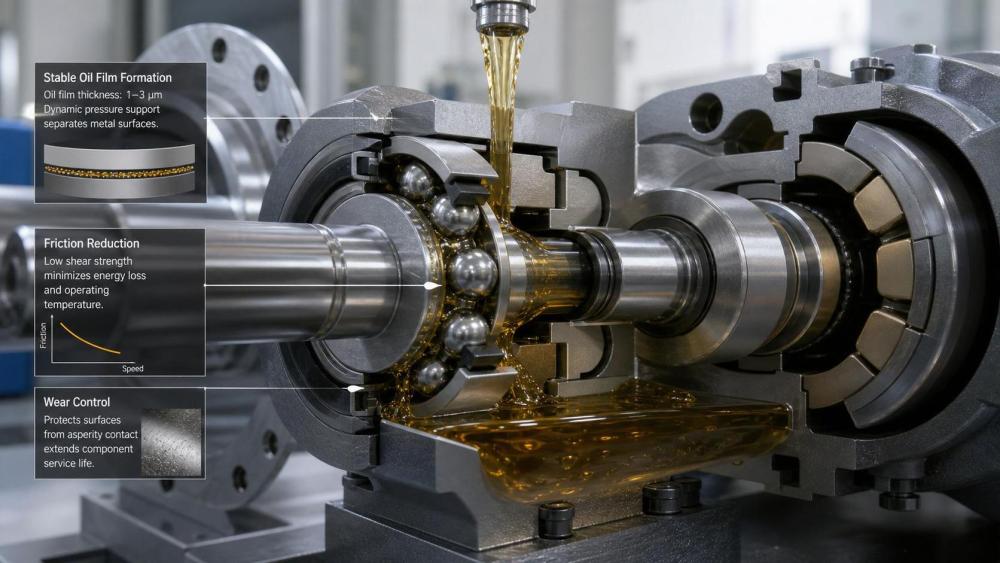
At its core, hydrodynamic lubrication theory describes pressure generated inside a converging lubricant film. Relative motion pulls the fluid into the contact zone, and that pressure supports the load.
When the film is thick enough, metal-to-metal contact drops sharply. Wear slows, friction becomes more predictable, and surface damage shifts from severe abrasion toward controlled long-term aging.
This is why the theory matters in rotating sleeves, journal bearings, thrust faces, seal interfaces, pump internals, and some chain or belt support elements. It helps explain why similar-looking parts perform very differently.
In practice, the question is not whether hydrodynamic lubrication theory is valid. The real question is whether the operating window actually allows a stable lubricating film to form and survive.
Film thickness is controlled by a moving balance
Film thickness does not come from lubricant choice alone. It emerges from speed, load, viscosity, geometry, alignment, temperature, and surface finish acting together.
Higher speed usually helps pull more lubricant into the interface. That often increases film thickness and improves separation, especially in high-speed bearings and fluid-supported rotating assemblies.
Higher load works in the opposite direction. It compresses the film and raises contact stress, making the system more vulnerable when startup conditions or shock loading interrupt stable lubrication.
Viscosity is equally sensitive. A lubricant that is too thin may fail to maintain separation. One that is too thick may create churning losses, heat buildup, and sluggish efficiency.
Temperature complicates every estimate. As temperature rises, viscosity usually falls. That means a machine that looks safe on paper can drift toward mixed lubrication during continuous duty.
The variables that shift the lubrication regime
This balance is why hydrodynamic lubrication theory should be used as a system-level lens, not a single-parameter check. The film exists only when the whole operating condition supports it.
Why wear control is now a sharper industry issue
Machines are being pushed toward higher speeds, longer intervals, tighter tolerances, and lower energy loss. Those trends make lubrication margins narrower, especially in precision and high-duty equipment.
At the same time, maintenance decisions are increasingly tied to total cost of ownership. A component that survives nominal load but consumes lubricant, raises vibration, or shortens seal life may still be the wrong choice.
This is where hydrodynamic lubrication theory connects with PCTS themes such as bearing reliability, hydraulic stability, seal durability, condition monitoring, and spare-part planning.
Wear control is no longer judged only by visible surface damage. It is also measured through temperature drift, power draw, leakage patterns, debris generation, and shortened replacement cycles.
What to examine across common component categories
Hydrodynamic lubrication theory shows up differently depending on the component. The evaluation logic changes with motion type, load direction, fluid environment, and contamination exposure.
Bearings and rotating supports
In plain bearings and related supports, film thickness often determines whether the design runs smoothly or enters intermittent surface contact. Shaft speed, clearance, and oil viscosity are central.
For high-precision applications, even minor geometry deviation can distort pressure distribution. That can turn a theoretically stable film into localized hot spots and accelerated wear.
Hydraulic pumps and motors
Pump slippers, valve plates, and rotating interfaces rely on thin lubricating films under high pressure. Here, hydrodynamic lubrication theory intersects with fluid cleanliness, temperature control, and material pairing.
A film that is too weak increases scoring risk. A film that is unstable can also affect volumetric efficiency, pressure ripple, and noise behavior.
Seals and dynamic sealing interfaces
Mechanical seals and some dynamic elastomer interfaces depend on controlled fluid films. The objective is not maximum thickness, but a stable balance between separation and leakage control.
That balance becomes harder in chemical, high-temperature, or dry-running conditions. Material compatibility matters, but surface motion and film behavior remain decisive.
Transmission and power transfer parts
Chains, sprockets, couplings, and belt-related contact zones do not always operate in full hydrodynamic conditions. Still, hydrodynamic lubrication theory helps explain where lubrication can reduce friction and wear.
This is especially relevant in harsh environments where dust, shock load, or poor relubrication shifts contacts toward boundary or mixed regimes.
A practical framework for evaluation
A useful review starts by asking whether the component spends enough time in a true hydrodynamic regime. Some designs perform well at rated speed but suffer heavily during starts, stops, or variable load cycles.
It also helps to compare predicted film thickness against surface roughness, not against a theoretical ideal alone. Real surfaces, contamination, and deformation decide the actual safety margin.
- Check the full duty cycle, not only nominal operating points.
- Review viscosity at real working temperature, not room temperature.
- Look for alignment sensitivity and edge loading risk.
- Assess contamination control and filter strategy.
- Link lubrication behavior with vibration, leakage, and wear debris data.
This approach turns hydrodynamic lubrication theory into a decision tool. It helps compare suppliers, validate design claims, and identify where lower purchase cost may hide higher lifecycle exposure.
From theory to better component decisions
The strongest use of hydrodynamic lubrication theory is not academic precision. It is disciplined judgment about film thickness, wear control, and operating risk across interconnected mechanical systems.
In a market shaped by tighter reliability targets, fluid power demands, sealing challenges, and MRO cost pressure, that judgment becomes a competitive advantage.
A sensible next step is to map critical components by speed, load, lubricant condition, and failure mode, then compare those findings against supplier data, field evidence, and monitoring trends.
That is where hydrodynamic lubrication theory becomes practical: not as a formula alone, but as a framework for selecting parts that can hold film, control wear, and remain dependable in service.
Related News
- 00
0000-00
How FFKM O-rings reduce seal failure in corrosive media - 00
0000-00
What global equipment manufacturing in the USA means for supply chain risk - 00
0000-00
How FFKM outgassing performance affects vacuum seal selection - 00
0000-00
When should heat resistant metallurgy belts be replaced? - 00
0000-00
When does a fluid power maintenance service reduce unplanned downtime?
Weekly Insights
Stay ahead with our curated technology reports delivered every Monday.