





Why the Comparison Process Matters
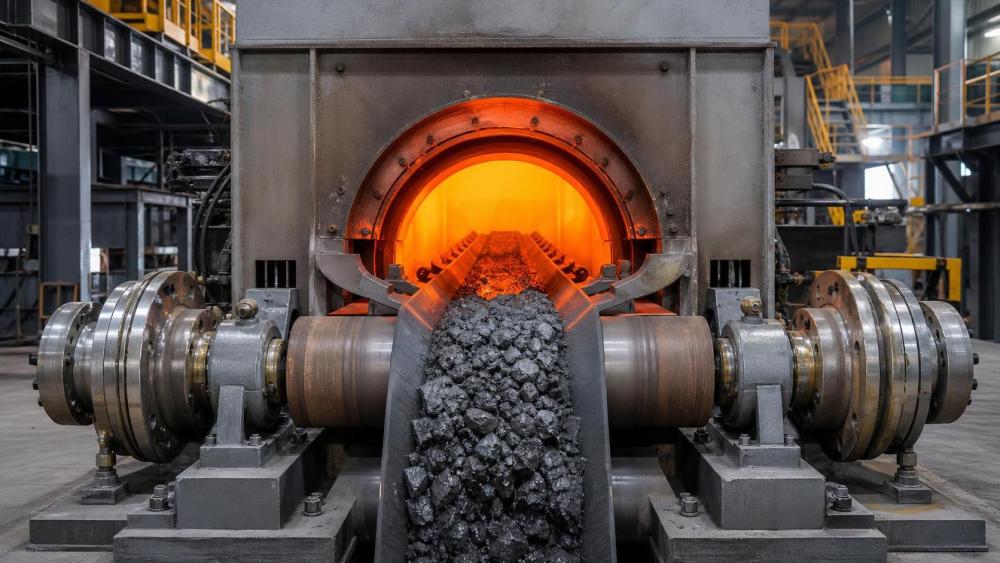
A metallurgy belt manufacturer is rarely judged on price alone when lines operate under furnace heat, abrasive dust, shock loading, and long duty cycles.
In these environments, belt failure is not a minor replacement issue. It can interrupt throughput, damage adjacent parts, and distort maintenance planning.
That is why a proper comparison starts with operating reality. Heat class, load profile, pulley design, conveyed material, and stopping frequency all shape belt performance.
A capable metallurgy belt manufacturer should show how its belt construction matches those conditions, not just publish a broad product catalog.
This is also where the wider industrial context matters. Platforms such as PCTS frame belts as part of a connected transmission and MRO system.
A belt does not work in isolation. Bearings, pulleys, couplings, lubrication practices, sealing, and condition monitoring often influence the real service life.
What a Metallurgy Belt Manufacturer Must Prove
The term covers suppliers producing industrial belts for high-temperature, high-load, and harsh-process transmission or conveying applications in metallurgical operations.
That includes sintering lines, coke handling, hot rolling support systems, cooling beds, ore transport, slag movement, and auxiliary heavy-duty equipment.
A credible metallurgy belt manufacturer should be able to explain several technical points in practical language:
- Base belt material and reinforcement structure
- Continuous and peak temperature tolerance
- Tensile strength and elongation behavior
- Resistance to abrasion, oil, scale, and chemicals
- Splice reliability and installation requirements
- Expected wear pattern under actual duty cycles
Simple data sheets are useful, but comparison becomes meaningful when those values are tied to application evidence and failure history.
Heat Resistance Is More Than a Temperature Number
Many sourcing decisions fail because temperature is treated as a single figure. In metallurgical service, the thermal picture is usually more complicated.
Surface heat, ambient heat, short spikes, hot particulate contact, and cooling intervals create very different stress patterns inside the belt.
When comparing a metallurgy belt manufacturer, ask whether ratings refer to continuous operation, intermittent peaks, or brief accidental exposure.
Also ask how heat affects adhesion between cover and carcass, splice integrity, flex life, and dimensional stability after repeated cycling.
A strong supplier will discuss compound selection, insulation layers, reinforcement behavior, and the limits of each construction style.
That conversation is often more revealing than the headline temperature claim.
Questions worth asking on thermal performance
- What was the test method for the stated heat rating?
- How does the belt behave after repeated heating and cooling?
- Which failures appear first under thermal overload?
- Are there field references in steel, foundry, or mineral processing lines?
Load Capacity Depends on More Than Tensile Strength
Heavy-load applications often push evaluators toward a single metric. Tensile strength matters, but it does not describe the whole operating margin.
Starting torque, impact loading, belt tracking, take-up travel, pulley diameter, and material lump size all affect the real load condition.
A metallurgy belt manufacturer should explain how its design manages both static load and dynamic shock.
For example, a belt that survives nominal load may still fail early if elongation is poorly controlled or splice efficiency drops under cyclic stress.
This is where engineering support becomes part of the product. Better suppliers review tension calculations, pulley arrangements, and safety factors before quoting.
Application Fit Often Separates Strong Suppliers
Two belts can carry similar ratings on paper and perform very differently in service.
The difference usually comes from application fit. Material size, belt speed, incline, contamination, and cleaning method all change the choice.
A metallurgy belt manufacturer with sector experience will usually ask for layout drawings, conveyed material details, maintenance intervals, and failure records.
That approach aligns with how PCTS examines transmission systems: component performance must be linked to the full machine environment and lifecycle cost.
In practice, this means a useful comparison should include how the belt interacts with rollers, bearings, sealing points, drive systems, and monitoring routines.
Typical metallurgy service conditions
- Hot sinter and pellet transport
- Scale and scrap handling
- Ore, coke, and aggregate movement
- Rolling line auxiliaries with stop-start stress
- Dusty zones with abrasive fines and poor cooling
A metallurgy belt manufacturer that understands these differences is easier to evaluate because recommendations become specific instead of generic.
How to Read Reliability Beyond the Catalog
Catalog claims are starting points. Reliability comparison depends on evidence.
Look for test reports, traceable quality control, compound consistency, and documented performance in comparable plants or process lines.
A dependable metallurgy belt manufacturer should also be transparent about where failure usually begins and how inspection intervals should be set.
That matters because early warning signs often appear before complete breakdown: edge cracking, cover hardening, splice fatigue, tracking drift, or abnormal noise.
The best comparisons therefore include after-sales capability, not only initial supply. Replacement lead time, technical troubleshooting, and root-cause support affect total risk.
Where plants already use vibration or condition monitoring, belt evaluation should connect with those maintenance signals rather than remain a separate procurement task.
Commercial Terms That Influence Technical Value
A metallurgy belt manufacturer may look technically qualified yet still create operating exposure through weak commercial execution.
Lead time stability, production repeatability, export packaging, documentation quality, and spare availability can change the effective value of the belt.
This is especially true for global supply chains where unplanned shutdowns cost far more than minor unit-price differences.
When comparing suppliers, it helps to place technical and commercial factors side by side:
- Batch consistency across repeat orders
- Availability of installation instructions and splice support
- Clarity on standards, compliance, and material traceability
- Response speed for urgent replacement demand
- Willingness to review failed belts and adjust design
A strong metallurgy belt manufacturer usually performs well in both areas because harsh-duty applications leave little room for disconnect between product and service.
A Practical Framework for Final Evaluation
A disciplined comparison process reduces bias and makes supplier decisions easier to defend internally.
One useful method is to score each metallurgy belt manufacturer across five dimensions: heat suitability, load behavior, application fit, reliability evidence, and support capability.
Then add real operating data where available, including shutdown frequency, belt life, installation time, and recurring failure location.
That turns selection from a price comparison into a risk comparison.
The next step is straightforward: define the true heat and load envelope, collect matching field cases, and ask each metallurgy belt manufacturer to respond against the same duty profile.
With that structure in place, the better option usually becomes visible through technical clarity, not sales language.
Want to dive deeper into these market dynamics, or need data-driven support for your next business move? Drop a line below and let the analysts at PCTS provide customized insights.
We respect your privacy. Your information is strictly confidential.
Related News
- 00
0000-00
How sealing technology reduces contamination in semiconductor manufacturing - 00
0000-00
Where to install vibration sensors on rotating machinery - 00
0000-00
NTSB Probe Finds Boeing Warned of MD-11 Engine Bearing Risk Years Earlier - 00
0000-00
How to size pneumatic grippers for packaging system integration - 00
0000-00
How to size alloy steel power transmission chains for heavy loads
Weekly Insights
Stay ahead with our curated technology reports delivered every Monday.