





O-rings Price Breakdown: Material, Size, and Volume Cost Drivers
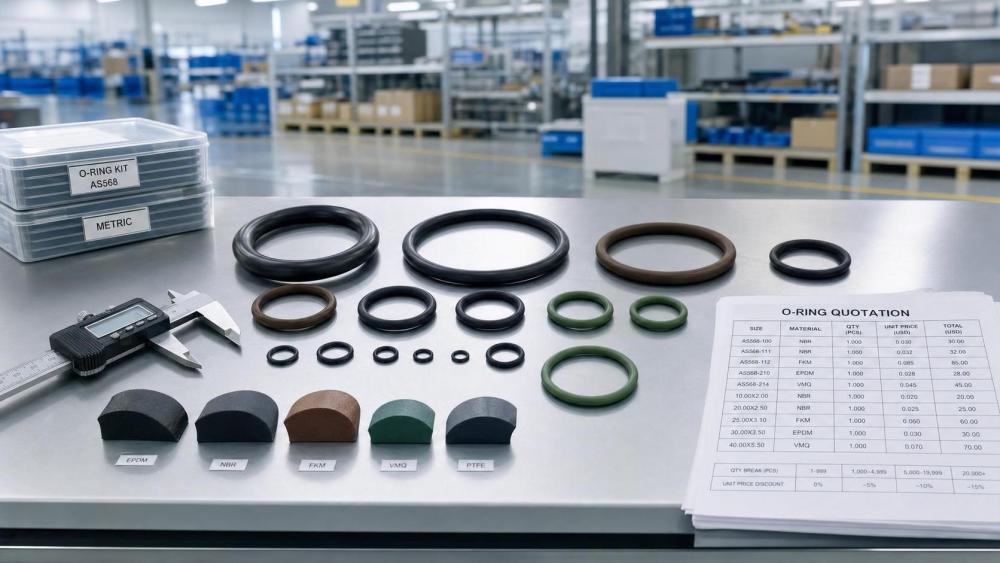
Understanding O-rings price is essential when sealing performance and budget must move together. A small unit cost difference can become a major sourcing issue at scale.
Material choice, dimensional tolerance, application risk, and order quantity all affect O-rings price. Freight, testing, tooling, and supplier capability also shape the final quote.
In practice, two O-rings with the same size may carry very different costs. The difference usually comes from compound quality, compliance needs, and production complexity.
This guide explains the main O-rings price drivers in clear terms. The goal is to help compare offers accurately and control total sourcing cost.
Why O-rings Price Varies More Than Many Buyers Expect
O-rings look simple, but their pricing structure is not. The part itself is small, yet its failure cost can be very high.
That is why O-rings price often reflects risk more than raw rubber cost. Suppliers price around performance certainty, process control, and rejection exposure.
For example, a basic static sealing application needs less validation than a high-pressure hydraulic system. The second case usually requires tighter quality control and better material traceability.
Recent market shifts make this even clearer. Energy costs, polymer feedstock volatility, and compliance requirements continue to move O-rings price across global supply chains.
The Main Cost Buckets
- Raw material and compound formulation
- Size, cross-section, and tolerance complexity
- Molding, trimming, inspection, and scrap rate
- Testing, certification, and documentation
- Order volume, packaging, and logistics
Material Is Usually the Biggest O-rings Price Driver
Material selection has the strongest impact on O-rings price. It determines not only compound cost, but also durability, media resistance, and expected service life.
Standard NBR is often the lowest-cost option for general industrial use. It performs well in many oil-based environments and supports broad market availability.
EPDM usually sits in a moderate price range. It is preferred for water, steam, and some outdoor applications, but it is not suitable for many petroleum oils.
FKM often costs more than NBR or EPDM. Buyers pay for stronger heat resistance, better chemical stability, and wider use in demanding automotive and process applications.
Silicone pricing can vary depending on purity and application. It is attractive for temperature flexibility, but mechanical strength limits must be understood early.
FFKM sits at the premium end of O-rings price. It is selected when chemical resistance, plasma exposure, or extreme temperatures justify a much higher unit cost.
Typical Material Impact on Cost
The practical point is simple. The cheapest compound is not always the lowest total cost once leakage, downtime, and replacement frequency are included.
Size, Tolerance, and Design Details Also Change O-rings Price
Many buyers focus on material first, which makes sense. Still, size and dimensional control can move O-rings price more than expected.
Large diameters use more material, so cost rises naturally. Very small O-rings can also become expensive because handling, molding, and inspection are more difficult.
Tighter tolerances often increase rejection rates. That drives up labor, process control, and scrap, especially in critical sealing applications.
Custom cross-sections, non-standard dimensions, and unusual hardness requirements usually add tooling or setup cost. Those charges can sharply affect low-volume orders.
Design Factors That Commonly Raise Cost
- Non-standard inside diameter or cross-section
- Tighter tolerance than standard industrial use requires
- Flash control or cosmetic surface requirements
- Special packaging for cleanroom or export handling
- Compound color matching or customer-specific identification
This is where quote comparison needs discipline. A lower O-rings price may hide looser tolerances or a different inspection standard.
Volume, Lead Time, and Supply Chain Terms Influence Unit Cost
Order volume is one of the fastest ways to reduce O-rings price. Higher quantities spread setup, tooling, inspection, and packaging cost across more units.
However, volume discounts are not automatic. They depend on compound availability, factory loading, curing cycle efficiency, and supplier inventory strategy.
Lead time matters as well. Expedited production often means overtime, disrupted schedules, premium freight, or smaller batch runs, all of which increase O-rings price.
From a sourcing perspective, stable forecasts are valuable. Suppliers usually offer better pricing when demand is visible and replenishment planning is realistic.
What to Confirm in Volume Quotes
- Price breaks by quantity tier
- Minimum order quantity and lot size
- Tooling amortization method
- Standard lead time versus rush lead time
- Incoterms, freight responsibility, and packaging cost
A quote that looks low at first can become expensive after freight, customs, and emergency replenishment are added. That is why landed cost matters more than piece price alone.
Application Risk, Testing, and Compliance Often Explain Premium O-rings Price
In regulated or high-risk industries, O-rings price often reflects validation work. The seal may need more than dimensional compliance.
Food processing, medical, semiconductor, chemical, and high-pressure hydraulic uses can require material certifications, batch traceability, or clean manufacturing controls.
Testing adds cost through lab work, documentation, and slower throughput. But it also lowers risk when a failed seal could stop production or trigger warranty claims.
More importantly, premium O-rings price can be justified when failure would contaminate product, damage equipment, or create safety issues.
Common Adders Beyond the Base Unit Cost
- Material certification and lot traceability
- First article inspection or PPAP-style documentation
- Cleanroom packing or contamination controls
- Accelerated aging, media compatibility, or pressure testing
- Regulatory declarations for export and end-use markets
How to Compare O-rings Price Quotes Without Missing Hidden Cost
A useful comparison starts with normalization. Every supplier should quote the same size, compound grade, hardness, tolerance, packaging, and test scope.
Then review the commercial details. Payment terms, lead time, tooling, annual rebate structure, and warranty support can materially change the real O-rings price.
It also helps to split direct cost from risk cost. A lower quote may bring higher field failure exposure, slower corrective action, or unstable supply continuity.
A Practical Quote Review Checklist
- Confirm the exact material family and compound specification.
- Check whether size tolerances match the application need.
- Separate tooling, sampling, and recurring unit price.
- Validate certification, testing, and traceability coverage.
- Estimate landed cost, not only ex-works price.
- Review supplier response time and quality history.
This process makes O-rings price analysis more reliable. It also helps prevent false savings that later appear as downtime or emergency buying.
Smarter Buying Decisions Start With Total Cost Thinking
The best O-rings price is not always the lowest number on a spreadsheet. It is the price that supports sealing reliability, supply continuity, and predictable lifecycle cost.
In day-to-day sourcing, the strongest results usually come from matching material performance to real operating conditions, then negotiating around volume and planning stability.
That approach creates better leverage in supplier discussions. It also reduces the chance of over-specifying expensive compounds or under-specifying seals that fail early.
When reviewing the next RFQ, break O-rings price into material, size, validation, and volume factors. That single step usually leads to cleaner quotes and better buying decisions.
Want to dive deeper into these market dynamics, or need data-driven support for your next business move? Drop a line below and let the analysts at PCTS provide customized insights.
We respect your privacy. Your information is strictly confidential.
Related News
- 00
0000-00
How sealing technology reduces contamination in semiconductor manufacturing - 00
0000-00
Where to install vibration sensors on rotating machinery - 00
0000-00
NTSB Probe Finds Boeing Warned of MD-11 Engine Bearing Risk Years Earlier - 00
0000-00
How to size pneumatic grippers for packaging system integration - 00
0000-00
How to size alloy steel power transmission chains for heavy loads
Weekly Insights
Stay ahead with our curated technology reports delivered every Monday.