





How Bearing Tribology Research Improves Service Life Predictions
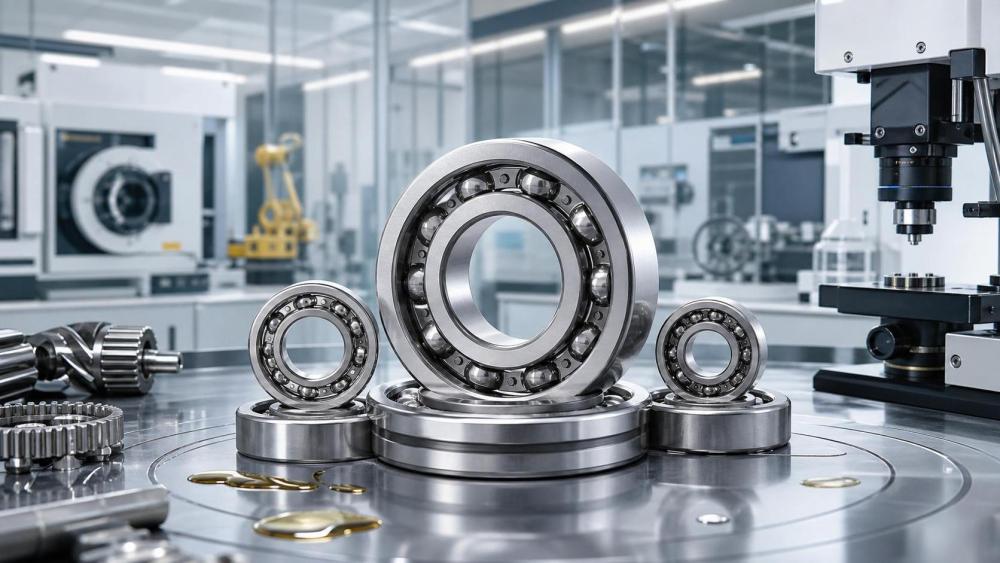
For service life estimation, load rating still matters. Yet it rarely explains why similar bearings fail at very different times.
That gap is where bearing tribology research becomes valuable. It connects theory with friction, lubrication, wear, contamination, and surface damage.
In practical terms, bearing tribology research improves prediction quality by reflecting operating reality, not only catalog assumptions.
This matters in wind turbines, machine tools, pumps, conveyors, gearboxes, and heavy industrial drives.
It also matters during supplier evaluation. A bearing that meets nominal load targets may still underperform under poor lubrication or contamination.
From a technical assessment perspective, better life prediction supports sourcing, maintenance planning, warranty analysis, and risk reduction.
Why Basic Life Formulas Are No Longer Enough
Conventional bearing life models usually begin with load, speed, and dynamic rating. They are useful, but they simplify the contact environment.
Real bearings operate in mixed lubrication, transient temperature cycles, variable loads, misalignment, and contaminated media.
Under those conditions, failure is not controlled by load alone. Surface distress often starts earlier than classical fatigue assumptions suggest.
Bearing tribology research studies these deviations. It looks at the interface where rolling, sliding, film thickness, and asperity contact interact.
That is why tribology-based models are now used to refine ISO-based life calculations and condition-based maintenance strategies.
Key limits of simplified prediction methods
- They assume stable lubrication quality over time.
- They often understate contamination effects.
- They may ignore surface finish and coating behavior.
- They treat variable duty cycles too broadly.
- They do not fully capture wear-driven failure paths.
What Bearing Tribology Research Actually Measures
Bearing tribology research is not just academic friction testing. It combines laboratory data, material science, lubricant analysis, and field evidence.
The goal is to understand how contact surfaces behave over time under realistic stress combinations.
More importantly, it identifies which mechanisms are most likely to shorten service life in a given application.
Common variables studied
- Lubricant film thickness and starvation risk
- Boundary versus elastohydrodynamic lubrication behavior
- Surface roughness and raceway finish quality
- Micropitting, smearing, scuffing, and adhesive wear
- Particle contamination size and hardness
- Temperature influence on viscosity retention
- Sliding ratio in high-speed or oscillating conditions
These variables explain why field life often differs from theoretical L10 life. They also support more credible supplier comparison.
How Tribology Improves Service Life Predictions
The main benefit of bearing tribology research is sharper prediction under specific operating conditions.
Instead of asking only how much load a bearing carries, it asks how the contact survives that load over time.
That shift changes the prediction model in several useful ways.
1. It links lubrication quality to fatigue risk
Film thickness strongly influences subsurface stress and surface interaction. Thin films raise asperity contact and accelerate surface-initiated fatigue.
Bearing tribology research quantifies this effect, making life prediction more realistic for marginal lubrication systems.
2. It exposes contamination sensitivity
Solid particles create denting, stress concentration, and early crack initiation. Water ingress can also disrupt lubricant film formation.
Tribology-based analysis converts those contamination conditions into measurable life reduction factors.
3. It reflects surface engineering effects
Superfinished raceways, coatings, and improved heat treatment can reduce friction and delay wear.
Without bearing tribology research, those benefits may be overlooked in selection models.
4. It supports variable duty cycle analysis
Many machines do not run at a single speed or load. Start-stop operation, shock loads, and low-speed idling change lubrication behavior.
Tribology data helps translate these shifts into service life predictions with better operational relevance.
Where the Research Has the Biggest Impact
The impact is strongest where loads are high, lubrication margins are tight, or downtime costs are severe.
In these settings, bearing tribology research helps separate acceptable risk from hidden risk.
This is also why industrial portals like PCTS increasingly connect bearing analysis with seals, lubricants, condition monitoring, and MRO planning.
What to Check During Technical Evaluation
When reviewing bearing proposals or supplier claims, bearing tribology research should appear in the evidence base, not only in marketing language.
A practical evaluation framework usually includes the following checkpoints.
- Ask which failure modes were modeled: fatigue, wear, smearing, micropitting, or contamination damage.
- Review lubricant assumptions, including viscosity grade, relubrication interval, and operating temperature range.
- Check whether surface finish, coatings, or material upgrades were included in life estimates.
- Confirm if variable loads and start-stop cycles were simulated or averaged too broadly.
- Compare test conditions with real duty conditions, especially speed, sealing quality, and contamination exposure.
- Look for links to standards, field data, or condition monitoring trends.
These checks help distinguish a robust engineering claim from a life estimate based only on ideal assumptions.
How Tribology Research Supports Better Decisions
The strongest value of bearing tribology research is decision quality. It improves the confidence behind replacement intervals and supplier selection.
It also supports more accurate total cost of ownership analysis. A lower unit price may hide higher lubrication, sealing, or downtime costs.
From recent market changes, this has become more important. Machines are running faster, cleaner, hotter, and with tighter reliability targets.
The clearer signal is that service life prediction now depends on component interaction, not isolated bearing rating alone.
That means bearings, lubricants, seals, contamination control, and monitoring data should be reviewed as one system.
A Practical Closing View
Bearing tribology research improves service life predictions because it explains how bearings actually fail in service.
It turns friction, lubrication, contamination, and surface damage into decision-ready evidence.
For technical review work, that leads to better risk judgment, stronger supplier comparison, and more credible maintenance planning.
The practical next step is simple: require life predictions to include tribology assumptions, not just catalog load calculations.
That one change often reveals whether a bearing solution is engineered for real operation or only for paper performance.
Related News
- 00
0000-00
How FFKM O-rings reduce seal failure in corrosive media - 00
0000-00
What global equipment manufacturing in the USA means for supply chain risk - 00
0000-00
How FFKM outgassing performance affects vacuum seal selection - 00
0000-00
When should heat resistant metallurgy belts be replaced? - 00
0000-00
When does a fluid power maintenance service reduce unplanned downtime?
Weekly Insights
Stay ahead with our curated technology reports delivered every Monday.