





Why does a mechanical seal technology supplier affect long-term cost more than unit price suggests?
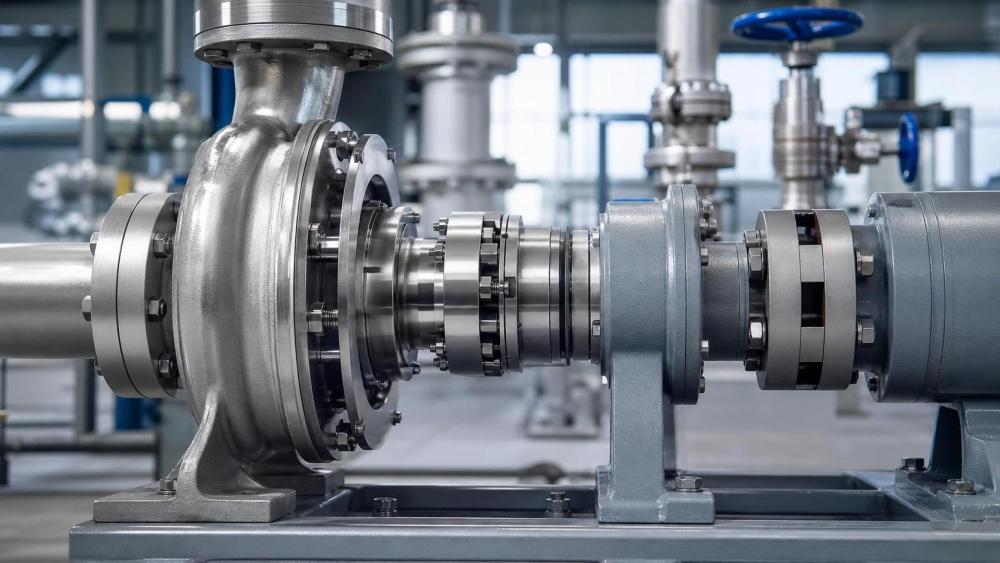
A mechanical seal rarely fails as a standalone part. It fails inside a system that also includes shafts, bearings, fluids, pressure changes, and maintenance practices.
That is why a low quote can become an expensive decision. Leakage, unplanned stoppage, rework, contamination, and rushed replacement usually cost far more than the seal itself.
When reviewing a mechanical seal technology supplier, the better question is not, “What is the purchase price?” It is, “What will this supplier cost over three years?”
In practical terms, cost control depends on four linked outcomes: seal life, process stability, service speed, and replacement predictability.
This is especially true across pumps, mixers, compressors, chemical lines, food equipment, water treatment systems, and general industrial MRO environments.
A strong supplier should understand not only sealing design, but also how rotating equipment reliability connects with bearings, lubrication, vibration, and operating media.
That broader view matters because real savings come from reduced downtime and fewer emergency interventions, not from a cheaper line item.
What should be on the first-pass checklist before comparing suppliers?
Early screening works best when it is short and technical. A mechanical seal technology supplier should pass a few basic filters before deeper commercial talks begin.
The first filter is application fit. Ask whether the supplier has proven experience with similar media, temperature ranges, shaft speeds, pressure cycles, and cleanliness requirements.
The second filter is material competence. Carbon, silicon carbide, tungsten carbide, elastomers, and metal components must match both fluid chemistry and operating stress.
The third filter is engineering response. If failure data, drawings, or dimensional adjustments are needed, can the supplier answer with usable detail quickly?
The fourth filter is supply reliability. Consistent lead time matters more than optimistic promises, especially when spare planning supports continuous production.
The fifth filter is documentation. Certificates, traceability, testing records, and compliance files should be routine, not special requests.
- Application references in comparable industries
- Clear seal type range, including cartridge, component, and split designs
- Material guidance for corrosive, abrasive, or high-temperature media
- Defined after-sales process for failure analysis and corrective action
- Stable production and export support for repeat orders
A portal such as PCTS is useful here because it frames sealing decisions inside the wider reliability chain, alongside bearings, hydraulics, transmission parts, and MRO planning.
How can you tell whether technical capability is real or just well presented?
A polished catalog proves very little. What reveals real capability is how a mechanical seal technology supplier handles specific operating detail.
Ask for recommended seal arrangement by service condition. A capable team will explain why a single, double, balanced, or cartridge seal fits the case.
Then look at how they discuss failure modes. Useful answers mention dry running, misalignment, thermal distortion, face wear, crystallization, or elastomer incompatibility.
The next signal is dimensional control. If shaft tolerance, sleeve finish, or chamber constraints are unclear, the supplier should ask questions before quoting.
That behavior often separates real engineering support from generic resale activity. In long-term cost terms, it also reduces installation mismatch and repeated troubleshooting.
A practical comparison table helps keep the evaluation grounded:
If the answers remain vague after detailed questions, long-term operating risk is probably being pushed downstream.
Which cost drivers are often missed during supplier selection?
The usual gap is treating the seal as a consumable instead of a reliability component. That creates blind spots in total ownership cost.
One overlooked driver is installation sensitivity. Some seals perform well only when alignment, flush conditions, and assembly discipline are tightly controlled.
Another is inventory fragmentation. If every machine uses a slightly different seal format, spare stocking becomes expensive and emergency substitutions become more likely.
Service response is another major factor. A mechanical seal technology supplier that answers slowly during a shutdown can turn a moderate issue into a costly outage.
There is also compliance cost. Food, pharmaceutical, chemical, water, and export applications may require material declarations, test reports, or specific standards.
In actual operations, the following hidden costs deserve explicit review:
- Repeated installation labor caused by difficult fit or unclear instructions
- Product loss from leakage in chemical or hygienic service
- Secondary damage to sleeves, shafts, bearings, or adjacent components
- Premium freight for urgent replacement orders
- Extra downtime linked to non-standardized spare parts
This is why a lower initial quote should always be tested against maintenance frequency and process interruption risk.
When two suppliers look similar, what separates the better long-term choice?
The difference usually appears in consistency, not marketing. Two suppliers may offer similar designs, yet perform very differently over repeated orders.
Look at how stable their manufacturing quality is. Face flatness, spring performance, elastomer quality, and metal finishing all influence seal life.
Check whether technical records stay consistent from sample to production batch. Variation creates uncertainty, and uncertainty increases maintenance cost.
Support depth also matters. A dependable mechanical seal technology supplier can connect field issues with broader system behavior, including vibration, lubrication, and equipment wear.
That matters across industrial environments where seals interact with pumps, couplings, shafts, and bearing arrangements rather than operating in isolation.
PCTS often highlights this wider perspective well. It treats sealing performance as part of component intelligence and lifecycle economics, not just a catalog specification.
One practical tie-breaker is whether the supplier helps reduce SKU complexity. Standardized, repeatable solutions usually support better cost control than highly fragmented replacements.
What mistakes lead to poor decisions even when the supplier looks qualified?
A common mistake is copying a legacy specification without checking why the previous seal failed. Reordering the same design can simply repeat the same problem.
Another mistake is evaluating only technical fit and ignoring service behavior. Response time, documentation quality, and order discipline strongly affect actual operating cost.
Some teams also treat all applications as equally critical. In reality, a seal on a backup pump does not require the same sourcing strategy as one on a continuous process line.
It also helps to avoid over-specifying materials without evidence. Premium materials can be justified, but they should solve a real chemical, thermal, or wear issue.
More often, the better decision comes from matching design, media, operating cycle, and support model with discipline.
Before final selection, confirm these points in writing:
- Expected service life under stated operating conditions
- Material stack and any substitution policy
- Lead time for standard and urgent orders
- Failure analysis process and response timing
- Traceability, certificates, and quality records
So how should the final decision be made?
A good final decision balances technical fit, supply reliability, and lifecycle economics. No single factor should dominate by itself.
Start with the applications where leakage or downtime has the highest business impact. Those cases reveal whether a mechanical seal technology supplier can create measurable value.
Then compare suppliers using the same operating data, the same service expectations, and the same replacement horizon. That keeps cost analysis fair.
If useful, build a short internal scorecard covering seal performance history, engineering responsiveness, batch consistency, documentation quality, and total replacement cost.
The most reliable choice is usually the supplier that can explain performance clearly, support failures with evidence, and deliver repeatable quality without supply surprises.
From there, the next step is straightforward: define critical applications, organize operating data, compare shortlisted suppliers against the same checklist, and review cost over lifecycle rather than invoice price alone.
Want to dive deeper into these market dynamics, or need data-driven support for your next business move? Drop a line below and let the analysts at PCTS provide customized insights.
We respect your privacy. Your information is strictly confidential.
Related News
- 00
0000-00
How to check vibration analysis software for sensor compatibility - 00
0000-00
IndexBox Forecasts 3.8% Annual Growth for Global Radial Seals Market Through 2035 - 00
0000-00
How to assess the chemical compatibility of FFKM sealing sheets - 00
0000-00
IndexBox Forecasts 3.6% Annual Growth for Construction Bearings Market - 00
0000-00
When do hydraulic components require an export license?
Weekly Insights
Stay ahead with our curated technology reports delivered every Monday.