





Metallurgy Equipment Components India: How to Compare Supplier Quality
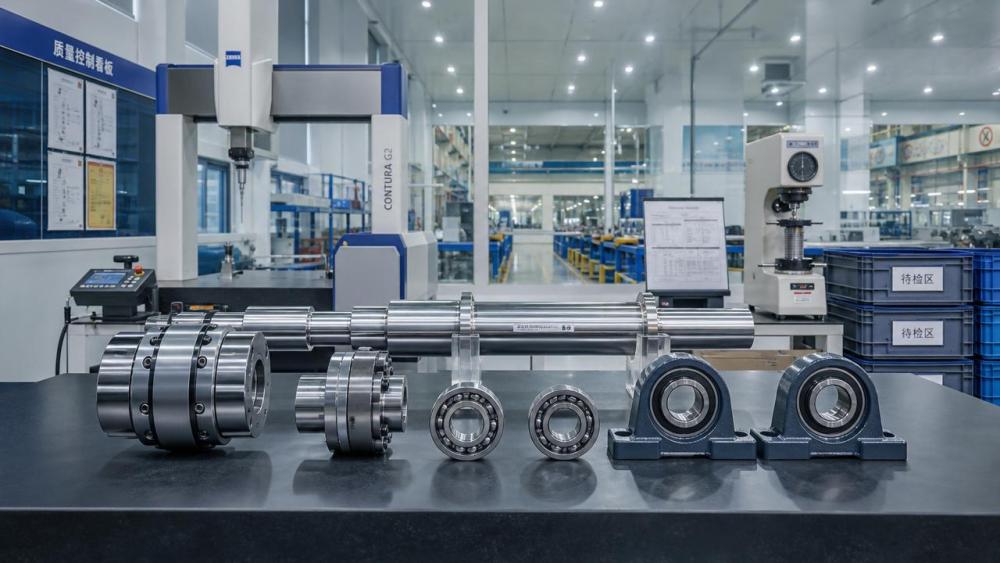
When sourcing metallurgy equipment components India, price should never be the only filter.
A cheaper part can create higher downtime, faster wear, and repeated replacement costs.
That is why supplier comparison needs a practical and repeatable framework.
In real buying decisions, quality means stable performance under heat, load, dust, shock, and long operating cycles.
For metallurgy equipment components India, the best suppliers prove consistency across production, testing, delivery, and service.
This guide explains how to compare suppliers in a way that supports confident and lower-risk decisions.
Start with the operating reality
Before comparing suppliers, define where the component will work and what can go wrong.
Metallurgy lines often involve abrasive dust, scale, thermal cycling, vibration, and continuous loading.
A supplier that looks strong on paper may still fail in furnace charging, rolling, conveying, or cooling sections.
So the first step is not asking for price.
It is asking for application fit.
- What temperature range will the part face?
- What loads, speeds, or impact conditions are expected?
- Is corrosion, scale, or chemical exposure a factor?
- How costly is downtime if the component fails?
These answers make metallurgy equipment components India comparisons far more accurate.
Check material consistency before machining claims
Many sourcing teams focus on dimensions first.
In metallurgy equipment components India, material quality usually matters earlier and more deeply.
A part can be machined well and still fail if the raw material varies from batch to batch.
Ask suppliers how they control source material, heat treatment, hardness, and traceability.
This is especially important for shafts, couplings, rollers, housings, seals, bushings, and transmission parts.
- Request mill certificates and batch traceability records.
- Confirm hardness ranges and heat treatment methods.
- Ask whether incoming materials are tested or only documented.
- Review rejection rates related to material defects.
Suppliers that answer clearly tend to be easier to trust later.
Measure machining precision in practical terms
Precision should be linked to function, not just to a generic tolerance promise.
For metallurgy equipment components India, critical dimensions often affect alignment, sealing, torque transfer, and bearing life.
Ask which tolerances are controlled in-process and which are checked only at final inspection.
A capable supplier can explain concentricity, runout, surface finish, and fit in application language.
That is a stronger signal than a brochure full of equipment photos.
- Check CMM, roughness testing, and gauge calibration records.
- Review first article inspection samples.
- Ask for Cp or Cpk data if volumes are high.
- Confirm whether subcontracted machining is involved.
If subcontracting exists, evaluate control over that network as carefully as the factory itself.
Look at durability evidence, not only certificates
Certifications matter, but they do not replace field performance.
For metallurgy equipment components India, real durability comes from design, process stability, and material discipline.
Ask for operating case examples in steel plants, foundries, casting units, or heavy material handling lines.
Useful evidence includes wear life, replacement intervals, failure modes, and maintenance impact.
A supplier that understands wear patterns often becomes a better long-term partner.
Evaluate certification and compliance with context
ISO certificates are useful, but they are only a starting point.
For metallurgy equipment components India, ask how documented systems translate into daily production control.
The stronger signal is not the certificate on the wall.
It is how quickly the supplier can retrieve records, inspection data, and nonconformance actions.
This becomes critical when buyers need audits, exports, or strict approval workflows.
- Verify ISO 9001 and any relevant sector standards.
- Check calibration, document retention, and revision control.
- Ask how deviations are approved and recorded.
- Confirm export documentation capability if cross-border supply is planned.
Good compliance systems reduce surprises during qualification and repeat orders.
Delivery reliability is part of supplier quality
Many teams separate quality from delivery.
In practice, unreliable delivery is a quality risk.
For metallurgy equipment components India, late shipments can stop maintenance windows and disrupt production schedules.
Ask about lead times, planning buffers, capacity constraints, and emergency response capability.
Also ask what percentage of orders ship on time and in full.
- Review average and peak lead times.
- Check raw material stock strategy.
- Confirm packaging quality for heavy industrial transit.
- Ask how urgent replacement orders are prioritized.
A low-cost supplier with unstable lead times often becomes expensive very quickly.
Compare technical support and after-sales response
This is where many supplier comparisons become more honest.
A supplier may offer good samples but weak support after installation.
For metallurgy equipment components India, after-sales quality affects uptime, root cause analysis, and confidence in scaling orders.
Ask who handles technical queries and how fast they respond.
If a failure occurs, a capable supplier should investigate, document, and propose corrective action.
- Availability of engineering support
- Speed of complaint handling
- Willingness to review operating conditions
- Clarity of warranty terms
Support quality is often the difference between a vendor and a real operating partner.
Use a weighted comparison scorecard
A structured scorecard helps remove bias from supplier selection.
It also keeps metallurgy equipment components India decisions aligned with operational priorities.
Not every criterion should carry the same weight.
For critical components, durability and consistency may matter more than unit price.
You can adjust the weights based on component criticality and maintenance risk.
Watch for common warning signs
Some risks appear early if you know where to look.
In metallurgy equipment components India sourcing, these warning signs should not be ignored.
- Inconsistent answers from sales and technical teams
- Missing batch records or vague traceability
- No clear process for complaints or corrective action
- Unrealistically low pricing without technical explanation
- Frequent changes in lead time commitments
A good comparison process is not only about identifying strengths.
It is also about spotting hidden future costs.
Make the final decision with total value in mind
The best metallurgy equipment components India supplier is rarely the one with the lowest quote.
The better choice is the supplier that combines stable quality, proven durability, reliable delivery, and useful support.
This approach lowers procurement risk and improves lifecycle value.
In practical terms, compare suppliers against real operating demands, not just catalog specifications.
Ask for evidence, test responsiveness, and score performance across the full sourcing process.
When you use that method, metallurgy equipment components India decisions become clearer, faster, and more defensible.
If needed, start with a pilot order, review results closely, and build the partnership from measurable performance.
Related News
- 00
0000-00
How precision transmission systems improve robot positioning accuracy - 00
0000-00
When welded hydraulic cylinder systems suit high-cycle equipment - 00
0000-00
Building a Conveyor Belt Predictive Maintenance Plan for Dusty Facilities - 00
0000-00
Which Chain Wear Indicators Enable Reliable Predictive Maintenance? - 00
0000-00
Predictive Maintenance for Conveyor Belts: Preventing Failures in High-Throughput Lines
Weekly Insights
Stay ahead with our curated technology reports delivered every Monday.