





Machinery reliability engineering for manufacturing has moved from a maintenance topic to a business-critical discipline. In plants where bearings, seals, hydraulic units, chains, belts, and couplings work under continuous load, small performance losses often grow into costly downtime. A useful reliability view connects asset condition, component behavior, maintenance timing, and lifecycle cost so that performance problems are identified before production is disrupted.
Why reliability metrics now matter more on the factory floor
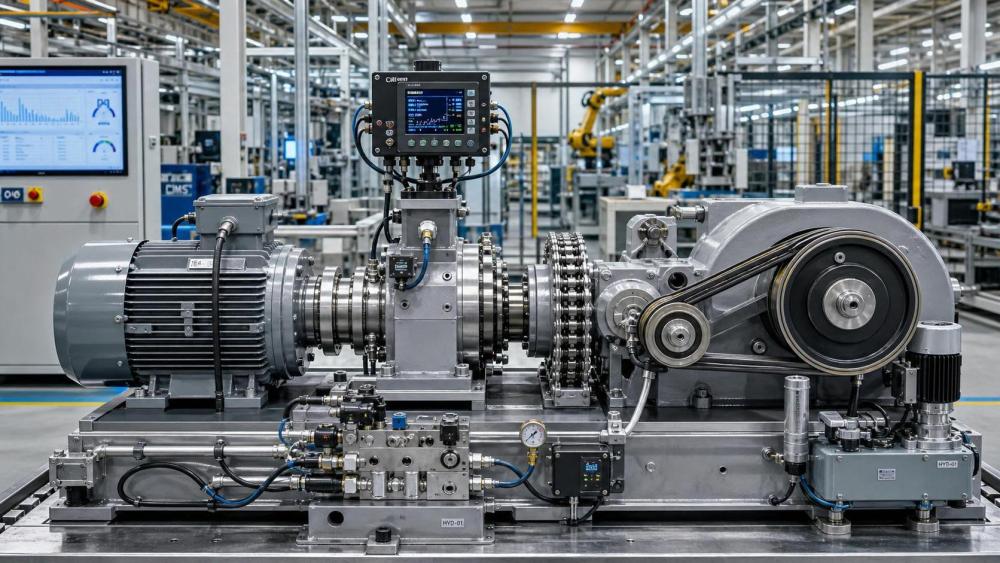
Manufacturing systems are more connected, faster, and less tolerant of interruption than before. A single failing component can affect throughput, quality, energy use, and delivery commitments within hours.
That is why machinery reliability engineering for manufacturing focuses on measurable signals rather than intuition alone. The goal is not only to repair equipment quickly, but to predict weakness, prevent repeat failure, and improve operating stability.
This matters across mixed industrial environments. Rotating equipment, fluid power systems, conveying lines, packaging assets, process machinery, and automated cells all depend on component reliability at a very practical level.
From an industry intelligence perspective, this is also where PCTS becomes relevant. The platform connects component knowledge with application performance, making it easier to evaluate how tribology, sealing, fluid power, and transmission design affect uptime.
What machinery reliability engineering for manufacturing really means
At its core, machinery reliability engineering for manufacturing is the structured effort to keep equipment performing its intended function over time, under real operating conditions, with acceptable risk and cost.
It combines failure analysis, condition monitoring, maintenance planning, component selection, and operating discipline. In practice, reliability is shaped by design quality, installation accuracy, lubrication control, contamination exposure, and maintenance response.
This is especially important for assets built around precision mechanical interfaces. A bearing with poor lubrication film, a hydraulic pump with internal leakage, or a seal exposed to incompatible media may still run for a while, yet reliability is already deteriorating.
The most effective programs treat reliability as a system issue. They do not isolate vibration, leakage, wear, or temperature rise as separate events. They trace how each symptom relates to root cause and business impact.
The key metrics that help prevent downtime
Metrics are useful only when they support decisions. The following indicators are widely used because they reveal whether machinery is becoming less stable, more failure-prone, or more expensive to keep online.
Core reliability indicators
These metrics should not be read in isolation. A rising MTBF may look positive, yet if MTTR is increasing because repair complexity is growing, the real risk profile may still be worsening.
Condition-based indicators
In many plants, early warning comes from condition data rather than failure history. Vibration amplitude, temperature trend, lubricant cleanliness, pressure stability, acoustic signals, and leakage rate often reveal a problem long before shutdown occurs.
For example, spindle bearings may show subtle vibration changes tied to raceway damage. Hydraulic pumps may reveal internal wear through flow loss and heat rise. Pneumatic actuators may lose speed consistency before obvious failure appears.
This is one reason smart sensing and edge-based fault diagnosis receive growing attention. Reliability decisions improve when component-level signals are translated into maintenance action windows.
Where downtime risk usually begins
Most reliability losses do not begin with dramatic breakage. They start with friction, contamination, misalignment, fatigue, leakage, poor lubrication, thermal overload, or deferred replacement cycles.
In bearing systems, the early issue may be incorrect preload, debris ingress, or lubricant breakdown. In transmission systems, chain elongation, belt slip, coupling misalignment, and sprocket wear can shift load distribution and accelerate failure.
Hydraulic and pneumatic assets follow similar patterns. Seal degradation, pressure fluctuation, fluid contamination, and actuator wear often begin as efficiency losses, then become reliability events.
A practical machinery reliability engineering for manufacturing program maps these failure drivers to measurable thresholds. Without thresholds, teams may detect abnormality but still miss the right intervention timing.
How component choices influence reliability outcomes
Reliability metrics are shaped by component quality and application fit. The installed part may meet dimensional requirements while still failing the operating environment.
That is why evaluation needs to go beyond catalog comparison. Bearing material, sealing compatibility, belt construction, chain hardness, hydraulic surface finish, and O-ring resistance all affect lifecycle behavior.
PCTS is useful here because it frames components within operating context. Topics such as bearing lubrication, chain wear, hydrodynamic lubrication, high-temperature seals, and corrosive media resistance directly support reliability assessment.
The question is rarely whether a component works on day one. The better question is whether it maintains stable performance across load variation, contamination risk, maintenance intervals, and total cost expectations.
A practical way to evaluate machinery reliability engineering for manufacturing
A strong evaluation model usually combines asset criticality, failure mode visibility, maintenance capability, and component replacement economics. This avoids over-monitoring low-risk assets while under-protecting production bottlenecks.
- Rank assets by downtime impact, not only by replacement price.
- Match each critical failure mode with one leading indicator.
- Check whether spare parts strategy supports actual MTTR targets.
- Review lubrication, sealing, alignment, and contamination controls together.
- Compare repair history with condition data to find recurring causes.
This method keeps machinery reliability engineering for manufacturing tied to decisions that matter: which assets need monitoring, which components need upgrading, and which maintenance tasks should be redesigned.
What to watch next
The next stage of reliability work is becoming more integrated. Component data, operating history, and service records are being connected to support earlier diagnosis and better lifecycle forecasting.
That does not remove the need for engineering judgment. It makes judgment more evidence-based. The most valuable improvement often comes from linking simple field signals with known component behavior and replacement logic.
For any review of machinery reliability engineering for manufacturing, the useful next step is to build a short metric set, define alert thresholds, and test those metrics on the assets where downtime hurts most. From there, component-level analysis can be expanded with clearer confidence.
Related News
- 00
0000-00
How to select PU timing belts for automation with high positioning accuracy - 00
0000-00
How to size power transmission systems for steel mill loads - 00
0000-00
How to select heavy duty metallurgy belts for high-temperature loads - 00
0000-00
When does a pneumatic system integrator reduce project risk? - 00
0000-00
When edge computing diagnostics reduce unplanned downtime
Weekly Insights
Stay ahead with our curated technology reports delivered every Monday.