





A longer-lasting seal can lower the total cost of ownership by reducing replacement work, leakage and unplanned downtime. But longer life is not automatically the lowest-cost choice: the financial benefit depends on how difficult the seal is to replace, whether failures disrupt production and whether the proposed material is compatible with the application.
For a useful comparison of total cost of ownership for seals, look beyond the price per piece. Compare the expected cost of keeping each option in service over the same operating period, including planned maintenance and the consequences of failure. The cheapest seal may be perfectly adequate in an accessible, low-risk application. In a critical pump or hydraulic cylinder, a higher-priced option may pay for itself by avoiding even one disruptive intervention.
Where seal service life changes the cost
The most visible effect of a shorter service life is the need to purchase replacements more often. That is only the beginning. Each replacement can involve maintenance labor, isolation and restart procedures, cleaning, inspection and disposal. Depending on the equipment, it may also require replacement fluid, gaskets, fasteners or other parts disturbed during disassembly.
Downtime can exceed all of those expenses. A failed seal on a standby unit may be repaired without interrupting output; the same failure on a bottleneck machine can halt an entire production line. The relevant cost is not necessarily the full value of everything the line could have produced during the outage. It is the incremental loss caused by the interruption, taking into account recoverable production, available backup capacity and any extra shifts or expediting needed to catch up.
Leaks and contamination create a separate cost path. A hydraulic seal failure may lead to fluid loss, cleanup and damage to surrounding components. A process seal failure may contaminate a batch or require additional inspection. Some consequences are difficult to price in advance, especially where safety or environmental exposure is involved. They still belong in the decision, even if the comparison records them as risks rather than assigning an unsupported monetary figure.
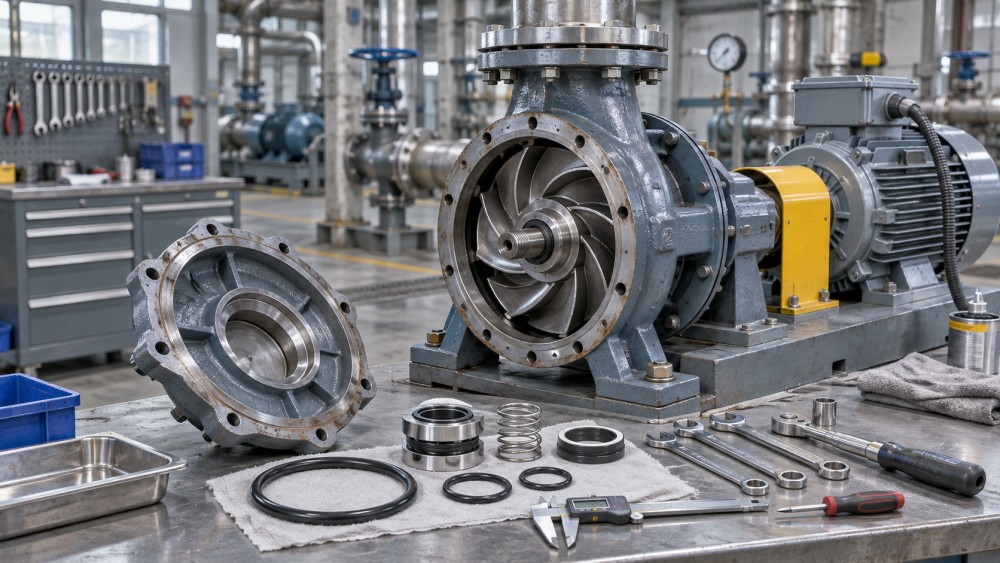
Longer seal life also affects inventory. Fewer expected replacements can reduce consumption, but a critical seal may still need to be held on site if lead times are long. Equally, buying a large quantity to secure a lower unit price can tie up cash and leave elastomer stock exposed to poor storage or age-related deterioration. Purchasing frequency and spare-parts policy should be considered separately.
Build a comparison around the same operating period
Ask suppliers for a quotation that separates the seal price from installation requirements, associated parts and delivery terms. Then compare the alternatives over a period that reflects how the equipment is managed, such as the interval between major overhauls or a multi-year budgeting cycle.
A practical calculation is:
Estimated lifecycle cost = initial purchase and installation + planned replacements + expected failure-related costs + leakage and cleanup + inventory and disposal costs.
Include only costs that differ between the options, or use the same treatment for shared costs. Do not count the same downtime twice: for example, labor already included in an outage cost should not also be added as a separate failure expense. Distinguish the cost of replacing a seal during an existing shutdown from the cost of stopping equipment solely to replace it.
For an illustrative comparison, suppose Seal A costs $50 and is replaced once a year during a planned shutdown. Seal B costs $150 and can remain in service for two years under the same conditions. If each planned replacement costs $200 in labor and associated materials, the two-year cost is $500 for A and $350 for B, including installation and scheduled replacements. This example assumes neither option causes an unplanned failure and that both replacements fit the shutdown schedule. Change those assumptions and the result may change.
The timing of purchases matters too. For longer evaluation periods or expensive interventions, finance teams may prefer to discount future costs to their present value. For a routine comparison involving modest amounts over a short period, a consistent, undiscounted estimate may be sufficient to identify the better option.
Use service-life estimates that match the duty
A supplier’s stated service life is useful only when its basis resembles the intended application. A seal may perform well in one fluid or temperature range and fail early in another. Before comparing expected replacement intervals, give each supplier the same operating information and ask what assumptions support its recommendation.
- Media: Identify the fluid or gas, additives, cleaning chemicals and any contaminants that contact the seal. Compatibility with the base fluid alone may not cover the complete chemical exposure.
- Temperature and pressure: Include normal operating ranges, peaks, pressure cycling and shutdown conditions. A short temperature excursion or repeated pressure spike can matter more than an average value.
- Movement: Specify whether the seal is static, reciprocating or rotary, along with speed, stroke frequency and expected idle periods. Different movements create different wear and friction conditions.
- Hardware and environment: Record shaft or rod condition, surface finish, alignment, clearances, contamination and exposure to external weather or washdown.
- Installation: Identify access constraints, tooling, lubrication and assembly practices. A seal damaged during fitting may fail long before material life becomes the limiting factor.
These details help distinguish a material problem from a system problem. Replacing a worn hydraulic rod seal with a more expensive compound will not necessarily solve repeated failures caused by a damaged rod or abrasive contamination. Similarly, a mechanical seal on a pump may suffer from dry running, misalignment or unsuitable operating conditions; a new seal alone does not remove those causes.
Where failure history is available, separate normal wear from installation damage, process upsets and equipment defects. An average interval built from mixed causes can make a seal appear unreliable when the recurring problem lies elsewhere. Conversely, a long average can conceal occasional failures with serious consequences.
Why a longer replacement interval may not save a shutdown
Maintenance schedules can limit the value of extra seal life. If equipment is opened for a major overhaul every year and the seal is routinely replaced at negligible additional labor cost, a seal expected to last two years may not eliminate an intervention. Its higher price could still be justified by lower leakage or failure risk, but that benefit needs its own assessment.
The opposite is true when a seal change requires a dedicated shutdown, specialist technicians or extensive disassembly. In that situation, extending the interval can avoid a substantial amount of work. The saving is strongest when the longer interval aligns with an existing planned outage and the seal can be inspected or replaced without creating a new maintenance event.
Also consider the consequence of leaving a seal in service. A longer theoretical life is not a reason to defer replacement when inspection shows damage, leakage exceeds an agreed limit or surrounding components have changed condition. Service life should support the maintenance strategy, not override evidence from the machine.
Compare materials by application, not by reputation
Sealing materials differ in chemical resistance, temperature capability, flexibility, friction and wear behavior. An elastomer O-ring suitable for a static joint may not be the best choice for a rapidly moving actuator. A higher-performance material may tolerate an aggressive fluid or temperature that rules out a lower-cost alternative, but it may offer little economic benefit where the standard material already meets the duty and planned replacement interval.
Material is only one part of the specification. Seal geometry, dimensions, hardness, mating surfaces and gland design also influence performance. Substituting a different compound without considering these factors can change sealing force, friction or fit. For mechanical seals, the faces, secondary seals and supporting arrangement must be considered together; comparing only the elastomer component can miss the principal source of failure.
When qualifying an alternative, distinguish an exact replacement from a proposed redesign. An exact replacement may be assessed against the established specification and performance history. A design or material change may require engineering review and a controlled trial, with agreed acceptance criteria for leakage, operating behavior and inspection results.
What to request before placing an order
A useful supplier response should make it possible to compare like with like. Alongside the quotation, request the full part identification, material specification, dimensions, applicable operating assumptions and installation or storage requirements. Where a supplier proposes an equivalent, ask for the specific differences and the conditions under which the substitution is appropriate.
Commercial terms matter because a suitable seal that cannot be obtained in time can become an expensive choice. Review lead time, minimum order quantity, availability of replacements, packaging and traceability. For stocked elastomer seals, agree how manufacturing or cure-date information will be identified where relevant, and store parts according to the material supplier’s recommendations.
A longer warranty can be helpful, but it is not a substitute for an application review. Check what the warranty covers, what evidence is required and whether it addresses only replacement of the component or also associated costs. A replacement seal provided after a failure does not necessarily offset lost production or cleanup.
Make the decision when the numbers are uncertain
Expected life and failure costs are estimates, not guaranteed outcomes. Instead of relying on one optimistic figure, compare a conservative case and a favorable case for each option. Vary the assumptions most likely to change the result: replacement interval, labor hours, outage duration and the likelihood of an unplanned failure. Keep the operating duty and evaluation period consistent across the comparison.
If the higher-priced seal wins only when its life is assumed to be much longer than the available evidence supports, it is a candidate for a limited trial rather than an immediate fleet-wide conversion. Define the equipment, duty, inspection points and measures of success before installation. Track operating hours or cycles, leakage, replacement reason and the condition of mating parts so the next purchase is based on comparable records.
Where a failure could create an unacceptable safety or environmental consequence, the lowest estimated cost alone is not an adequate selection rule. Set the required risk controls and technical performance first, then compare the lifecycle cost of the options that meet them.
For the next seal purchase, start with the current failure history and the cost of the intervention, then ask suppliers to quote against the same duty and maintenance schedule. That gives procurement a defensible way to decide whether extra service life is worth paying for, and whether the next improvement belongs in the seal itself or elsewhere in the equipment.
Want to dive deeper into these market dynamics, or need data-driven support for your next business move? Drop a line below and let the analysts at PCTS provide customized insights.
We respect your privacy. Your information is strictly confidential.
Related News
- 00
0000-00
How to assess a chain and belt drive manufacturer's quality control - 00
0000-00
How intelligent condition monitoring detects conveyor bearing faults - 00
0000-00
How misalignment affects belt drive components - 00
0000-00
Trelleborg Sealing Solutions Uses AI to Optimize Rotary Shaft Seal Design - 00
0000-00
How turbine operating speed affects precision bearing selection
Weekly Insights
Stay ahead with our curated technology reports delivered every Monday.