





System size is a major factor in belt drive systems price, but a larger footprint does not always mean a proportionally higher cost. Belt length and width, pulley diameter, power requirements, and load capacity all influence material and component selection. For procurement teams, understanding these relationships makes it easier to compare supplier quotes, avoid overspecification, and account for installation and maintenance costs.
The practical distinction is between a drive’s physical size and its required capacity. A long belt moving a lightly loaded conveyor may cost less than a compact drive transmitting high torque through a restricted space. The purchase price depends on which dimensions are growing, what the drive must do, and how much of the surrounding equipment is included in the quote.
Why a larger drive does not have a simple price multiplier
More belt material and larger pulleys generally add cost. But a supplier is not simply selling rubber and metal by weight. Belt construction, manufacturing volume, machining, balance requirements, hub design, and availability can matter just as much.
For example, increasing the distance between shafts usually calls for a longer belt. If the load and duty remain modest, that may be a relatively straightforward change within a standard belt range. Increase the transmitted power or shock loading instead, and the supplier may need a wider synchronous belt, a different pitch or construction, additional V-belts, or larger pulleys. Those changes can also affect shafts, bearings, guards, and the machine frame.
This is where early price estimates often go wrong: they compare belt dimensions but leave out the components that must change with them. Ask whether the quoted price covers only the belt, a belt-and-pulley set, or a complete installed drive.
Which dimensions have the biggest effect on cost?
Belt length and center distance
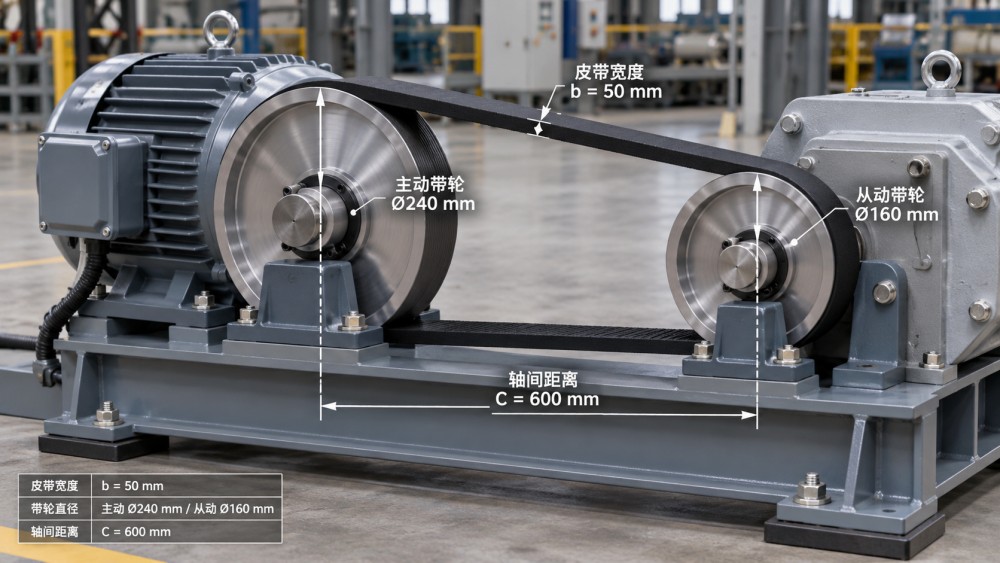
A longer center distance generally requires a longer belt, increasing material cost. It can also affect belt span behavior and the space needed for tension adjustment. Depending on the application, the drive may need an idler or a different support arrangement; an idler is not automatically required just because a belt is long.
Availability matters too. A standard length stocked by several distributors may be easier to replace than a length that must be ordered specially. Before accepting a custom center distance, check whether a small adjustment to the machine layout would permit an established belt size without compromising the drive design. The savings may appear less in the first purchase than in future spare-parts lead time.
Belt width, profile, and number of belts
Wider belts generally use more material and require wider pulleys. In V-belt drives, additional belts can increase capacity, but they also require more pulley grooves and axial space. Multiple-belt sets need proper selection and installation; mixing belts with different wear or length characteristics can lead to uneven load sharing.
Width alone is not a reliable capacity comparison. Belt type, tensile member, tooth profile or cross-section, pulley dimensions, speed, and operating conditions all affect the supplier’s rating. A cheaper narrow belt is not a saving if it falls outside the manufacturer’s recommended operating range.
Pulley diameter and shaft interface
Larger pulleys can cost more because of material, machining, and handling. However, making pulleys as small as possible to reduce footprint can create a more expensive design elsewhere. Small diameters increase belt bending demands and may reduce the rating or service life for a given belt construction. The minimum acceptable diameter should come from the belt manufacturer’s application guidance, not from available space alone.
The bore and mounting arrangement deserve attention. A standard pulley with a common bushing may be readily available, while an unusual bore, keyway, hub, or material can require additional machining. On larger pulleys, balancing requirements and the method of removal can also affect both purchase price and maintenance time.
Capacity is often more expensive than footprint
A quote based only on motor power and an approximate shaft spacing is incomplete. The supplier also needs operating speeds, speed ratio, load characteristics, starting frequency, expected daily duty, and environmental conditions. These inputs determine the design load and narrow the choice of belt and pulley combinations.
Consider two drives with similar shaft spacing. One runs a steady-duty fan; the other starts a heavily loaded machine frequently. Even if their motors have similar nameplate ratings, the second application may need a different selection because starting and shock loads matter. A design allowance is appropriate where the duty warrants it, but adding generous allowances at every stage can result in paying for capacity the machine will never use.
Ask suppliers to identify the operating assumptions and service factor used in their selection. If two quotes differ substantially, the reason may be a different interpretation of the duty rather than a simple difference in margin. Have engineering review those assumptions before purchasing the less expensive option.
The hidden costs around a bigger belt drive
A change in belt size can travel through the rest of the assembly. Wider or heavier pulleys may require different shaft arrangements, while belt tension and transmitted loads must be checked against bearing and shaft limits. The relationship is not automatic: the bearing load depends on the actual drive geometry, belt forces, and application. Still, it is a check worth making before the pulley order is placed.
Installation costs can also rise when a larger guard must be fabricated, access is restricted, or heavy pulleys need lifting equipment. A long drive may require more guarding or structural work. Conversely, a compact arrangement can be difficult to tension or inspect if there is not enough clearance. Neither layout is inherently cheaper once installation is included.
Maintenance teams should review how the belt will actually be replaced. Can it be installed without dismantling adjacent equipment? Is there room to move the motor or tensioner? Are alignment and tension checks practical? A low component price can quickly lose its appeal if every replacement requires a lengthy shutdown.
Compare quotes on the same scope, not just the same belt size
Before requesting quotations, prepare a common duty description and a clear boundary for supply. If suppliers are encouraged to propose alternatives, ask them to show both compliance with the base specification and any deviations. This makes a comparison useful rather than a contest between different interpretations of the job.
A practical quote review should establish:
- Whether belts, pulleys, bushings, tensioners, guards, and installation hardware are included or excluded.
- The design power, speeds, ratio, load characteristics, operating hours, and environmental assumptions used for selection.
- Belt construction and pulley details, including bore, keyway, mounting method, and any special machining or balancing.
- Lead time for the original equipment and replacement parts, including whether the proposed sizes are normally stocked.
- Freight, installation, alignment, commissioning, and documentation responsibilities.
- Any interchangeability limits or conditions affecting the supplier’s performance and warranty commitments.
Also distinguish a lower unit price from a lower delivered cost. A larger pulley may need protective packaging or special handling; a custom belt may carry a longer replenishment time. Where downtime is consequential, holding a spare belt or pulley may be sensible, but its purchase and storage cost belongs in the comparison.
Where standardization helps—and where it can backfire
Using a smaller range of belt sizes across a plant can simplify purchasing and reduce the number of spare parts held in stores. It may also make urgent replacements easier if the selected parts are widely available. For an OEM building repeat machines, common pulleys and mounting arrangements can simplify assembly and supplier management.
Standardization becomes expensive when every application is forced into a drive sized for the most demanding machine. A lightly loaded auxiliary conveyor does not necessarily need the same belt construction as a high-duty drive nearby. Equally, substituting a familiar belt for a properly rated one can transfer cost into premature wear or unplanned stoppages.
The workable compromise is to standardize within comparable duty groups. Check the approved alternatives against manufacturer ratings, environmental exposure, and pulley compatibility, then agree which spares are worth stocking. For maintenance and repair purchasing, the existing pulley condition matters too: replacing a belt without examining worn grooves, damaged teeth, alignment, and tensioning hardware can undermine the replacement.
Make the final decision on installed and replacement cost
A useful cost comparison covers the initial components, freight, installation, planned replacement parts, and the labor or downtime associated with service. Where operating energy is material to the application, evaluate that as well, using supplier data appropriate to the actual duty rather than assuming every belt type performs the same way.
There is no universal price per unit of belt length or pulley diameter that will produce a dependable budget. For an early estimate, request an indicative price against a defined duty and identify the items still subject to engineering selection. For a final order, require a complete scope and an approved drawing or dimensional schedule.
The best purchasing question is not simply whether a larger drive costs more. It is which change in size is necessary, which related components it affects, and whether standard parts can meet the duty. Resolve those points with engineering and maintenance before comparing final offers; that is usually more valuable than negotiating the belt price in isolation.
Want to dive deeper into these market dynamics, or need data-driven support for your next business move? Drop a line below and let the analysts at PCTS provide customized insights.
We respect your privacy. Your information is strictly confidential.
Related News
- 00
0000-00
How sealing technology reduces contamination in semiconductor manufacturing - 00
0000-00
Where to install vibration sensors on rotating machinery - 00
0000-00
NTSB Probe Finds Boeing Warned of MD-11 Engine Bearing Risk Years Earlier - 00
0000-00
How to size pneumatic grippers for packaging system integration - 00
0000-00
How to size alloy steel power transmission chains for heavy loads
Weekly Insights
Stay ahead with our curated technology reports delivered every Monday.