





Global Sourcing Strategy Cost Reduction Without Supply Risk
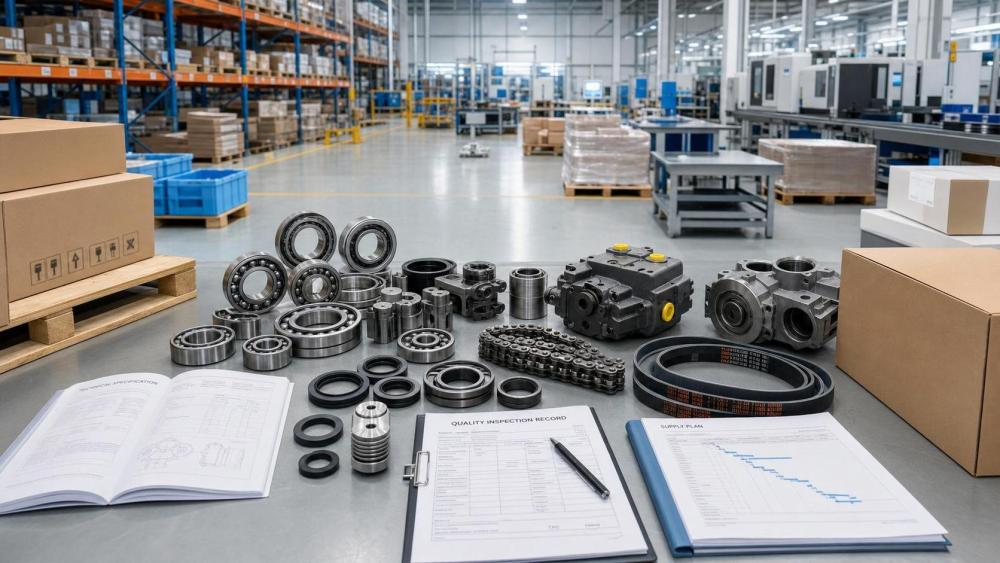
For many industrial companies, cost pressure is real, constant, and hard to ignore.
Yet a global sourcing strategy cost reduction plan fails when lower prices create unstable supply.
That tradeoff appears often in bearings, seals, hydraulic parts, chains, belts, and other MRO-critical components.
The first quote may look attractive.
The real cost appears later through delays, quality escapes, emergency freight, and unplanned downtime.
A smarter approach connects sourcing decisions to continuity, engineering fit, and lifecycle economics.
That is where global sourcing strategy cost reduction becomes a business system, not just a price exercise.
In practice, the best savings come from structured supplier choices, better demand visibility, and disciplined risk control.
Why Cost Reduction Often Increases Hidden Supply Risk
Many companies reduce unit cost first and review supply resilience later.
That sequence is risky, especially for precision and transmission components.
A lower-cost bearing with unstable geometry can shorten equipment life.
A cheaper seal with poor material traceability can trigger leakage and contamination.
A lower-priced hydraulic pump can create energy loss, maintenance burden, and inconsistent output.
From recent market shifts, the clearer signal is this.
Supply risk is no longer only about geography.
It also comes from specification drift, weak process control, and poor communication across tiers.
This means a global sourcing strategy cost reduction program must measure total landed risk, not only purchase price.
The Most Common Hidden Cost Drivers
- Long lead times that force higher safety stock.
- Quality variation that increases inspection and rework.
- Low documentation quality that slows approval and onboarding.
- Single-source dependence for critical industrial components.
- Poor visibility into raw material, tooling, and process capability.
- Expedited logistics caused by inaccurate demand planning.
Each factor can erase the expected benefit of global sourcing strategy cost reduction.
Often, they erase it faster than teams expect.
Build a Sourcing Model Around Total Cost, Not Piece Price
A resilient sourcing strategy starts with a different question.
Instead of asking who is cheapest, ask who is cheapest to operate with over time.
That shift changes supplier evaluation completely.
For industrial buyers, total cost includes freight, duties, stock carrying cost, defect rates, downtime exposure, and technical support response.
It also includes replacement frequency and field performance stability.
In bearings and transmission parts, longer service life can outweigh modest purchase price differences.
In seals and O-rings, material reliability can prevent costly line stoppages.
In hydraulic and pneumatic systems, consistent performance can reduce maintenance calls and energy waste.
A Practical Total Cost Review
- Group parts by business criticality, not only spend.
- Separate commodity items from failure-sensitive components.
- Measure supplier performance on quality, lead time, and technical responsiveness.
- Add downtime cost assumptions for critical machines.
- Review inventory cost against lead-time volatility.
This makes global sourcing strategy cost reduction more realistic and easier to defend internally.
Segment Suppliers by Risk, Capability, and Component Criticality
Not every component needs the same sourcing model.
That is where many cost programs become too blunt.
A standard fastener and a spindle bearing should not follow the same supplier logic.
A basic belt and a chemical-resistant seal should not carry the same approval pathway.
The more effective model segments suppliers into clear decision groups.
Suggested Segmentation Framework
This structure helps companies prioritize where global sourcing strategy cost reduction can move faster and where caution must stay high.
Reduce Cost Through Better Visibility, Not Just Tougher Negotiation
Price negotiation matters, but visibility creates deeper savings.
When buyers understand supplier capacity, tooling status, and process consistency, surprises fall sharply.
That also improves forecast alignment and replenishment timing.
In real operations, this often saves more than another round of price pressure.
Better visibility also supports earlier response to material shortages, shipment slippage, and engineering changes.
What to Track Consistently
- On-time delivery by part family and plant.
- PPM or defect trends by production lot.
- Average lead-time change over rolling quarters.
- Raw material dependency and alternate source readiness.
- Supplier response speed during technical or quality incidents.
This is especially useful for global sourcing strategy cost reduction across multi-country supplier networks.
The more accurate the data, the lower the emergency cost.
Strengthen Supply Continuity With Smart Dual Sourcing
Dual sourcing is often misunderstood.
It is not about splitting every order across many vendors.
It is about protecting critical categories where interruption cost is too high.
For a global sourcing strategy cost reduction plan, dual sourcing can improve negotiation leverage while limiting continuity risk.
Still, the second source must be truly qualified.
A name in the system is not the same as operational readiness.
How to Make Dual Sourcing Work
- Use it for high-impact categories, not everything.
- Align drawings, tolerances, and validation criteria across sources.
- Run pilot orders before a disruption happens.
- Keep technical files and quality records current.
- Review share allocation based on performance, not habit.
This approach reduces dependency without creating unnecessary sourcing complexity.
Use Technical Intelligence to Support Better Buying Decisions
In industrial sourcing, technical understanding is a cost lever.
That may sound obvious, but it is often underused.
A buyer who understands lubrication limits, seal material behavior, or transmission wear patterns can compare suppliers more accurately.
That improves sourcing choices before problems reach production.
Platforms like PCTS are useful here because procurement decisions rarely sit apart from engineering and maintenance reality.
Supplier visibility, application knowledge, and lifecycle insight should work together.
That is especially true when global sourcing strategy cost reduction targets mission-critical systems.
Questions Worth Asking Before Switching Suppliers
- What performance data supports the claimed service life?
- What process controls protect consistency batch to batch?
- What is the response path if field failure appears?
- Can the supplier support documentation, traceability, and compliance needs?
- How fast can alternate production or logistics be activated?
Turn Global Sourcing Strategy Cost Reduction Into a Repeatable Operating Discipline
The strongest cost programs do not depend on one negotiation cycle.
They depend on process, visibility, and cross-functional discipline.
That includes procurement, quality, engineering, operations, and maintenance working from shared priorities.
In that model, global sourcing strategy cost reduction becomes sustainable.
Savings improve, and operational surprises decline.
A practical next step is simple.
Review the top twenty sourced components by business impact.
Then compare price savings against lead-time risk, quality stability, and downtime exposure.
That single exercise often reveals where true savings exist.
When companies treat supply continuity as part of cost control, global sourcing strategy cost reduction becomes both safer and more profitable.
Related News
- 00
0000-00
How to assess a mechanical seal solutions supplier’s quality control - 00
0000-00
How to use chain wear analysis to prevent mining conveyor failures - 00
0000-00
How to select PU timing belts for automation with high positioning accuracy - 00
0000-00
How to size power transmission systems for steel mill loads - 00
0000-00
How to select heavy duty metallurgy belts for high-temperature loads
Weekly Insights
Stay ahead with our curated technology reports delivered every Monday.