





The export compliance standards that apply to industrial equipment depend on where the equipment comes from, where it is going, its technical capabilities, and who will use it. A shipment may need export authorization, sanctions screening, customs declarations, and evidence that the product meets destination-market safety rules. These are separate obligations, and satisfying one does not satisfy the others.
A standard bearing, a high-performance hydraulic pump, and a complete automated production machine can therefore require different compliance reviews. The practical starting point is to identify the exact product and transaction before requesting certificates or promising a delivery date.
Separate export controls from product conformity
“Export compliance” often becomes a catch-all term for every document needed to move equipment internationally. That creates confusion because the requirements answer different questions.
A quality-management certificate does not authorize an export. A customs tariff code does not establish whether equipment is controlled. Similarly, a conformity marking does not show that the buyer or intended application is permitted under sanctions rules.
Which export control rules cover the equipment?
Begin with the exporting country’s controls, then identify whether another jurisdiction’s rules also reach the transaction. For example, equipment subject to the U.S. Export Administration Regulations can remain subject to those rules when reexported from another country. Foreign-made products can also fall within their scope under particular content or production-related rules.
The European Union has a separate framework for dual-use exports. Other exporting jurisdictions maintain their own control systems. Equipment specially designed or modified for military applications may require assessment under military controls rather than the framework used for ordinary commercial machinery.
Dual-use means that an item can have both civilian and military or other sensitive applications. Industrial equipment does not become controlled simply because it is precise or expensive. Classification depends on the wording of the relevant control entry and the product’s actual characteristics.
For mechanical components, relevant characteristics can include materials, accuracy, operating capability, design features, and suitability for particular applications. A catalog description such as “precision bearing” or “high-pressure pump” is rarely enough to make a defensible decision.
Use technical data to support the classification
Request a classification statement tied to the exact model and configuration. For products subject to U.S. rules, this may identify an Export Control Classification Number, or explain an EAR99 designation. EAR99 generally describes items subject to the EAR that are not listed under a specific Commerce Control List entry; it does not guarantee unrestricted shipment.
A useful supplier statement identifies the product, applicable jurisdiction, classification, and basis for the conclusion. A blanket statement covering an entire product family becomes less useful when models differ in materials, precision, electronics, or intended application.
Even equipment outside a listed control category may face restrictions because of its destination, end user, or end use. Classification is therefore an input to the license decision, not the complete decision.
Screen the transaction beyond the delivery address
Sanctions and end-use restrictions can affect ordinary industrial goods. Review the purchaser, consignee, end user, and other relevant parties, including intermediaries and payment participants where applicable. Some sanctions rules also reach entities through ownership or control, so a name-screening result alone may be insufficient.
The intended use deserves equal attention. A hydraulic assembly supplied for a conventional packaging line presents a different review from the same assembly requested for a restricted military or nuclear-related activity. Broad descriptions such as “maintenance stock” should be supported by a credible account of the receiving facility and application when the circumstances warrant it.
Warning signs include unexplained routing changes, refusal to identify the final user, specifications inconsistent with the stated business, or requests to remove identifying information from documents. These signs do not automatically establish wrongdoing, but they require resolution before release.
Screening should also remain connected to the shipment schedule. A transaction approved when quoted can change before dispatch because the buyer, route, ownership, or restrictions have changed.
When do CE marking and equipment safety requirements apply?
Destination-market rules govern whether equipment can be supplied or used in that market. In the European Economic Area, CE marking applies to products covered by relevant EU legislation. It is not a universal certificate required for every exported industrial component.
A complete machine may fall under machinery legislation. Depending on its design, electrical safety, electromagnetic compatibility, pressure equipment, or explosive-atmosphere requirements may also apply. Each framework has its own scope and assessment requirements.
A loose bearing, chain, belt, or O-ring generally does not require CE marking merely because it will be installed in machinery. Certain components have specific legal treatment, however, so the assessment must consider the component’s function and how it is supplied.
Partly completed machinery also needs careful handling. An assembly intended for incorporation into a larger machine may require incorporation documentation and assembly instructions under applicable machinery rules. That documentation does not establish conformity of the finished machine, which still needs assessment after integration.
For hydraulic and pneumatic equipment, pressure ratings alone do not determine the entire compliance route. Equipment type, fluid characteristics, assembly configuration, and regulatory exclusions can change the result. Likewise, equipment intended for a potentially explosive atmosphere may require a different assessment from an otherwise similar general-purpose product.
Other markets use their own safety, electrical approval, labeling, and import arrangements. A European conformity document should not be treated as automatic authorization for another destination.
Which technical standards actually matter?
Technical standards help translate broad safety duties into engineering decisions. Relevant subjects include machinery risk assessment, protective guarding, electrical equipment, hydraulic and pneumatic system safety, and functional safety where control systems perform safety functions.
The standards selected should match the product and its hazards. For a hydraulic power unit, useful evidence may address pressure limitation, hose failure, stored energy, leakage, and safe maintenance. For a transmission assembly, guarding, entanglement, alignment, and unexpected movement may be more relevant.
Standards are not all legally mandatory in every market. Their status can arise from legislation, recognition within a regulatory framework, or a purchasing contract. Under some frameworks, using a recognized standard can support a presumption of conformity with the requirements it covers. It does not automatically establish compliance with every applicable obligation.
Quality-management certification serves a different purpose. ISO 9001 certification concerns an organization’s quality-management system; it does not certify that every product meets machinery safety requirements or is eligible for export. Material certificates, dimensional inspections, and performance tests likewise support particular claims rather than replacing the full compliance assessment.
When reviewing a certificate or report, check the issuing organization, named manufacturer, covered model, scope, and connection to the delivered configuration. A report for a different motor, seal compound, or control cabinet may leave a significant gap.
Customs documentation must describe the same product
Customs classification uses the Harmonized System and destination-specific tariff subdivisions. It serves a different purpose from export control classification, even when both depend on technical details.
A pump, a pump part, and a complete hydraulic power unit may require different tariff treatment. Describing all three as “machine spares” conceals the information needed for accurate declarations. Consistent descriptions should identify what the item is, what it does, and any characteristics relevant to classification.
Commercial invoices, packing lists, transport documents, and customs declarations should agree on product identity, quantities, and the transaction details relevant to each document. Country of origin needs its own assessment: the location of a warehouse or trading company does not automatically establish where goods originate.
Preferential origin claims require supporting evidence under the relevant trade arrangement. A supplier’s address or a routine country-of-origin statement may not establish eligibility for reduced duty.
Packaging can introduce additional requirements. Solid-wood packaging may need phytosanitary treatment and marking, while equipment containing batteries, gas cylinders, or other regulated contents may trigger dangerous-goods transport rules. These checks belong in shipment planning because they can affect carrier acceptance.
Build a release file around the exact configuration
A practical compliance file should allow another reviewer to understand why the shipment was released. It should connect the equipment, transaction, and supporting evidence without relying on undocumented assumptions.
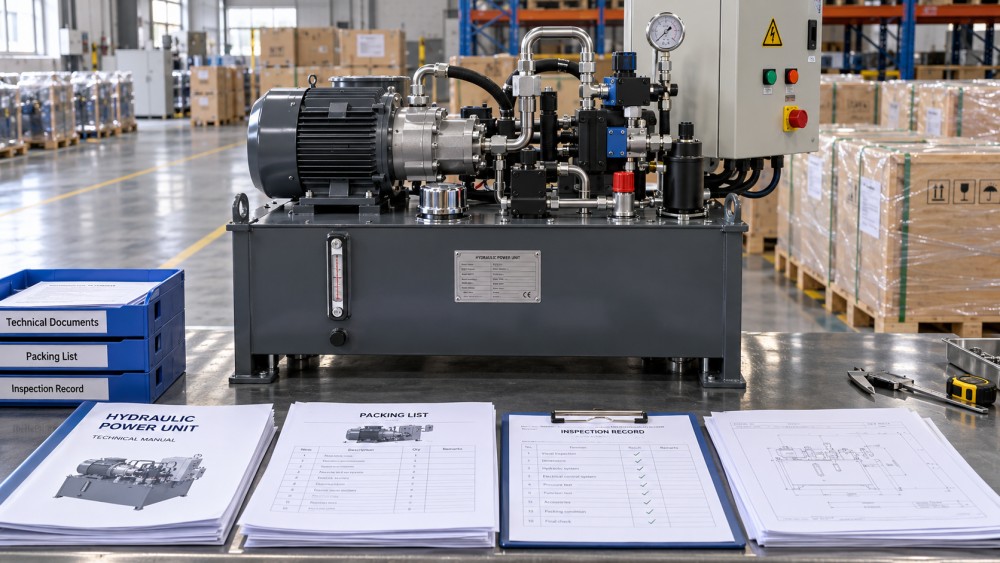
- Define the supplied item. Record model numbers, configuration, technical specifications, included software, accessories, and whether the supply is a component, assembly, or complete machine.
- Map the transaction. Identify the exporting country, destination, transit route, purchaser, consignee, final user, and intended application.
- Record the control decision. Retain classification support, screening results, end-use information, and the basis for any license requirement or permitted shipment.
- Identify market-access obligations. Establish which product rules apply and collect the relevant declarations, reports, labels, and instructions.
- Align customs and logistics records. Confirm tariff classification, origin, value, descriptions, packaging, and any special transport requirements.
- Authorize release against the evidence. Resolve gaps before dispatch and retain records for the periods required by the applicable regimes.
Assign responsibility for each item. The manufacturer may hold design evidence, the exporter may control shipment authorization, and the importer may have destination-market duties. Contract terms can allocate tasks and costs, but they do not automatically remove statutory responsibilities.
Recheck changes, repairs, and spare-parts orders
A previous successful shipment is useful history, but it is not a permanent approval. A replacement bearing may have a different specification, a hydraulic unit may contain new electronics, or an order may now serve a different facility. Each change can affect part of the assessment.
Repairs, temporary exports, demonstration equipment, and warranty replacements also need review. A shipment with no sale price can still require a customs value, export authorization, or destination documentation. Returning an item to its original owner does not by itself remove those obligations.
Software and technical support deserve a separate check when included with machinery. Sending controlled technical information electronically or providing access from another country can create obligations even when no physical goods move.
Before committing to shipment, establish three things clearly: the exact equipment configuration, the final destination and use, and the evidence supporting release. That gives procurement, engineering, and logistics teams a concrete basis for deciding which requirements apply—and prevents an unrelated certificate from being accepted as proof that the whole transaction is compliant.
Related News
- 00
0000-00
How to check a heavy-duty chain drive distributor’s stock availability - 00
0000-00
Can condition monitoring solutions for motors detect bearing faults? - 00
0000-00
Changsheng Bearings Reports 22.68% Revenue Growth for First Nine Months of 2026 - 00
0000-00
How to assess export compliance readiness before your first shipment - 00
0000-00
Is the Cheapest Replacement Part Really Lower Cost Over Time?
Weekly Insights
Stay ahead with our curated technology reports delivered every Monday.