





Can a packaging automation manufacturer integrate with your existing line?
A packaging automation manufacturer can often integrate new equipment with an existing line, but success depends on more than matching production speeds. Technical evaluators need to assess mechanical interfaces, controls and communication protocols, footprint constraints, and the condition of bearings, belts, pneumatic actuators, and other critical components. These checks help establish whether a proposed upgrade can operate reliably without creating an expensive new bottleneck.
The practical answer is therefore conditional: integration is feasible when the equipment, surrounding line and project team can agree on how products, signals, utilities and responsibilities cross the connection points. A machine that fits on a layout drawing may still fail that test during changeover, fault recovery or routine maintenance.
Start with the line as it actually runs
Before comparing equipment proposals, document the existing process from the upstream machine through to the downstream operation. Identify product formats, package dimensions, orientation, material variations and the way operators handle rejects. Include normal production, startup, changeover and recovery after a stoppage; these modes often expose constraints that a nominal cycle rate does not.
Throughput should be described as a pattern, not just a number. An upstream machine may discharge in bursts while a new cartoner requires a steady infeed. A conveyor buffer can absorb some variation, but only if its usable capacity, product stability and control logic are suited to the application. Ask the supplier to explain what happens when the buffer is empty, full or blocked, and how long the line can tolerate those states.
Collect current drawings where available, but verify them on site. Conveyor heights may have changed, guarding may have been modified, and an apparently open area may be needed for a pallet truck, cleaning access or electrical-panel clearance. Photographs and short videos of actual operation can reveal transfer problems that drawings miss.
Mechanical fit is more than a footprint
The critical dimensions are often at the transfer points. Check conveyor height and direction, belt or chain width, guide-rail adjustment, product spacing and the gap between machines. Lightweight packs can tip at a transfer; flexible pouches can deform or catch; unstable containers may need support through acceleration and deceleration. Product samples should include the expected range of sizes and, where relevant, variations in fill level or packaging material.
A layout should also show how equipment is installed and maintained. Can a worn belt be replaced without dismantling adjacent machinery? Is there room to remove a motor, access a bearing housing or adjust a pneumatic actuator? If the machine must be moved through a doorway or lifted into place, those constraints belong in the installation plan rather than appearing as a surprise during shutdown.
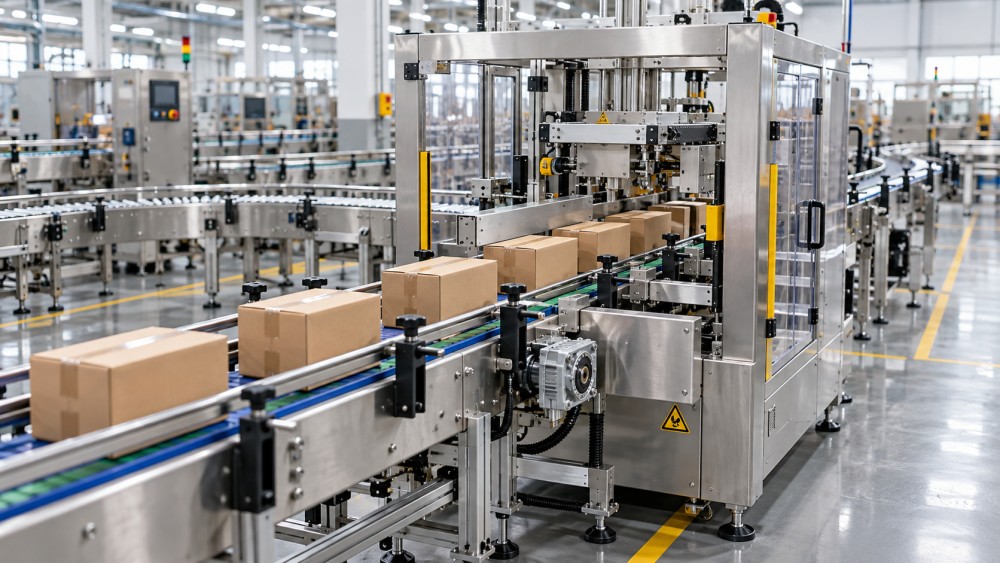
Environmental exposure changes component selection. Washdown, dust, abrasive particles, cleaning chemicals and temperature can affect seals, lubricants, bearings and drive components. The right choice depends on the actual exposure and cleaning method, not simply on whether a supplier describes a machine as suitable for a demanding environment. Request material and maintenance details for the components most likely to be affected.
Controls compatibility needs a defined interface
Two machines using the same industrial network are not automatically ready to work together. Communication requires agreement on available ports, network configuration, data ownership and the meaning of each signal. A simple interface may use discrete inputs and outputs; a more connected line may exchange status, recipes, alarms or production data over an industrial Ethernet protocol.
Ask for an interface document early. It should identify which controller sends and receives each signal, the expected machine states, timing assumptions and the response to lost communication. For example, “downstream ready” needs a defined meaning: does it indicate that the receiving conveyor is running, that there is physical space for another pack, or both? Ambiguity at this level can produce intermittent jams that are difficult to diagnose.
Recipe and format changes deserve the same attention. Determine whether settings are entered separately on each machine or transferred from a supervisory system, who can edit them, and how mismatched recipes are detected. If production data will move to plant systems, involve the controls and IT teams in access, network segmentation, backup and remote-support decisions. A supplier’s remote connection should have an agreed access method and authorization process.
Safety functions must be assessed as a combined system, not treated as ordinary production signals. The project team should define the effects of emergency stops, guard opening and restart commands across connected equipment. Applicable safety requirements depend on the machinery, modification and jurisdiction; responsibility for the risk assessment and validation should be explicit in the contract.
Do not overlook the condition of existing components
A new machine can expose weaknesses that the old process tolerated. Higher acceleration, tighter product spacing or more frequent stops may increase demand on an existing conveyor drive. A slipping belt, worn chain, misaligned sprocket or deteriorating bearing can then appear to be an integration problem even when the new equipment is functioning as specified.
Inspect the equipment that will remain in service. Look for abnormal noise, vibration, belt tracking problems, chain elongation, air leaks and inconsistent actuator movement. Compare findings with maintenance records and component manufacturers’ recommendations. Where the consequences justify it, condition monitoring can support diagnosis, but measurements need a baseline and a plan for interpreting them; a sensor alone does not resolve a mechanical defect.
Utilities need a similar reality check. Confirm available electrical supply, protection, compressed-air pressure and flow at the connection point, as well as air quality where required by the equipment. A pneumatic system may show adequate pressure when idle but struggle during simultaneous actuator cycles. If vacuum, extraction or cooling is required, establish whether existing capacity is available under normal production conditions.
This component-level review is also useful for comparing lifecycle costs. Global Precision Components & Transmission Systems (PCTS) covers bearings, fluid power, seals and transmission components from an engineering and maintenance perspective. That context can help evaluators frame questions about wear, replacement intervals and spare-parts availability rather than judging proposals on machine price alone.
How to compare integration approaches
A retrofit is not always the least disruptive option. The choice depends on the condition of the existing line, access to controls documentation and the extent of the changes needed.
- Add a standalone machine with a limited interface. This can contain control changes, but may leave operators managing separate recipes, alarms and recovery procedures.
- Integrate the new machine into line controls. Coordinated operation and shared data can be valuable, but require defined ownership of software changes, testing and ongoing support.
- Replace or rebuild the surrounding section. This may be justified when conveyors, drives or controls are already unreliable or cannot support the required product flow. It also expands the installation scope and shutdown planning.
Compare proposals using the same boundaries. One supplier may include conveyor modifications, guarding, controls programming and operator training; another may quote only the machine. Make exclusions visible, including civil work, utilities, disposal, third-party software access and support from the original equipment manufacturer. An apparently lower quotation can shift substantial engineering work to the plant.
Turn supplier claims into testable commitments
A capable packaging automation manufacturer should be able to discuss the interfaces and limitations of the proposed solution, not just its headline speed. Ask who will survey the line, who owns the interface specification, and whether the supplier will work directly with the existing machine builder or the plant’s chosen integrator. Clarify what happens if source code, controller passwords or legacy documentation are unavailable.
Agree on acceptance criteria before design is finalized. These should reflect the production formats and operating conditions that matter, including product quality, reject handling, sustained operation and recovery from specified faults. Define the test materials, responsibilities and method of recording results. A factory acceptance test can verify functions before shipment, but it cannot fully reproduce every interaction with the installed line; site acceptance testing needs its own scope.
For shutdown planning, work backward from the available production window. Separate work that can be completed in advance from tasks that require the line to stop. Include electrical isolation, removal of existing equipment, installation, safety checks, commissioning and time for troubleshooting. A rollback or temporary operating plan is worth considering if the plant cannot tolerate an extended interruption.
Finally, specify the handover: electrical and pneumatic drawings, software backups and access arrangements, recommended spares, maintenance instructions, training and a clear route for fault support. Confirm which documents will reflect the as-installed system, including changes made during commissioning.
The best next step is a joint technical review using current line data, representative products and a marked-up layout. If the supplier can identify each interface, explain its assumptions and assign responsibility for unresolved risks, the integration is ready for a more reliable cost and schedule assessment. If those details remain vague, a machine quotation is not yet an integration plan.
Want to dive deeper into these market dynamics, or need data-driven support for your next business move? Drop a line below and let the analysts at PCTS provide customized insights.
We respect your privacy. Your information is strictly confidential.
Related News
- 00
0000-00
How to assess a chain and belt drive manufacturer's quality control - 00
0000-00
How intelligent condition monitoring detects conveyor bearing faults - 00
0000-00
How misalignment affects belt drive components - 00
0000-00
Trelleborg Sealing Solutions Uses AI to Optimize Rotary Shaft Seal Design - 00
0000-00
How turbine operating speed affects precision bearing selection
Weekly Insights
Stay ahead with our curated technology reports delivered every Monday.