





A metallurgy equipment components supplier demonstrates reliable traceability when it can connect a delivered part to its material origin, production history, inspection results and any outsourced processes through records that are consistent and retrievable. A certificate of conformity alone is not enough: request a demonstration using an actual part or representative production lot, then test whether the links work both backward to source and forward to affected deliveries.
The level of evidence should match the consequence of failure. A critical mill bearing, hydraulic component or heat-exposed seal may justify batch-level or serial-level controls, while a low-risk standard fastener may need a simpler lot and supplier record. The key decision is whether the available evidence is sufficient to contain a defect, verify compliance with the purchase specification and support a timely replacement.
What traceability should prove for metallurgy equipment components
Traceability is the ability to follow a defined item or lot through relevant stages of its history using recorded identifiers. It is different from quality certification: a quality management certificate describes a management system within a stated scope, but it does not establish that a particular component meets its specification.
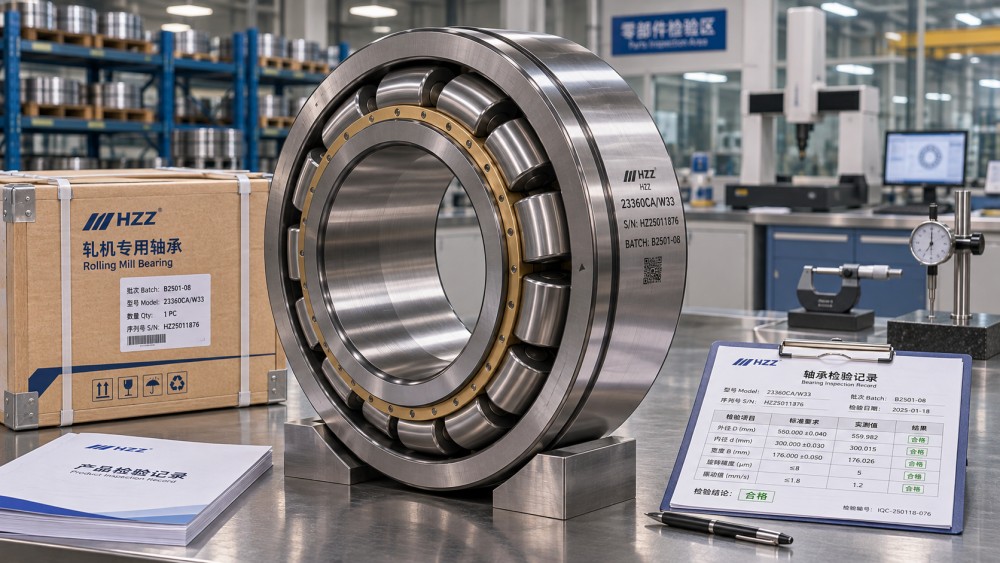
A defensible traceability chain links the physical part, its identifier and the supporting records without unexplained gaps. Depending on the component and purchase requirements, that chain may include:
- Purchase order, drawing revision, specification and applicable inspection requirements.
- Manufacturer identity, production site, part number and serial or lot number.
- Raw-material heat, cast, batch or compound identification, where relevant.
- Manufacturing operations and outsourced processes, such as heat treatment, coating or nondestructive testing.
- Inspection and test results, acceptance decisions, deviations and final release.
- Packaging, shipment and customer delivery records, including any lot splits.
Not every link needs to appear on the component itself. Small parts, seals and consumables may be identified through controlled packaging instead. The supplier should explain how identification is preserved when parts are transferred, repacked, mixed, processed or stored.
Match the depth of traceability to the failure risk
Applying the same paperwork requirement to every item can add cost without improving control. Set the traceability level before requesting quotations, taking account of the operating environment, failure consequence, replacement lead time and applicable contractual or regulatory obligations.
These are starting points, not universal requirements. For a safety-critical application or a customer-controlled specification, the required traceability may extend further into subcomponents and special processes. Conversely, asking for raw-material certificates for every commercial item is not useful if the manufacturer cannot associate them with the supplied lot.
Follow one component backward and forward
The most revealing assessment is a live trace exercise. Select a delivered item, a warehouse sample or a representative completed order. Record its marking and packaging identifiers, then ask the supplier to retrieve the supporting records without allowing the sample to be chosen solely for convenience.
- Start at the physical item. Confirm that the part number, revision where applicable, manufacturer marking and serial or lot number agree with the packaging and delivery documents.
- Trace backward. Ask for the production order, applicable inspection records and links to material and outsourced processes required by the specification. Check whether each record identifies the same item or an explicitly linked lot.
- Trace forward. Choose one material heat, production lot or process batch from the records and ask which finished lots and deliveries contain it.
- Test a boundary. Ask how the system handles a split lot, repackaging, rework or a subcontractor return. The supplier should show the record that preserves the relationship, not merely describe the intended procedure.
- Record retrieval time and completeness. Compare the response with the agreed requirement for a quality investigation, including the availability of records held by subcontractors.
A successful exercise does not require every document to carry the same number. It requires documented cross-references: for example, a finished bearing serial number linked to a work order, which in turn links to a heat-treatment batch and the relevant material record. A missing link prevents a reviewer from knowing whether an otherwise valid certificate belongs to the supplied part.
Look closely at lot definition and mixing
Ask the supplier what constitutes a lot at each stage. A raw-material heat, a heat-treatment batch and a finished-goods lot are different groupings; their boundaries need not coincide. If several material heats are combined into one finished lot, determine whether the records identify all contributing heats and whether individual items can still be distinguished.
Lot size affects the scope of containment. If a defect is found in one heat-treatment batch but the supplier can only identify a much larger finished-goods lot, more stock may need to be quarantined while the cause is investigated. Finer identification can reduce that uncertainty, but its value should be weighed against marking, handling and recordkeeping costs.
Verify documents instead of counting them
A large document package can conceal weak links. Compare each record with the purchase order and the trace exercise, looking for the correct specification, revision, item identity, acceptance criteria and authorized release. Results should be identifiable as belonging to the relevant item, sample or lot; a generic statement that material meets a grade does not establish that connection.
Where a material inspection document is required under a standard such as EN 10204, specify the required document type and acceptance conditions in the order. The document type and issuer’s role matter, but the document still needs a reliable link to the supplied material. Neither a standard designation nor a laboratory logo substitutes for verifying that link.
For distributors, establish whether documents originate from the actual manufacturer and whether the distributor can preserve the original lot identity through storage and repacking. Confirm in advance what upstream evidence can be released; commercial confidentiality may restrict access, but it should not leave essential verification requirements undefined.
Expose weak points at handoffs and changes
Traceability often depends on more than one organization. A machined shaft may pass through material supply, machining, heat treatment, grinding and inspection before shipment. Each handoff creates a risk that an identifier is lost or a record remains with a subcontractor that the supplying company cannot promptly access.
- Outsourcing: Identify which operations are subcontracted, how batches are identified at dispatch and return, and who owns or can retrieve the records.
- Rework and concessions: Check whether reworked items retain their identity and whether deviations are approved against the correct order and revision before release.
- Substitution: Require approval for changes to material, manufacturer, production site or process when those attributes affect the agreed specification or qualification.
- Mixed inventory: Examine controls for partial boxes, returns and repacking, especially where similar part numbers or seal compounds are stored together.
- Record integrity: Ask how records are protected against unauthorized changes, backed up and retained, and how corrections are identified.
Consider a hypothetical seal lot supplied for a hot rolling application. If a failure raises a question about compound identity, the useful response is not just a general elastomer datasheet. The supplier needs to identify the shipped batch, its manufacturing and inspection records, and other deliveries potentially affected by the same batch, subject to the agreed scope of traceability.
Turn the assessment into purchase-order controls
Traceability requirements are easier to enforce when they are part of the quotation and order rather than requested after production. Define the required granularity, marking method and documents in terms that match the component and its failure risk.
- State whether identification is required by individual serial number, production lot, material heat or another defined grouping, and where that identifier must appear.
- List required certificates, test reports and special-process records, including the applicable specification and revision.
- Specify which records accompany shipment and which must be retrievable on request, together with the agreed retrieval timeframe.
- Set a retention period consistent with contractual, operational and any applicable legal requirements; agree how records remain accessible if a supplier or subcontractor changes.
- Define advance notification and approval requirements for relevant changes, substitutions, deviations and outsourced processes.
- Require a documented response to a suspected nonconformity, including affected-lot identification, containment, disposition and notification arrangements.
Review the commercial consequences as well. Serial-level marking, additional testing and long retention can affect price and lead time; missing traceability can delay acceptance, expand quarantine and complicate replacement. Compare quotations on the same evidence requirements rather than treating the lowest document-light offer as directly equivalent.
Make the supplier decision on demonstrated coverage
Approve a supplier’s traceability approach when the demonstrated chain covers the order’s critical requirements, records agree with the physical identification, subcontracted steps are visible, and forward and backward searches meet the agreed response needs. Resolve gaps before release where they affect safety, compliance or the ability to contain a failure.
Where risk is lower, a documented limitation may be acceptable if the specification permits it and the consequences are understood. In either case, retain the assessment result and repeat the trace exercise after significant changes in source, process, site or supply arrangement. The strongest evidence is not the number of certificates supplied, but the supplier’s ability to connect the right records to the right components when the connection matters.
Want to dive deeper into these market dynamics, or need data-driven support for your next business move? Drop a line below and let the analysts at PCTS provide customized insights.
We respect your privacy. Your information is strictly confidential.
Related News
- 00
0000-00
How to assess a metallurgy equipment components supplier's traceability - 00
0000-00
How to assess a chain and belt drive manufacturer's quality control - 00
0000-00
How intelligent condition monitoring detects conveyor bearing faults - 00
0000-00
How misalignment affects belt drive components - 00
0000-00
Trelleborg Sealing Solutions Uses AI to Optimize Rotary Shaft Seal Design
Weekly Insights
Stay ahead with our curated technology reports delivered every Monday.