





Why do CHP generator sets require a different cost review than standard backup power?
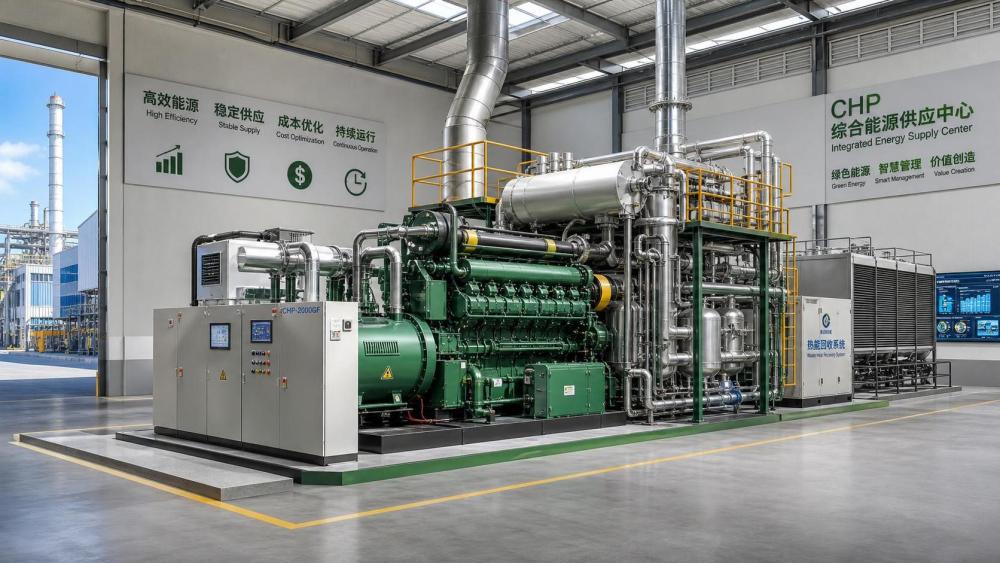
CHP generator sets are usually evaluated too narrowly when the review starts with purchase price alone.
That approach misses the real value driver: combined heat and power uses one fuel source to produce electricity and usable thermal energy.
In practical terms, the budget question is not only “What does the unit cost?”
It is also “How much purchased electricity, boiler fuel, and downtime can it offset over time?”
This matters in industrial sites where heat loads are steady, such as process lines, HVAC-heavy plants, food operations, and utility-intensive facilities.
A well-matched CHP generator set can improve total energy utilization far beyond a conventional genset.
A poorly matched one may run below design efficiency and stretch payback uncomfortably.
That is why cost approval should connect capex, fuel profile, maintenance intervals, and site heat demand in one model.
On platforms such as PCTS, this wider lifecycle view is familiar.
Industrial assets are judged by how components, reliability, and operating economics work together, not as isolated line items.
Which cost elements shape the real budget of CHP generator sets?
The visible equipment price is only one layer.
The full budget for CHP generator sets usually includes several cost blocks that need separate review.
- Prime mover and alternator package cost.
- Heat recovery equipment, including exchangers and controls.
- Installation, piping, exhaust treatment, and grid interconnection.
- Fuel supply upgrades and gas quality conditioning.
- Monitoring, protection systems, and remote diagnostics.
- Routine service parts, lubricants, and planned overhauls.
More hidden costs often appear in civil work, acoustic treatment, permits, and load integration.
Sites with older steam, hydraulic, or transmission equipment may also require balance-of-plant adjustments.
That can include pumps, valves, seals, couplings, bearings, and control retrofits.
These supporting components rarely dominate the headline quote, but they affect commissioning risk and long-term maintenance cost.
A useful rule is to separate one-time spend from recurring spend before approval.
That makes it easier to compare vendors whose proposals look similar on the surface but differ materially in lifecycle expense.
A quick review table for cost and efficiency checks
Before comparing proposals, it helps to test each item against a practical decision question.
How should efficiency be judged beyond the headline percentage?
This is where many approvals become optimistic.
Suppliers may present attractive efficiency numbers under controlled conditions, but site performance depends on operating reality.
For CHP generator sets, the key metric is not electrical efficiency alone.
The stronger measure is total system efficiency under the actual load profile, heat demand, ambient conditions, and maintenance regime.
A unit running at stable, well-utilized loads will usually outperform a larger unit cycling inefficiently.
That is why load matching often matters more than nameplate ambition.
It is also worth checking parasitic losses.
Fans, pumps, lubrication systems, and control hardware consume energy that should be included in net output calculations.
In real industrial environments, mechanical support systems make a measurable difference.
High-quality bearings, seals, couplings, and condition monitoring can reduce friction, leakage, vibration, and unplanned stoppages.
That connection is easy to overlook, yet it aligns with the broader PCTS view of lifecycle efficiency.
When component reliability improves, the modeled efficiency becomes easier to achieve in service, not just on paper.
What usually drives payback faster, and what tends to delay it?
Payback for CHP generator sets usually improves when three conditions align.
- The facility has a steady electricity demand.
- Recovered heat can be used for many operating hours.
- Fuel pricing is favorable relative to grid power and boiler fuel.
Projects slow down when one of those conditions is weak.
A common example is a site with strong electrical demand but inconsistent thermal use.
In that case, the “combined” advantage becomes thinner than expected.
Another delay factor is underestimating maintenance and parts planning.
Scheduled outages, replacement consumables, and overhaul timing can materially shift annual savings.
More careful models use a range rather than one fixed payback number.
That range should test fuel escalation, utilization rates, maintenance events, and downtime assumptions.
If the project only works under one best-case scenario, the approval case is fragile.
If it still works under moderate stress, the budget case is much stronger.
Where do buyers misread risk when comparing CHP generator sets?
The most common error is comparing CHP generator sets as if they were interchangeable packaged assets.
They are not.
The surrounding system determines whether the promised economics are realistic.
Need-to-check risks usually include:
- Oversizing the unit for prestige capacity rather than usable load.
- Ignoring heat recovery integration complexity.
- Assuming service parts are easily available in every region.
- Using vendor payback models without independent operating assumptions.
- Overlooking emissions compliance, noise limits, or interconnection approvals.
There is also a quieter risk around mechanical support quality.
If the project includes lower-grade seals, bearings, belts, or couplings, maintenance frequency can rise later.
That may seem peripheral at purchase stage, yet it directly affects uptime and cost certainty.
This is one reason industrial intelligence sources matter.
A platform like PCTS helps connect energy equipment decisions with component durability, MRO planning, and total cost of ownership.
What is a practical next-step checklist before approval?
A solid review process does not need to be complicated, but it should be disciplined.
Before moving forward with CHP generator sets, confirm these points:
- Map hourly electrical demand against thermal demand, not just annual totals.
- Request net efficiency data at expected operating loads.
- Separate equipment cost from installation and integration cost.
- Review overhaul intervals, spare parts lead times, and service coverage.
- Stress-test payback using conservative fuel and downtime assumptions.
- Check whether heat recovery value is real, seasonal, and continuously usable.
- Verify the quality of supporting mechanical and monitoring components.
In the end, CHP generator sets make financial sense when the site can convert efficiency into repeatable operating savings.
The strongest decisions usually come from combining energy analysis, component reliability, and MRO readiness in one review.
That gives a clearer basis for comparing proposals, testing risk, and setting a more credible budget path.
Related News
- 00
0000-00
How FFKM O-rings reduce seal failure in corrosive media - 00
0000-00
What global equipment manufacturing in the USA means for supply chain risk - 00
0000-00
How FFKM outgassing performance affects vacuum seal selection - 00
0000-00
When should heat resistant metallurgy belts be replaced? - 00
0000-00
When does a fluid power maintenance service reduce unplanned downtime?
Weekly Insights
Stay ahead with our curated technology reports delivered every Monday.