





Pneumatic Directional Valve Failures: Common Causes and Fast Fixes
When a pneumatic directional valve fails, even a simple automation task can trigger downtime, slow motion, or unsafe behavior.
The good news is that most pneumatic directional valve issues leave clear clues before total failure happens.
This guide explains the most common symptoms, the likely causes, and the fastest fixes that restore stable air control.
Why Pneumatic Directional Valve Problems Matter
A pneumatic directional valve controls where compressed air goes and when actuator motion starts or stops.
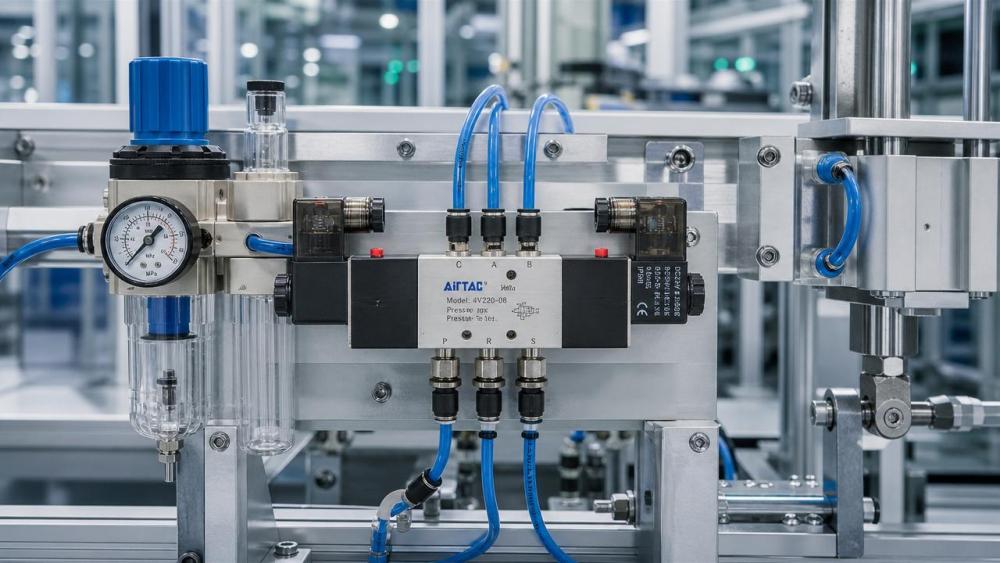
If the valve shifts late, sticks, leaks, or fails to return, the entire machine can lose timing and repeatability.
In packaging, assembly, clamping, or pick-and-place systems, that often means jams, rejects, and lost output.
More importantly, unstable valve behavior can create sudden cylinder movement, which raises safety concerns during troubleshooting.
That is why fast diagnosis matters. A small issue inside one pneumatic directional valve can affect the whole line.
Common Failure Signs You Should Not Ignore
Most pneumatic directional valve failures begin with a symptom that seems minor at first.
Spotting that symptom early usually saves more time than replacing parts after complete shutdown.
- Cylinder does not move after the control signal arrives.
- Actuator moves slowly or hesitates in mid-stroke.
- Valve shifts, then sticks in one position.
- Air exhaust sounds louder than normal.
- Solenoid coil becomes unusually hot.
- Manual override works, but automatic control does not.
- The machine cycles inconsistently from one batch to the next.
These signs often point to contamination, poor air quality, low voltage, worn seals, or internal spool problems.
Top Causes of Pneumatic Directional Valve Failure
1. Contaminated Compressed Air
Dirty air is one of the biggest reasons a pneumatic directional valve stops working correctly.
Dust, rust, pipe scale, oil residue, and water droplets can enter the valve body and block spool movement.
In real operating conditions, contamination usually builds up slowly rather than causing an instant failure.
Fast fix: inspect filters, drain moisture traps, clean the air line, and replace blocked silencers or clogged filter elements.
2. Low or Unstable Air Pressure
A pneumatic directional valve needs enough inlet pressure to shift fully and hold its position.
If pressure drops below the required range, the valve may chatter, respond late, or fail to actuate.
Pressure loss often comes from leaks, undersized tubing, overloaded compressors, or poorly adjusted regulators.
Fast fix: verify actual pressure at the valve inlet, not only at the compressor outlet.
Then check regulators, fittings, and downstream demand during peak cycle periods.
3. Solenoid Coil or Wiring Issues
Sometimes the pneumatic directional valve is mechanically fine, but the electrical trigger fails.
Loose terminals, damaged connectors, voltage drop, or a burned coil can stop the valve from shifting.
A hot coil, weak magnetic pull, or intermittent response usually confirms the problem.
Fast fix: measure supply voltage under load, inspect connectors, and compare coil resistance with the supplier specification.
4. Sticking Spool or Worn Internal Seals
Inside the pneumatic directional valve, the spool must move smoothly for clean switching.
Wear, varnish, corrosion, or incompatible lubrication can create drag and block full travel.
Worn seals may also cause internal leakage, reducing force and making actuator movement inconsistent.
Fast fix: remove the valve if serviceable, clean internal parts carefully, and replace seals or the entire valve if wear is visible.
5. Incorrect Installation or Application Mismatch
A pneumatic directional valve can fail early when it is installed in the wrong orientation or used beyond its rating.
Wrong port connections, excessive back pressure, or an undersized valve can all create unstable operation.
This becomes more obvious in high-speed automation where timing windows are narrow.
Fast fix: confirm the valve type, flow capacity, pressure range, and port layout against the actual machine duty.
Fast Troubleshooting Steps That Work on the Floor
When a pneumatic directional valve fails, a simple sequence helps isolate the cause without wasting time.
- Lock out energy if motion could create risk.
- Check whether the valve receives the correct electrical signal.
- Measure air pressure directly at the pneumatic directional valve inlet.
- Use the manual override to see whether the spool can shift mechanically.
- Listen for exhaust flow, leakage, or chatter during actuation.
- Inspect filters, regulators, and lubricators for blockage or water carryover.
- Check tubing, fittings, and mufflers for restrictions.
- Replace the coil or valve with a known-good unit if the fault remains unclear.
This step-by-step method usually reveals whether the issue is electrical, pneumatic, or internal to the valve.
Quick Reference Table for Common Pneumatic Directional Valve Issues
How to Prevent Repeat Pneumatic Directional Valve Failures
A fast fix is helpful, but preventing the next failure saves much more production time.
The most effective prevention plan focuses on air quality, correct sizing, and routine inspection.
- Drain condensate regularly and maintain filters on schedule.
- Monitor pressure at critical valves during real production cycles.
- Use the correct pneumatic directional valve for flow, media, and duty cycle.
- Keep spare coils, seal kits, or replacement valves ready for critical assets.
- Inspect connectors and cable strain points during routine maintenance.
- Record recurring failures by machine, valve model, and operating condition.
That last step matters more than it seems, because repeat issues usually reveal a system problem, not a single bad part.
When Repair Is Not Enough
Sometimes replacing seals or cleaning the spool is only a short-term answer.
If the same pneumatic directional valve keeps failing, review the full application instead of repeating the same repair.
Look at cycle frequency, shock loads, ambient contamination, washdown exposure, and actual air quality trends.
In many plants, recurring valve trouble is a sign that the selected component no longer matches production demands.
A better-rated pneumatic directional valve can improve reliability, response speed, and maintenance intervals at the same time.
Final Takeaway
Most pneumatic directional valve failures come from a short list of causes: dirty air, pressure loss, electrical faults, internal wear, or application mismatch.
Once the symptom is clear, the right fix usually comes quickly.
Start with signal, pressure, contamination, and manual override checks before replacing parts at random.
That practical approach helps restore motion faster, reduce repeat stoppages, and keep pneumatic systems dependable under daily production pressure.
When maintenance decisions are tied to root cause instead of guesswork, every pneumatic directional valve becomes easier to manage and far less likely to fail again.
Want to dive deeper into these market dynamics, or need data-driven support for your next business move? Drop a line below and let the analysts at PCTS provide customized insights.
We respect your privacy. Your information is strictly confidential.
Related News
- 00
0000-00
How sealing technology reduces contamination in semiconductor manufacturing - 00
0000-00
Where to install vibration sensors on rotating machinery - 00
0000-00
NTSB Probe Finds Boeing Warned of MD-11 Engine Bearing Risk Years Earlier - 00
0000-00
How to size pneumatic grippers for packaging system integration - 00
0000-00
How to size alloy steel power transmission chains for heavy loads
Weekly Insights
Stay ahead with our curated technology reports delivered every Monday.