





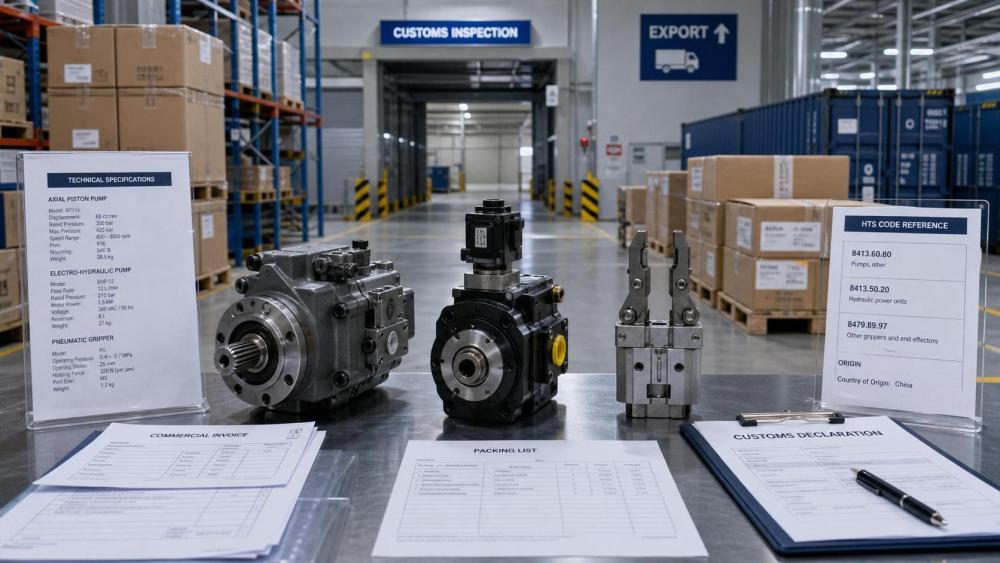
On June 20, 2026, U.S. Customs and Border Protection began fully applying a new ACE risk-control module that uses intelligent HTS validation for Axial Piston Pumps, Electro-hydraulic Pumps, and Pneumatic Grippers. For exporters, importers, customs teams, and supply-chain service providers handling these categories, the update is worth close attention because entries with codes that do not match a product’s physical characteristics or technical parameters can now be stopped in real time, marked as high risk, and pushed into longer clearance cycles.
What CBP Has Confirmed
According to the information provided, CBP announced that the upgraded ACE module took full effect on June 20, 2026. The system now performs intelligent HTS code checks on selected components including Axial Piston Pumps, Electro-hydraulic Pumps, and Pneumatic Grippers.
If the declared HTS code does not align with the product’s physical features or technical specifications, the entry is automatically intercepted and labeled as a “High-Risk Entry.” The stated consequence is a 100% document review and an average customs clearance delay of 72 hours. The provided information also states that multiple Chinese suppliers have already encountered first-order cancellations.
Where the Pressure Is Likely to Appear First
Export-facing manufacturers may feel the impact at the documentation stage
From an industry perspective, manufacturers shipping the affected component categories may face the earliest pressure before goods even reach final delivery. The immediate issue is not only product shipment, but also whether internal product descriptions, technical parameter sheets, and declared HTS codes remain consistent across export documents.
Importers and buyers may focus more on delivery certainty
Analysis shows that buyers and import-side trading companies are likely to pay closer attention to whether a supplier’s declared code accurately reflects the product being shipped. Where an entry is flagged as high risk and document review becomes mandatory, the practical concern shifts to customs timing, order acceptance, and delivery predictability.
Customs brokers and supply-chain service providers face higher review sensitivity
For brokers, forwarders, and other supply-chain service providers, the update points to a more sensitive filing environment for the named component categories. What deserves closer attention is whether filing support, document preparation, and pre-shipment verification are sufficient to reduce the chance of mismatch between declaration data and actual goods characteristics.
What Companies Should Watch Now
Consistency between product data and HTS declarations
The clearest practical focus is the match between declared HTS codes and the product’s physical and technical attributes. For the listed component categories, companies may need to review whether descriptions used in quotations, contracts, packing documents, and customs declarations are aligned closely enough to avoid avoidable mismatch flags.
Differences between system enforcement and routine filing habits
Observably, the policy signal in this case is tied directly to automated system enforcement. That means practices that previously passed through routine filing workflows may now draw immediate attention if the code selected does not correspond to the underlying product characteristics referenced in documentation.
Order scheduling and customer communication
Because the provided information mentions average delays of 72 hours and cases of first-order cancellations among Chinese suppliers, companies involved in these product lines may need to pay closer attention to delivery buffers, order confirmation timing, and customer communication around potential customs review risks.
Ongoing monitoring of official wording and implementation detail
What also deserves closer attention is whether future official communications further clarify how the ACE module interprets product characteristics and technical parameters in practice. For companies in the affected categories, the distinction between a broad compliance message and actual filing-level enforcement remains a key point to monitor.
Why This Reads as More Than a Routine System Update
Analysis shows that this development should not be read merely as a technical platform adjustment. The notable point is that CBP is applying real-time intelligent validation to specific industrial components and linking mismatch findings directly to high-risk treatment and full document review.
It is more appropriate to understand this as a concrete compliance-enforcement signal with immediate operational consequences, while still treating its broader long-term effects as something that requires continued observation. The confirmed facts already indicate direct clearance and order-execution consequences for affected shipments, but the wider spillover across adjacent categories is not established by the provided information.
How to Read the Signal at This Stage
At this stage, the update is best understood as an operational compliance change with clear short-term implications for shipments involving the named pump and gripper categories. The most immediate industry meaning lies in stricter alignment between product reality and HTS filing, rather than in any confirmed broader market shift.
A neutral reading is that the event already matters at the transaction and customs-processing level, especially for suppliers and trade participants handling the listed components. Broader conclusions about long-term structural impact should remain subject to further observation.
Basis of This Article
This article is based on the user-provided news title, event date, and event summary concerning the CBP ACE system upgrade and its treatment of HTS mismatches in selected components. For this type of industry update, source categories commonly relevant to verification include official government notices, company disclosures, industry association updates, authoritative media reporting, and standards-related documents.
No specific official source link was provided in the input, so the precise official reference still requires continued verification. Follow-up attention should remain on any additional CBP wording, implementation clarification, and further market feedback related to filings for the listed component categories.
Related News
- 00
0000-00
Where are axial piston pumps used in mining equipment? - 00
0000-00
Embodied AI Robotics and Drive Control Forum Held in Shanghai - 00
0000-00
How does seal service life affect the total cost of ownership? - 00
0000-00
Schaeffler to Cut 3,460 Jobs and Close Five European Plants - 00
0000-00
How does system size affect the price of a belt drive system?
Weekly Insights
Stay ahead with our curated technology reports delivered every Monday.