





Before any air-powered line goes live, compliance needs to be treated as a design condition, not a late paperwork step. Pneumatic Automation Solutions CE review sits at the center of that process because it connects machine safety, component selection, technical documentation, and market access. When those checks are delayed, the result is often rework, slower approval, and avoidable risk in production environments where cylinders, valves, seals, sensors, and transmission elements must perform together without failure.
Why Pneumatic Automation Solutions CE deserves early attention
In practical terms, Pneumatic Automation Solutions CE is about proving that a pneumatic system meets relevant European safety and compliance expectations before launch.
That proof does not come from one component alone. It comes from the interaction between actuators, air preparation units, tubing, fittings, guards, electrical interfaces, and operating logic.
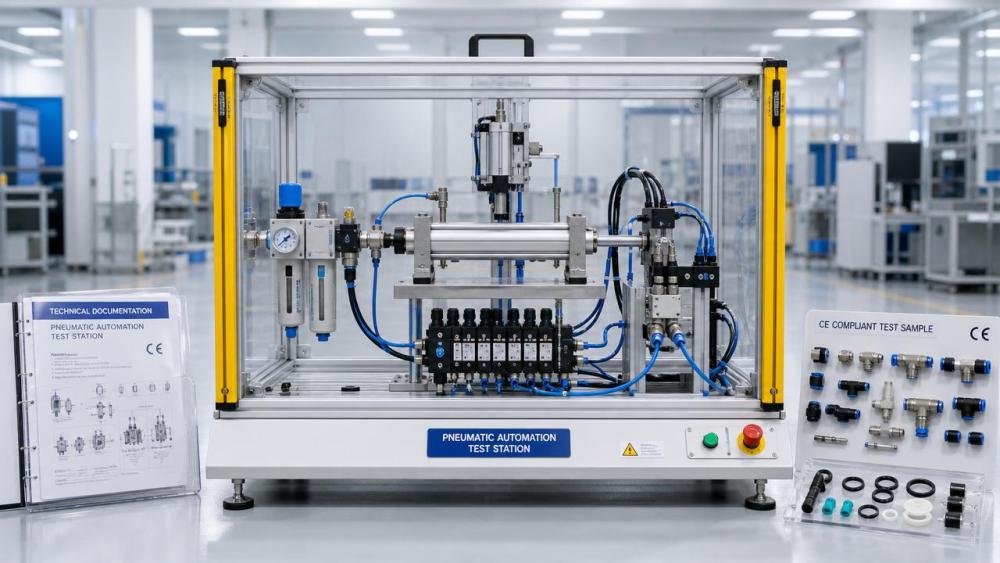
This matters across general industry because pneumatic automation is rarely isolated. It often works beside bearings, couplings, chains, belts, seals, and condition monitoring devices inside packaging, assembly, material handling, and process equipment.
That broader system view is also why PCTS tracks fluid power, transmission, sealing, and maintenance economics together. Compliance decisions affect not only launch timing, but also spare parts planning, uptime stability, and long-term ownership cost.
The compliance question is broader than a CE mark
A visible CE mark is only the final sign. The real work sits behind it in risk assessment, design validation, traceability, and documented evidence.
For Pneumatic Automation Solutions CE, the most common reference points include the Machinery framework, pressure-related requirements, electrical integration rules, and functional safety expectations where relevant.
Usually, the key question is simple: can the system operate safely in normal use, predictable misuse, maintenance mode, restart conditions, and fault conditions?
If the answer depends on undocumented assumptions, compliance is weak even when individual parts appear qualified.
What should be verified first
- System boundaries are clearly defined, including interfaces with electrical, hydraulic, and mechanical subassemblies.
- The intended use, operating pressure range, ambient conditions, and maintenance limits are documented.
- Critical components have traceable specifications, declarations, and performance data.
- Residual risks are identified and reduced through design, guarding, control logic, and instructions.
Key technical checks before launch
Most Pneumatic Automation Solutions CE gaps appear in details that seem routine during assembly. Leakage control, response speed, stored energy, and unintended motion can all change the final risk profile.
A disciplined review normally includes the following technical checkpoints.
Pressure integrity and air quality
Components must be rated for the real operating envelope, not only for nominal pressure. Pressure spikes, regulator drift, and emergency venting behavior need verification.
Air quality also affects compliance in practice. Contaminated air accelerates seal wear, sticking valves, and unstable actuator travel, which can turn a safe design into an unsafe machine over time.
Motion control and fail-safe behavior
The system should be checked for controlled stopping, safe exhaust, restart prevention, and predictable movement after pressure loss or recovery.
Where gripping, clamping, lifting, or vertical motion is involved, the review becomes stricter. Load retention and drop prevention are not optional details.
Mechanical interfaces and wear points
Pneumatic automation performance depends on supporting components. Misalignment, loose couplings, undersized bearings, poor belt tension, or unsuitable chain drives can create vibration and shock that compromise safety margins.
This is where cross-disciplinary evaluation becomes valuable. PCTS often highlights how friction, sealing quality, and transmission stability shape real machine reliability, not just theoretical compliance.
Sealing and leak prevention
O-rings, rod seals, gaskets, and chemical-resistant sealing materials should match media, temperature, cycle rate, and cleaning conditions.
Even minor leakage can affect force consistency, sensor timing, and emergency response. In CE review, that is not only an efficiency issue; it is a safety issue.
Documentation often decides whether approval moves smoothly
Many launch delays come from incomplete evidence rather than poor hardware. Pneumatic Automation Solutions CE requires a technical file that shows how the machine was evaluated and why the design choices are justified.
That file should support internal review, customer audits, and regulator scrutiny without depending on verbal explanations.
Instructions deserve special attention. If replacement intervals, lubrication points, seal compatibility, or safe depressurization steps are vague, field risk rises quickly.
Where issues often appear in real industrial settings
Pneumatic Automation Solutions CE checks become more demanding when the machine operates in variable, high-cycle, or contaminated environments.
Packaging systems may struggle with rapid cycling and sensor timing. Assembly lines may face gripping repeatability problems. Material handling equipment may involve suspended loads and shock loads.
Process industries add chemical exposure, washdown routines, or aggressive temperature changes. In those cases, sealing materials and corrosion resistance must be reviewed with the same seriousness as actuator sizing.
Export projects introduce another layer. A machine may meet internal plant expectations yet still fail external documentation review if declarations, labels, or translated instructions are inconsistent.
Useful warning signs before launch
- Repeated pneumatic leaks during final testing.
- Different supplier data for the same valve or cylinder series.
- Emergency stop behavior that changes under pressure fluctuation.
- Maintenance instructions that omit isolation and venting steps.
- Spare part substitutions without updated risk review.
A practical review path that reduces late surprises
The best Pneumatic Automation Solutions CE process starts before final assembly. Compliance works better when it follows the lifecycle of the machine.
At concept stage, define hazards and operating limits. During design, verify component suitability and safe-state logic. During build, confirm installation quality and traceability. Before shipment, validate performance under realistic conditions.
This approach also supports stronger sourcing decisions. When pneumatic parts, seals, and transmission elements are evaluated together, hidden incompatibilities are easier to catch.
That is why platforms such as PCTS are useful reference points. They help connect compliance readiness with component durability, maintenance intervals, and total cost considerations instead of treating them as separate topics.
What to review next
A sound next step is to map every safety-critical pneumatic function against its supporting components, documents, and test evidence.
Then compare that map with actual operating conditions, including pressure variation, contamination risk, replacement practices, and operator interaction.
When Pneumatic Automation Solutions CE is assessed this way, launch decisions become clearer. The outcome is not only a compliant machine, but a more reliable one with fewer surprises after installation.
Want to dive deeper into these market dynamics, or need data-driven support for your next business move? Drop a line below and let the analysts at PCTS provide customized insights.
We respect your privacy. Your information is strictly confidential.
Related News
- 00
0000-00
IndexBox Forecasts 3.8% Annual Growth for Global Radial Seals Market Through 2035 - 00
0000-00
How to assess the chemical compatibility of FFKM sealing sheets - 00
0000-00
IndexBox Forecasts 3.6% Annual Growth for Construction Bearings Market - 00
0000-00
When do hydraulic components require an export license? - 00
0000-00
How to size modular pneumatic valve systems for adequate airflow
Weekly Insights
Stay ahead with our curated technology reports delivered every Monday.