





Open Pit Mining Machinery Components Most Likely to Fail First
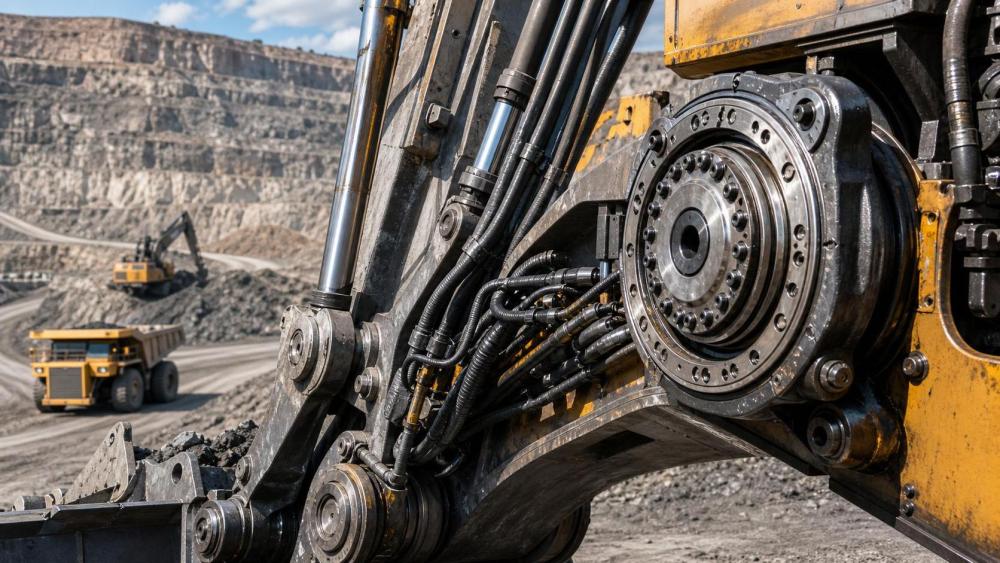
In open-pit operations, production rarely stops because of one dramatic event.
More often, it starts with small wear inside open pit mining machinery components.
A leaking seal, a hot bearing, or a weak hose can turn into lost shifts.
That is why early-failure mapping matters more than generic maintenance routines.
The harsh mix of dust, impact, vibration, heavy loads, and heat punishes every moving system.
Still, some open pit mining machinery components fail sooner and more often than others.
Knowing which parts sit at the front of the risk curve helps shape smarter inspections.
It also improves spare planning, contractor scheduling, and maintenance budget control.
From a lifecycle perspective, the first failures are usually not the most expensive parts.
They are the parts exposed to contamination, poor lubrication, pressure spikes, and alignment drift.
Why Early Failures Happen in Open-Pit Equipment
Open-pit fleets operate in one of the most punishing mechanical environments in industry.
Haul trucks, excavators, dozers, shovels, and conveyors run long hours under changing loads.
Dust enters housings, abrasive fines attack seals, and shock loads stress rotating assemblies.
Even high-quality open pit mining machinery components lose life quickly when contamination control slips.
Temperature swings add another problem.
Cold starts thicken lubricants, while midday heat reduces viscosity and weakens sealing behavior.
In practice, early failure is usually a systems issue, not a single-part issue.
That means root cause reviews should include loading, lubrication, cleanliness, installation, and operating habits.
The Open Pit Mining Machinery Components That Fail First
The first wave of failures usually appears in components with constant exposure and motion.
These parts are often inexpensive compared with major assemblies, yet they drive unplanned downtime.
- Bearings in wheel ends, idlers, pulleys, fans, and rotating support points.
- Seals and O-rings exposed to abrasive dust, pressure cycling, and chemical attack.
- Hydraulic hoses, fittings, pumps, and cylinder seal kits facing high-pressure fluctuation.
- Chains, belts, couplings, and sprockets working under shock, misalignment, and debris.
- Pins, bushings, and joint interfaces suffering poor lubrication and surface wear.
Among all open pit mining machinery components, bearings and seals usually show the earliest warning signs.
Hydraulic parts often fail next, especially where preventive inspection intervals are too wide.
1. Bearings Often Lead the Failure List
Bearings are among the most failure-prone open pit mining machinery components for one simple reason.
They carry load while depending on clean lubrication and proper alignment.
Open-pit conditions rarely make that easy.
Fine dust can contaminate grease quickly.
Impact loading creates brinelling, while misalignment accelerates uneven raceway wear.
The first clues are usually heat, noise, grease discoloration, and rising vibration trends.
Ignoring these signs often turns a planned bearing change into shaft or housing damage.
2. Seals and O-Rings Fail Quietly but Early
Many teams underestimate seals because they look simple and low cost.
In reality, they protect the health of many critical open pit mining machinery components.
A worn seal allows contamination in and lubricant out.
That double failure path is why seal degradation escalates so fast.
Common causes include lip hardening, abrasive scoring, pressure cycling, and poor material selection.
In hydraulic circuits, one failed O-ring can trigger leaks, pressure loss, and secondary component wear.
3. Hydraulic Hoses, Pumps, and Cylinder Seals Follow Closely
Hydraulic systems sit at the center of digging, lifting, steering, and braking performance.
That makes hydraulic open pit mining machinery components especially sensitive to neglect.
Hoses fail from abrasion, bending stress, heat, and clamp damage.
Pumps fail when fluid cleanliness declines or cavitation begins.
Cylinder seals fail when rod surfaces scratch or side loading increases.
A minor wet spot near a fitting is often the first sign of a much larger reliability problem.
4. Chains, Belts, and Couplings Wear Faster Than Expected
Power transmission parts rarely fail without warning, but they do wear steadily.
In conveyors and auxiliary drives, these open pit mining machinery components face dust, shock, and alignment issues.
Chain elongation changes sprocket engagement and raises vibration.
Belts slip when tension drifts or pulley surfaces wear.
Couplings crack or loosen when shafts run out of alignment.
These failures look small at first, but they often create larger motor and gearbox stress.
How to Spot High-Risk Components Before They Stop Production
The best maintenance teams do not wait for failure.
They build inspection routines around the open pit mining machinery components most likely to fail first.
That approach keeps data collection focused and practical.
From recent field practice, condition monitoring works best when tied to failure history.
A generic checklist is useful, but a failure-ranked checklist is far more effective.
What Reduces Failure Rates Fastest
Reducing failure in open pit mining machinery components does not always require major capital investment.
In many operations, the fastest gains come from disciplined basics.
- Tighten contamination control for bearings, lubricants, and hydraulic reservoirs.
- Upgrade seal materials where dust, heat, or aggressive fluids shorten life.
- Use route-based inspections for hoses, fittings, chain tension, and coupling alignment.
- Track repeat failures by location, not just by component name.
- Align spare parts strategy with criticality and lead time, not purchase price alone.
- Review installation practices, because many early failures begin during assembly.
This also means supplier evaluation should go beyond catalog specifications.
Fit-for-application performance matters more than a low unit cost.
For many sites, the real savings come from extending service intervals without increasing failure risk.
A Practical Decision Framework for Maintenance Planning
When prioritizing open pit mining machinery components, three questions usually clarify the next move.
Which parts fail first, which failures stop production, and which parts have the longest resupply risk?
The overlap between those answers defines the highest maintenance priority.
In most fleets, that priority zone includes bearings, seals, hydraulic wear parts, and transmission interfaces.
This is where component intelligence becomes valuable.
A platform such as PCTS helps compare component behavior, service demands, and replacement economics.
That makes it easier to connect maintenance decisions with supplier quality and total cost of ownership.
The broader point is simple.
Open-pit uptime improves when failure-prone parts are managed as a strategic category.
The open pit mining machinery components most likely to fail first should never be treated as routine line items.
They deserve closer inspection, better sourcing discipline, and clearer replacement triggers.
A short review of failure records can reveal where hidden downtime is already forming.
Start there, rank the weak points, and build the maintenance plan around those realities.
Want to dive deeper into these market dynamics, or need data-driven support for your next business move? Drop a line below and let the analysts at PCTS provide customized insights.
We respect your privacy. Your information is strictly confidential.
Related News
- 00
0000-00
How sealing technology reduces contamination in semiconductor manufacturing - 00
0000-00
Where to install vibration sensors on rotating machinery - 00
0000-00
NTSB Probe Finds Boeing Warned of MD-11 Engine Bearing Risk Years Earlier - 00
0000-00
How to size pneumatic grippers for packaging system integration - 00
0000-00
How to size alloy steel power transmission chains for heavy loads
Weekly Insights
Stay ahead with our curated technology reports delivered every Monday.