





How to Evaluate Semiconductor Equipment Components for Uptime and Yield
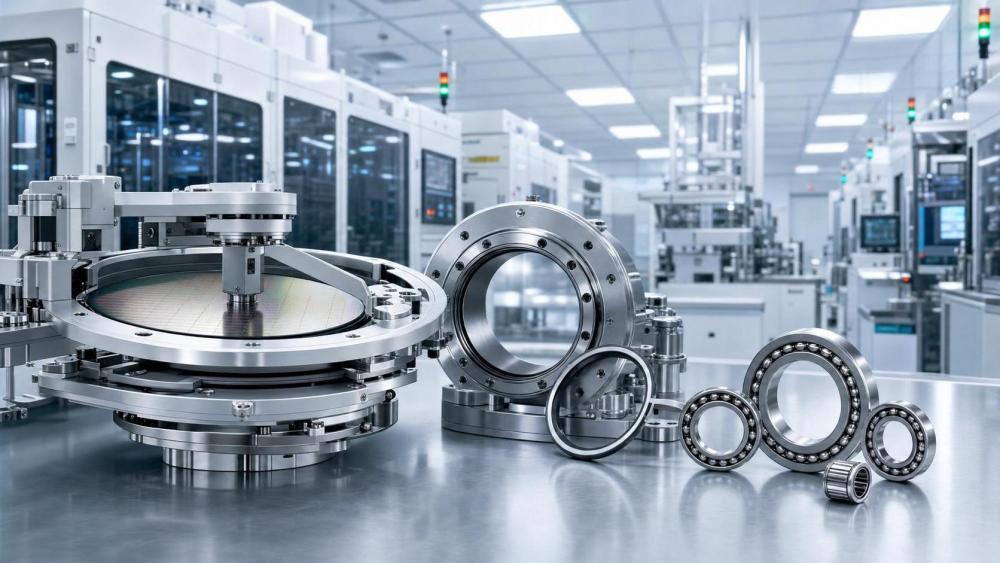
Evaluating Semiconductor Equipment Components is not just a specification exercise. It is a reliability decision that affects yield, maintenance load, and long-term process stability.
In semiconductor production, tiny component weaknesses can trigger big losses. A seal outgasses, a bearing vibrates, or a coupling slips, and the result may be scrap, contamination, or unplanned downtime.
That is why Semiconductor Equipment Components should be evaluated through uptime and yield together. One without the other creates blind spots in selection.
A useful review goes beyond catalog numbers. It checks materials, tolerances, surface quality, lubrication behavior, sealing integrity, wear patterns, and replacement intervals under real operating conditions.
This also means comparing supplier claims with application evidence. Cleanroom compatibility, vacuum behavior, thermal cycling, particle control, and chemical resistance matter far more than generic industrial performance.
From a practical standpoint, the best evaluation framework asks a simple question. Will this component protect stable output while keeping maintenance predictable over time?
Start with the Process Risk Profile
Before comparing Semiconductor Equipment Components, define where failure hurts most. Not every position inside equipment carries the same risk to uptime and yield.
Critical zones usually include wafer handling, vacuum chambers, gas delivery paths, spindle assemblies, linear motion systems, and chemical sealing interfaces. Each zone creates different stress conditions.
For example, a transfer robot bearing may face precision and particle concerns. A chamber seal may face plasma, heat, and aggressive media. A drive belt may face repeatability and slip risk.
A sound risk profile should cover these factors:
- Contamination sensitivity and acceptable particle generation
- Thermal load, cycling frequency, and temperature extremes
- Chemical exposure, plasma contact, and corrosion risk
- Motion accuracy, backlash tolerance, and vibration limits
- Maintenance access, replacement time, and spare availability
Once this map is clear, Semiconductor Equipment Components can be ranked by consequence of failure, not by purchase price alone. That shift usually improves decision quality quickly.
Check Material and Surface Integrity First
Material selection often decides whether Semiconductor Equipment Components remain stable in harsh semiconductor environments. This is especially true for seals, bearings, shafts, guides, and contact surfaces.
Look closely at corrosion resistance, outgassing behavior, hardness retention, and compatibility with process gases or cleaning agents. Materials that work in general industry may fail quickly in fabs.
Surface finish matters just as much. Rough surfaces increase friction, trap particles, and accelerate wear. In precision motion systems, they can also reduce repeatability and damage adjacent components.
Ask suppliers for details on coatings, grinding quality, passivation, and traceability. Generic material grades are rarely enough for a confident selection decision.
If the component is exposed to vacuum or chamber conditions, verify low contamination behavior through test data. Material claims without application proof should be treated carefully.
Measure Precision, Stability, and Wear Behavior
For Semiconductor Equipment Components, precision is not only about initial tolerance. It is about how accuracy holds after repeated cycles, thermal shifts, and extended operating hours.
This is a key difference between a part that passes inspection and a part that supports yield. Short-term accuracy can hide long-term instability.
Review measurable indicators such as runout, radial play, torque consistency, friction variation, leakage rate, and wear debris generation. These values show how performance changes over time.
In actual operations, wear behavior often reveals the real quality level. A component that degrades slowly and predictably is usually easier to manage than one that fails suddenly.
For moving assemblies, ask whether performance data is available after accelerated life testing. For sealing parts, ask how compression set or chemical aging changes sealing force.
This kind of review helps separate durable Semiconductor Equipment Components from parts that only look competitive on paper.
Useful Comparison Metrics
Do Not Underestimate Sealing and Contamination Control
Among Semiconductor Equipment Components, sealing elements are often undervalued during early evaluation. In reality, they can decide both chamber integrity and maintenance frequency.
O-rings, mechanical seals, valve seals, and specialty elastomers should be reviewed for chemical compatibility, plasma resistance, thermal aging, and particle shedding. Small failures here create expensive downstream effects.
More importantly, sealing performance should be linked to the actual process window. A seal that survives temperature may still fail under compression cycling or cleaning chemistry.
The same logic applies to bearings, guides, couplings, and pneumatic or hydraulic components. If they release particles, lose lubrication control, or trap contaminants, yield risk rises fast.
When evaluating Semiconductor Equipment Components, contamination control should be treated as a measurable technical requirement, not a broad quality statement.
Review Supplier Evidence, Not Just Claims
The quality of Semiconductor Equipment Components depends partly on supplier process discipline. Even a strong design can become unreliable if manufacturing control is inconsistent.
A better evaluation asks for evidence in several areas:
- Process capability for critical dimensions and surfaces
- Batch traceability and raw material certification
- Application test reports in semiconductor conditions
- Clean packaging and contamination control procedures
- Response speed for engineering changes and field issues
This is where platforms like PCTS become useful. They help compare precision components, sealing technologies, transmission parts, and MRO value through a broader industrial reliability lens.
In business practice, stronger suppliers usually present clearer failure analysis logic. They can explain why a component wears, how it behaves under stress, and which maintenance interval is realistic.
That level of transparency makes Semiconductor Equipment Components easier to qualify and less risky to scale across multiple tools or sites.
Balance Purchase Cost with Life Cycle Value
A low unit price can be misleading when selecting Semiconductor Equipment Components. Downtime, scrap, emergency replacement, and process instability often cost far more than the component itself.
A practical evaluation should compare total cost of ownership across the full service period. That includes installation effort, maintenance intervals, spare inventory, expected life, and failure consequence.
This is especially important for high-precision bearings, chamber seals, drive systems, couplings, pneumatic actuators, and fluid power parts used in support equipment.
If a higher-grade component extends replacement cycles and reduces process interruptions, it may deliver the better commercial result even with a higher upfront cost.
In other words, the best Semiconductor Equipment Components are not the cheapest parts. They are the parts that hold stable performance with the least operational disruption.
Build a Simple Evaluation Framework for Faster Decisions
To make decisions faster, use a repeatable scoring model for Semiconductor Equipment Components. Keep it simple enough for cross-functional review, but detailed enough to catch hidden risks.
A strong model often includes five weighted sections:
- Application fit and environmental compatibility
- Precision retention and wear stability
- Contamination and sealing performance
- Supplier capability and support readiness
- Life cycle cost and replacement predictability
This structure keeps discussions grounded in evidence. It also helps align engineering, procurement, quality, and maintenance when trade-offs appear.
As semiconductor tools become more sensitive, evaluating Semiconductor Equipment Components this way is no longer optional. It is part of protecting yield and sustaining equipment availability.
The next step is straightforward. Review each critical component by failure consequence, verify supplier evidence, and compare life cycle value before final selection. That approach leads to better uptime and more stable yield.
Want to dive deeper into these market dynamics, or need data-driven support for your next business move? Drop a line below and let the analysts at PCTS provide customized insights.
We respect your privacy. Your information is strictly confidential.
Related News
- 00
0000-00
How to check vibration analysis software for sensor compatibility - 00
0000-00
IndexBox Forecasts 3.8% Annual Growth for Global Radial Seals Market Through 2035 - 00
0000-00
How to assess the chemical compatibility of FFKM sealing sheets - 00
0000-00
IndexBox Forecasts 3.6% Annual Growth for Construction Bearings Market - 00
0000-00
When do hydraulic components require an export license?
Weekly Insights
Stay ahead with our curated technology reports delivered every Monday.