





Equipment Maintenance Planning for Downtime Reduction: A Practical Framework
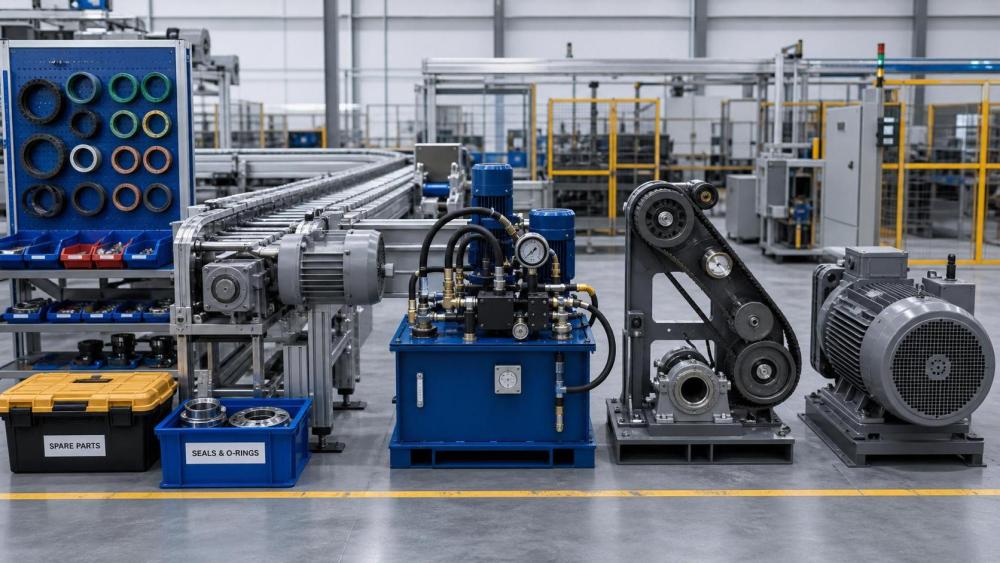
Equipment Maintenance Planning is the foundation of effective downtime reduction in modern industrial operations.
A clear plan helps teams protect output, control maintenance cost, and avoid emergency repairs that disrupt production schedules.
In practice, Equipment Maintenance Planning works best when it connects reliability targets, labor timing, spare parts strategy, and asset condition data.
That matters across bearings, hydraulic pumps, pneumatic actuators, chains, belts, couplings, seals, and other critical machine elements.
Downtime reduction is rarely the result of one inspection route or one software tool.
It usually comes from a disciplined framework that reduces hidden failure risk before it becomes a production loss.
This article lays out a practical model that can be applied in mixed industrial environments with different equipment ages, suppliers, and operating loads.
Why Equipment Maintenance Planning Drives Downtime Reduction
Most unplanned stoppages begin with small signals that were missed, delayed, or treated as low priority.
A bearing runs hotter than normal.
A hydraulic motor shows pressure fluctuation.
A belt starts slipping under peak load.
A seal leaks slightly, then contamination spreads.
Without Equipment Maintenance Planning, these issues stay isolated until they force a shutdown.
With proper planning, maintenance teams can rank risk, schedule intervention windows, and prepare parts before failure escalates.
This also improves coordination with production, procurement, and external service partners.
More importantly, downtime reduction becomes measurable instead of reactive.
Start With Equipment Criticality and Failure Impact
The first step in Equipment Maintenance Planning is not building a task list.
It is deciding which assets deserve the most attention.
Every site has a small group of machines that create outsized downtime risk.
These may include spindle systems, conveyor drives, hydraulic power units, compressors, robotic transfer axes, or high-speed packaging lines.
A simple scoring model keeps the evaluation practical:
- Production impact if the asset stops
- Safety or environmental consequence
- Repair lead time and spare part availability
- Failure frequency and historical downtime hours
- Effect on upstream and downstream processes
This ranking creates focus.
It prevents teams from giving equal maintenance effort to noncritical and mission-critical assets.
For downtime reduction, that distinction is essential.
Build a Maintenance Mix That Matches Real Failure Modes
One common mistake is relying on calendar-based maintenance for every asset.
That often creates unnecessary work on stable equipment and misses fast-developing failures elsewhere.
Effective Equipment Maintenance Planning combines several maintenance methods.
- Preventive maintenance for routine lubrication, alignment, filter replacement, and inspection cycles.
- Predictive maintenance for vibration, temperature, oil analysis, pressure trend, and leakage monitoring.
- Condition-based maintenance for components that show clear degradation signals before failure.
- Run-to-failure only for low-risk items with limited operational consequence.
For example, high-precision bearings and couplings often benefit from vibration analysis and alignment control.
Hydraulic systems need pressure stability, contamination control, and seal condition checks.
Pneumatic components may require leak detection, cycle tracking, and actuator response checks.
Chains and belts need wear monitoring, tension review, and surface condition inspection.
This method makes downtime reduction more realistic because each asset gets the right maintenance logic.
Turn Data Into a Weekly Equipment Maintenance Planning Routine
A framework only works when it becomes operational rhythm.
Weekly review is often the best interval for balancing urgency and planning quality.
In actual operations, a short weekly maintenance planning cycle can include:
- Review critical alarms, work orders, and recent stoppages
- Check condition monitoring data for drift or abnormal trends
- Confirm labor availability and required technical skills
- Verify spare parts, seals, bearings, belts, and repair kits
- Align maintenance windows with production plans
- Escalate high-risk deferrals with clear business impact
This routine supports downtime reduction because it closes the gap between raw data and timely action.
It also reduces the habit of pushing maintenance work into the next shutdown without reviewing risk.
Control Spare Parts Risk Before It Creates Downtime
Equipment Maintenance Planning fails quickly when the right part is missing at the right time.
This is especially true for imported bearings, specialized seals, hydraulic valves, servo couplings, or custom chain assemblies.
Downtime reduction depends on linking maintenance strategy with procurement risk.
A useful approach is to separate parts into three categories:
This is where supplier visibility matters.
A maintenance plan is only as reliable as the parts network behind it.
Use Standard Work to Improve Maintenance Quality
A hidden cause of repeat failure is inconsistent maintenance execution.
Two technicians can service the same asset and leave it in very different condition.
That is why Equipment Maintenance Planning should include standard job steps for critical tasks.
Examples include torque checks, lubrication quantity, alignment tolerances, contamination control, seal installation methods, and commissioning verification.
Short checklists are usually enough.
The goal is not paperwork.
The goal is repeatable quality that supports downtime reduction over time.
This becomes even more important when external contractors support shutdown work.
Track the Right Metrics, Not Just Work Order Volume
Many teams say they have strong maintenance control because they close many work orders.
That metric alone says very little about downtime reduction.
A better Equipment Maintenance Planning dashboard should monitor:
- Unplanned downtime hours by asset group
- Mean time between failures for critical equipment
- Planned versus emergency maintenance ratio
- Schedule compliance for critical tasks
- Spare parts stockout incidents
- Repeat failures within 30 or 90 days
From a decision standpoint, these indicators show whether maintenance effort is reducing operational risk or simply keeping teams busy.
A Practical 90-Day Framework for Equipment Maintenance Planning
For sites that need a clear starting point, a 90-day sequence is often realistic.
- Days 1-30: rank critical assets, review failure history, and identify top downtime drivers.
- Days 31-60: define maintenance tasks, inspection routes, parts strategy, and weekly review cadence.
- Days 61-90: launch dashboards, standard work, and escalation rules for deferred maintenance risk.
This phased approach keeps Equipment Maintenance Planning practical.
It also helps teams show visible downtime reduction results without waiting for a full digital transformation program.
Conclusion
Strong Equipment Maintenance Planning gives industrial operations a workable path to downtime reduction.
It aligns asset criticality, maintenance methods, spare parts readiness, execution quality, and decision metrics into one operating system.
In real facilities, the biggest gains usually come from better timing, better prioritization, and fewer overlooked risks.
Start with the equipment that hurts output most.
Build the review rhythm.
Strengthen parts planning.
Then track whether each change delivers measurable downtime reduction.
That is how Equipment Maintenance Planning moves from a maintenance activity to a real business control tool.
Want to dive deeper into these market dynamics, or need data-driven support for your next business move? Drop a line below and let the analysts at PCTS provide customized insights.
We respect your privacy. Your information is strictly confidential.
Related News
- 00
0000-00
How to check vibration analysis software for sensor compatibility - 00
0000-00
IndexBox Forecasts 3.8% Annual Growth for Global Radial Seals Market Through 2035 - 00
0000-00
How to assess the chemical compatibility of FFKM sealing sheets - 00
0000-00
IndexBox Forecasts 3.6% Annual Growth for Construction Bearings Market - 00
0000-00
When do hydraulic components require an export license?
Weekly Insights
Stay ahead with our curated technology reports delivered every Monday.