





China’s Ministry of Commerce and General Administration of Customs jointly issued Announcement No. 50 of 2026 on October 19, introducing export controls on items including tunnelling machines, walking excavators, high-altitude wet-mix shotcrete machines and various types of shield tunnelling machines. The controls take effect on November 18, 2026, alongside an update to China’s Dual-Use Items Export Control List.
The announcement has implications for international equipment trade and related supply chains. For shield tunnelling machinery, the potential effects extend to trade and sourcing decisions involving key components such as main bearings, hydraulic systems and seals. The distinction between controls on complete machines and the treatment of individual components will be important when assessing exposure.
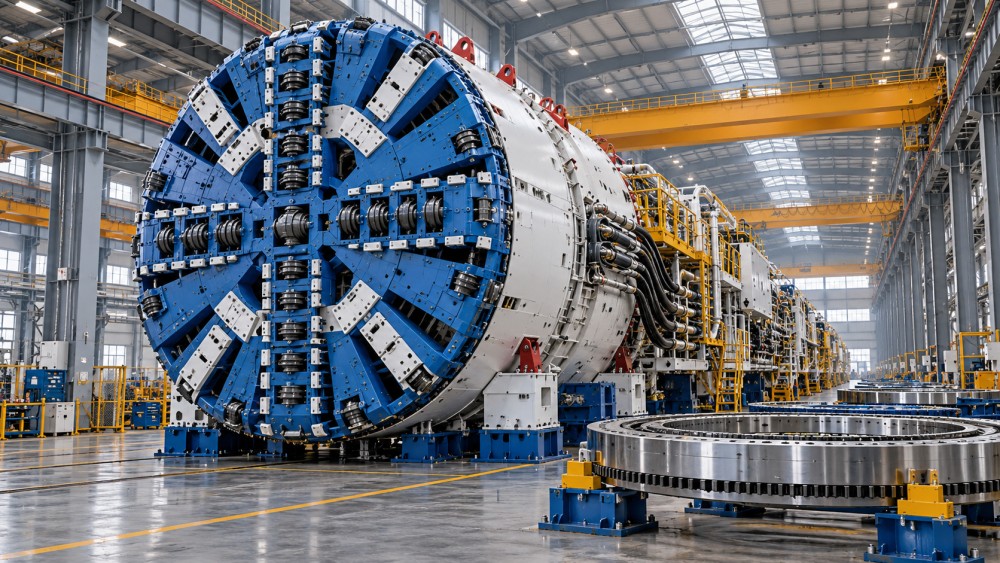
Product scope will shape the immediate impact
For exporters and overseas buyers, an early priority is determining how the listed items correspond to the equipment involved in their transactions. Export controls should not be read as a blanket export ban, nor does the inclusion of a complete machine automatically establish that every associated component is separately controlled. The scope set out in the announcement and the updated list will therefore be central to individual product assessments.
In the period before implementation, the most immediate effects may arise in order reviews, shipment planning and coordination between equipment suppliers and component providers. Where a transaction involves a controlled item, additional compliance considerations could affect delivery arrangements. The extent of any disruption will depend on the products involved and the applicable requirements.
Component supply chains warrant closer attention
For suppliers of main bearings, hydraulic systems and seals, exposure may arise through direct component exports or through their role in supplying complete machines. These routes could create different commercial effects: a change affecting an equipment shipment may also influence component purchasing schedules, even where the component’s own regulatory treatment differs.
The announcement alone does not establish that shortages, price increases or a relocation of supply chains will follow. Those outcomes would depend on how the controls apply to specific transactions and how suppliers and buyers respond. Further official clarification on product coverage and implementation, together with company disclosures on delivery arrangements, will help show whether the effects remain concentrated in export procedures or extend into broader sourcing decisions.
Want to dive deeper into these market dynamics, or need data-driven support for your next business move? Drop a line below and let the analysts at PCTS provide customized insights.
We respect your privacy. Your information is strictly confidential.
Related News
- 00
0000-00
How to check vibration analysis software for sensor compatibility - 00
0000-00
IndexBox Forecasts 3.8% Annual Growth for Global Radial Seals Market Through 2035 - 00
0000-00
How to assess the chemical compatibility of FFKM sealing sheets - 00
0000-00
IndexBox Forecasts 3.6% Annual Growth for Construction Bearings Market - 00
0000-00
When do hydraulic components require an export license?
Weekly Insights
Stay ahead with our curated technology reports delivered every Monday.