





The 2026 Global Developer Pioneers Conference, held in Shanghai from October 23 to 25, highlighted lower-cost domestic bearings as a potential development for robot procurement and supplier qualification. The supplied account describes product pricing and validation progress, but identifies no new policy, regulation, certification requirement or trade rule. From an industry perspective, its relevance lies in how robot manufacturers and component buyers may assess alternative suppliers while maintaining their technical acceptance requirements.
Domestic Bearings Draw Attention Across the Robot Supply Chain
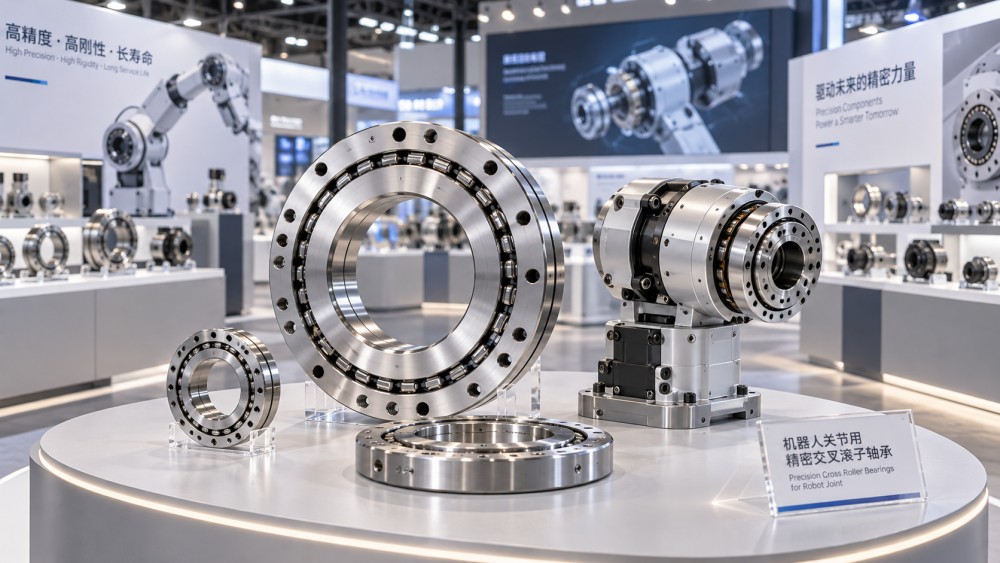
The conference took place in Shanghai, with Hall A bringing together nearly 200 enterprises. Exhibits covered the industrial chain from millimeter-scale high-precision bearings to complete humanoid robots.
A domestic bearing manufacturer exhibited cross-roller bearings designed for humanoid robots, with unit prices reduced to between 100 and 300 yuan. According to the supplied account, these prices were less than half those of comparable foreign products. Some models had passed validation by leading robot manufacturers.
The account presents these developments as a cost-reduction breakthrough for domestic precision bearings in robot mass production. It does not identify the validated models, validation criteria, purchasing volumes or delivery commitments.
Lower Prices May Change Sourcing Decisions, While Acceptance Criteria Still Matter
Robot Manufacturers May Have More Alternatives to Evaluate
Analysis suggests that the reported price difference could encourage robot manufacturers to evaluate domestic bearings for relevant applications. The immediate implications would concern component selection, engineering validation and purchasing decisions. Because the reported validation applies to some models, buyers should assess whether the supporting evidence covers the particular bearing and robot application under consideration.
Component Suppliers May Face Closer Scrutiny of Qualification Evidence
From a supplier perspective, lower prices may attract inquiries, but conversion into orders could depend on the quality and scope of technical documentation. Buyers may seek model-specific specifications, test results and traceability records. These are procurement considerations suggested by the reported validation progress; the input does not establish any newly mandatory documentation requirement.
Integrators May Need to Reassess the Full Cost of Substitution
Analysis suggests that equipment integrators considering these bearings may need to evaluate compatibility, assembly requirements and acceptance testing alongside purchase price. A lower component price could support cost reduction, but the supplied information does not establish the cost of integration or the savings achievable across a complete robot.
Procurement Reviews Should Connect Price, Validation and Delivery
Check What the Quoted Price Covers
As a practical recommendation, buyers could confirm which models fall within the reported 100-to-300-yuan range and whether competing quotations cover equivalent specifications and commercial terms. The input does not provide order quantities or quotation conditions, so the reported price comparison should be treated as a starting point for evaluation rather than a universal purchasing benchmark.
Establish the Scope of Manufacturer Validation
Buyers could request evidence identifying the validated model, test scope and applicable operating conditions. Validation by a robot manufacturer should not be treated as proof of a regulatory certification that the supplied account does not identify. Analysis suggests that keeping customer acceptance and any applicable compliance review distinct would help procurement teams avoid unsupported qualification claims.
Confirm Readiness for Repeat Orders
For companies considering a supplier change, it may be useful to verify delivery schedules, batch consistency, quality records and arrangements for handling defects. The exhibition account does not establish production capacity or sustained delivery performance. Any purchasing plan would therefore benefit from supplier-specific confirmation before relying on the reported prices for production budgeting.
Review Existing Purchasing Documents Before Substitution
As a procurement precaution, companies could check whether their existing specifications, contracts or customer approval procedures allow the proposed substitution. Where additional approval or testing is applicable, it should be addressed within that particular purchasing process. The conference report itself provides no evidence that existing requirements have been relaxed or replaced.
A Supplier Qualification Signal Rather Than a Confirmed Rule Change
Editorial assessment: this development is best understood as evidence of progress in domestic component pricing and selected customer validation. It does not demonstrate the introduction or implementation of a new industry rule. Its possible significance for procurement practice is that more buyers may consider domestic bearings for qualification, subject to their own technical and commercial requirements.
What deserves closer attention is whether validation extends to additional models and whether reported pricing is supported by consistent quality and dependable deliveries. Changes to customer specifications, tender documents or supplier approval practices could provide further evidence of market adoption, but none is confirmed in the supplied information.
Cost Reduction Remains Dependent on Application-Level Evidence
Analysis suggests that the conference offers a concrete reason for robot manufacturers to revisit bearing sourcing options. The reported prices and validation progress support further evaluation, while leaving the suitability of individual models and the economics of production use to be established. Companies can reasonably treat the news as a procurement opportunity requiring verification, without assuming a change in regulatory obligations or automatic acceptance across robot platforms.
Basis of Reporting and Matters Requiring Follow-Up
This article is based solely on the user-provided news title, event dates and event summary. No specific official source links were provided in the input; the underlying information therefore remains subject to continued verification.
Relevant follow-up materials could include official conference announcements, supplier technical documents and statements from robot manufacturers concerning validation. Further reporting should monitor model coverage, quotation conditions, delivery performance and customer feedback. Any subsequent claim of a policy, standard, certification or trade-rule change would require separate verification against the relevant official documents.
Want to dive deeper into these market dynamics, or need data-driven support for your next business move? Drop a line below and let the analysts at PCTS provide customized insights.
We respect your privacy. Your information is strictly confidential.
Related News
- 00
0000-00
IndexBox Forecasts 3.8% Annual Growth for Global Radial Seals Market Through 2035 - 00
0000-00
How to assess the chemical compatibility of FFKM sealing sheets - 00
0000-00
IndexBox Forecasts 3.6% Annual Growth for Construction Bearings Market - 00
0000-00
When do hydraulic components require an export license? - 00
0000-00
How to size modular pneumatic valve systems for adequate airflow
Weekly Insights
Stay ahead with our curated technology reports delivered every Monday.