





Sealing Materials for Hydraulics: PU, FFKM, or Mechanical Seals?
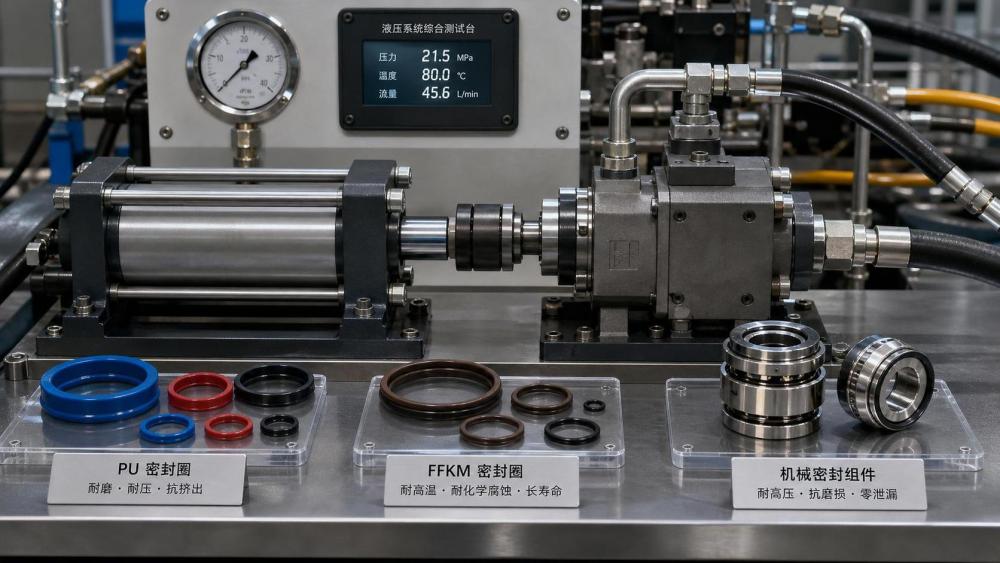
Choosing sealing materials for hydraulics is rarely a simple material question.
It affects leakage control, maintenance cycles, contamination risk, and long-term sourcing cost.
That is why buyers often compare PU, FFKM, and mechanical seals side by side.
Each option solves a different hydraulic sealing problem.
The right decision depends on pressure, motion type, fluid chemistry, temperature, and service expectations.
In practical procurement, the best sealing materials for hydraulics balance performance and replacement economics.
This guide compares the three options in a decision-focused way.
The goal is to make hydraulic seal selection faster, clearer, and less risky.
Why Sealing Materials for Hydraulics Matter in Procurement
Hydraulic systems fail expensively when seals are mismatched.
A low-cost seal can trigger oil leakage, pressure drop, unplanned shutdowns, or contaminated product lines.
More importantly, wrong sealing materials for hydraulics often hide their weakness until field conditions become harsh.
Recent buying patterns show more attention on total cost of ownership, not just unit price.
This shift is visible in heavy equipment, industrial presses, marine hydraulics, and chemical processing systems.
In these settings, seal failure can also affect safety and compliance.
So material selection should start from operating reality, not catalog habit.
PU Seals: Practical Value for Dynamic Hydraulic Applications
PU, or polyurethane, is one of the most common sealing materials for hydraulics.
It is widely used in rod seals, piston seals, wipers, and wear rings.
Its popularity comes from strong abrasion resistance and good mechanical strength.
For cylinders with repeated motion, PU often delivers reliable service at a manageable cost.
Where PU Performs Well
- Mobile hydraulics and construction machinery
- Standard industrial cylinders
- Applications with moderate temperature and clean fluid conditions
- Systems where wear resistance matters more than chemical extremes
Main Buying Advantages
- Competitive cost
- Strong tear and extrusion resistance
- Good fit for dynamic sealing
- Broad market availability
Still, PU is not a universal answer.
Its limits appear under high heat, aggressive chemicals, and certain synthetic fluids.
Hydrolysis can also become a concern in wet environments, depending on grade.
So when evaluating sealing materials for hydraulics, PU works best in mainstream duty, not extreme media exposure.
FFKM Seals: Premium Chemical and Temperature Resistance
FFKM sits at the high end of sealing materials for hydraulics.
It is chosen when fluid compatibility and temperature stability are more critical than upfront price.
This material performs well in aggressive chemicals, high-purity environments, and severe thermal conditions.
That makes it relevant for specialty hydraulic systems in semiconductor, aerospace, chemical, and high-value process equipment.
Where FFKM Makes Sense
- Hydraulic circuits exposed to aggressive additives or cleaning chemicals
- High-temperature operation with frequent thermal cycling
- Applications where leakage causes very high downtime cost
- Systems requiring long service intervals and low contamination risk
The challenge is obvious: FFKM is expensive.
Lead times can also be longer, especially for non-standard profiles or certified grades.
In standard cylinder service, the added performance may not create real economic return.
So FFKM should be selected for risk control, not prestige.
Mechanical Seals: Different Structure, Different Decision Logic
Mechanical seals are often compared with elastomer-based sealing materials for hydraulics, but they serve a different design role.
They are commonly used on rotating shafts, pumps, and mixers rather than simple reciprocating cylinders.
If the hydraulic system includes rotating equipment, mechanical seals may be the correct sealing strategy.
Their performance depends on face materials, spring design, lubrication conditions, and shaft alignment.
Typical Strengths
- Effective sealing for rotating equipment
- Better leakage control than many simple lip seal arrangements
- Suitable for higher pressure and demanding fluid containment
- Long service life when installation and lubrication are correct
However, mechanical seals require careful installation and stable operating conditions.
Misalignment, dry running, or vibration can shorten life quickly.
That means the decision is less about material alone and more about equipment design maturity.
PU vs FFKM vs Mechanical Seals: A Practical Comparison
When comparing sealing materials for hydraulics, direct side-by-side criteria help prevent overspecification.
This comparison shows that no single option dominates every hydraulic sealing requirement.
How to Choose Sealing Materials for Hydraulics Step by Step
A structured selection process usually prevents the most expensive mistakes.
- Confirm the motion type first: static, reciprocating, or rotating.
- Check operating pressure, peak pressure, and pressure cycling.
- Map fluid chemistry, additives, water content, and cleaning exposure.
- Define continuous and peak temperature ranges.
- Review shaft speed, surface finish, and hardware tolerances.
- Estimate downtime cost, replacement labor, and inventory strategy.
- Ask suppliers for media compatibility and service-life evidence.
In real projects, failures usually come from skipped details in steps three and four.
A seal that handles pressure may still fail because fluid chemistry changes during cleaning cycles.
That is especially relevant when choosing sealing materials for hydraulics in mixed-duty plants.
Common Sourcing Risks and How to Avoid Them
Material selection errors often start in the RFQ stage.
- Ordering by old part number while the fluid specification has changed
- Choosing PU without checking heat aging limits
- Using FFKM where standard media does not justify premium cost
- Comparing mechanical seals only by price, not face design or balance type
- Ignoring installation conditions and field maintenance capability
A stronger RFQ should include medium, temperature, pressure profile, motion mode, and expected maintenance interval.
This gives suppliers enough context to recommend suitable sealing materials for hydraulics instead of generic equivalents.
It also improves quote comparability across global sources.
Final Decision Guide
Choose PU when the application is a standard dynamic hydraulic duty with strong wear demand and controlled temperatures.
Choose FFKM when chemical attack, heat, contamination risk, or downtime cost is unusually high.
Choose mechanical seals when the sealing point involves rotating shafts or pump-style hydraulic equipment.
The most effective sealing materials for hydraulics are the ones matched to the system’s real failure drivers.
Good sourcing decisions come from technical clarity, not from buying the most expensive option.
Before placing the next order, validate fluid compatibility, operating extremes, and replacement economics together.
Want to dive deeper into these market dynamics, or need data-driven support for your next business move? Drop a line below and let the analysts at PCTS provide customized insights.
We respect your privacy. Your information is strictly confidential.
Related News
- 00
0000-00
How sealing technology reduces contamination in semiconductor manufacturing - 00
0000-00
Where to install vibration sensors on rotating machinery - 00
0000-00
NTSB Probe Finds Boeing Warned of MD-11 Engine Bearing Risk Years Earlier - 00
0000-00
How to size pneumatic grippers for packaging system integration - 00
0000-00
How to size alloy steel power transmission chains for heavy loads
Weekly Insights
Stay ahead with our curated technology reports delivered every Monday.