





On June 1, 2026, Japan’s Ministry of Finance launched a dual-track anti-dumping investigation into cold-rolled and hot-rolled iron or non-alloy steel strip products originating in China, following an application from four Japanese steelmakers including Nippon Steel. For the PU hydraulic seal supply chain, this development deserves close attention because the steel products under review are core base materials for seal skeletons, metal inserts, and high-strength seal housings, which may increase near-term export cost pressure and delivery uncertainty for related sealing components.
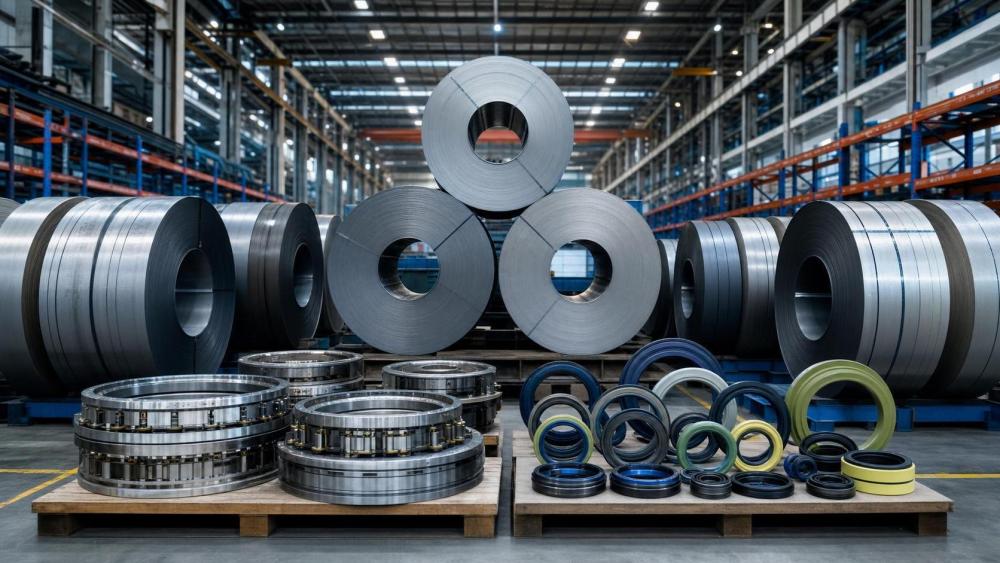
What Has Been Confirmed So Far
The confirmed information is limited but commercially relevant. The investigation was initiated on June 1, 2026 by Japan’s Ministry of Finance in response to an application from four Japanese steel companies. The scope covers cold-rolled and hot-rolled iron or non-alloy steel strip products from China, with HS code coverage including 7209, 7208, 7225, and 7226 across 21 items. The material involved is identified in the input as a key substrate used in PU hydraulic seal frameworks, metal inserts, and high-strength seal casings.
Based on the provided summary, the immediate issue is not a confirmed change in final trade outcomes, but the start of an investigation affecting an upstream steel category that matters to seal-related manufacturing and export activity.
Why the Seal Supply Chain Is Paying Attention
Pressure may first appear in direct export transactions
From an industry perspective, companies directly exporting PU hydraulic seals or related components may be among the first to feel the impact. The reason is straightforward: if the steel strip under investigation is part of the cost structure of skeletons, inserts, or housings, trade compliance risk and pricing uncertainty can quickly move into quotations, contract discussions, and shipment planning.
Procurement teams need to watch upstream material exposure
For raw material and component procurement teams, the main issue is whether affected steel categories are embedded in current sourcing arrangements. What deserves closer attention is not only the material specification itself, but also whether existing purchase plans, supplier commitments, and lead-time assumptions rely on the steel strip categories named in the investigation scope.
Manufacturers may face planning friction in production and delivery
Seal processors and manufacturers using steel-backed structures, metal inserts, or high-strength housings may face short-term planning pressure if upstream pricing or supply expectations shift. Analysis shows that even without a final trade result, an investigation can create uncertainty around production scheduling, delivery promises, and customer response timelines.
Supply chain service providers should monitor documentation and timing
For logistics, trade service, and channel-side participants, the practical concern is execution risk. If customers or suppliers begin revisiting product classification, material origin, or shipment timing, the operational burden may move into document preparation, communication cycles, and coordination around delivery windows.
What Companies Should Track Now
Follow official wording and scope updates closely
Analysis shows that the most important near-term task is to track how the official scope is described in subsequent statements. The difference between a broad policy headline and the exact product scope can matter significantly for businesses handling steel-backed seal components or related assemblies.
Review which product lines rely on the covered steel inputs
Companies should map where cold-rolled or hot-rolled iron or non-alloy steel strip is used inside PU hydraulic seal structures, especially in skeletons, inserts, and high-strength housings. This is less about making assumptions on final impact and more about identifying which quotations, orders, or export-facing product lines could be more sensitive to upstream material changes.
Separate policy signal from immediate operational effect
Observably, the launch of an investigation is a policy and trade signal, but it is not identical to a final commercial outcome. Businesses should therefore avoid treating all exposure as already realized, while still preparing for possible effects on cost discussions, delivery commitments, and customer expectations.
Prepare supplier, document, and customer communication checks
In practical terms, firms should pay attention to supplier qualifications, product descriptions, supporting trade documents, and contract timelines. Where customer deliveries may be affected by longer decision cycles or cost adjustments, early communication may be more useful than waiting for uncertainty to escalate into shipment-stage problems.
How This Development Is Best Understood
Observably, this news is better understood as an upstream risk signal rather than a concluded market outcome. The confirmed fact is the start of a dual-track anti-dumping investigation; the broader commercial consequences remain subject to how the case develops. For the PU hydraulic seal segment, the relevance lies in the material linkage: when a core steel substrate enters a trade investigation, downstream manufacturers and exporters may need to reassess exposure even before any final decision is known.
From an industry perspective, this is not yet a basis for sweeping conclusions about long-term market restructuring. It is, however, a development that merits continued monitoring because it touches a material category tied directly to cost, lead time, and delivery reliability in specific seal-related applications.
A Near-Term Signal, Not a Final Market Verdict
The industry significance of this case lies in its position upstream of PU hydraulic seal manufacturing. The immediate takeaway is not that outcomes are settled, but that a key steel input has entered a formal trade review in Japan. It is more appropriate to understand this as a near-term warning sign for cost and delivery uncertainty, combined with a longer observation point for businesses exposed to steel-backed seal structures and related exports.
Basis of This Article
This article is generated from the user-provided news title, event date, and event summary. The information available for this piece is limited to the reported launch of Japan’s anti-dumping investigation on June 1, 2026, the product scope as described in the input, and the stated relevance of the steel products to PU hydraulic seal skeletons, metal inserts, and high-strength seal housings.
For this type of development, source categories typically worth checking include official government notices, company disclosures, industry association updates, authoritative media reporting, and classification or standards-related documents. No specific official source link was provided in the input, so the exact official documentation still requires ongoing verification. Continued attention should focus on any follow-up wording on investigation scope, affected product interpretation, and implications for cost and delivery execution.
Want to dive deeper into these market dynamics, or need data-driven support for your next business move? Drop a line below and let the analysts at PCTS provide customized insights.
We respect your privacy. Your information is strictly confidential.
Related News
- 00
0000-00
How to check vibration analysis software for sensor compatibility - 00
0000-00
IndexBox Forecasts 3.8% Annual Growth for Global Radial Seals Market Through 2035 - 00
0000-00
How to assess the chemical compatibility of FFKM sealing sheets - 00
0000-00
IndexBox Forecasts 3.6% Annual Growth for Construction Bearings Market - 00
0000-00
When do hydraulic components require an export license?
Weekly Insights
Stay ahead with our curated technology reports delivered every Monday.