





As of July 1, 2026, importers shipping certain power transmission and industrial components into Pakistan face a new documentation threshold. The Pakistan Standards and Quality Control Authority (PSQCA) issued an urgent notice on June 19 requiring certified supply chain due diligence records and a written no forced labor declaration for imported mechanical seals, heavy-duty roller chains, PU timing belts, and self-lubricating chains. For traders, manufacturers, procurement teams, and customs-facing supply chain operators, the immediate issue is not only compliance on paper, but the risk of cargo being held and clearance extending beyond 21 days if documents are missing.
What the PSQCA Notice Confirms
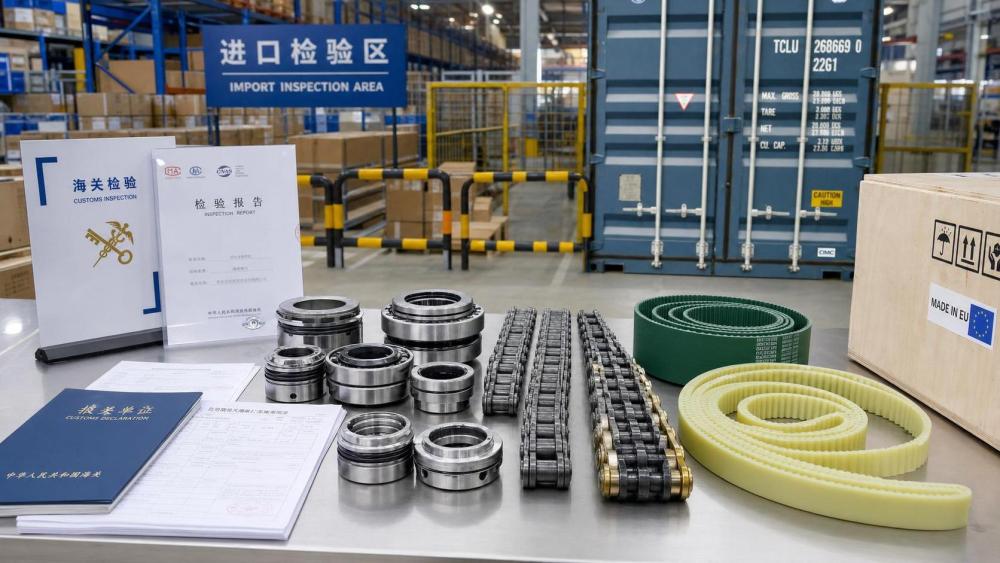
The confirmed facts are narrow but operationally significant. PSQCA released an emergency notice on June 19, 2026, and set July 1, 2026 as the effective date for the new import requirement. The rule applies to four product groups: mechanical seals, heavy-duty roller chains, PU timing belts, and self-lubricating chains.
Under the notice, imports of those products must be accompanied by two compliance items: a certified supply chain due diligence report and a written declaration stating that no forced labor was involved. If those materials are not submitted, customs will detain the shipment and initiate an anti-circumvention review. According to the information provided, that process can extend customs clearance by more than 21 days.
Where the Pressure Will Be Felt First
Import traders face an immediate documentation risk
From an industry perspective, direct importers are the first group likely to feel the impact because they sit at the point where shipment paperwork meets customs control. The main exposure is at filing and clearance, where missing or incomplete compliance documents could turn a routine import into a delayed consignment.
Manufacturing buyers may see disruption in inbound planning
Companies purchasing these components for production or maintenance may be affected indirectly if imported goods are held at the border. Analysis shows the issue is not limited to the legal requirement itself; it can also affect procurement timing, production scheduling, and replacement-part availability where the covered product categories are involved.
Supply chain service providers will need tighter document coordination
Customs brokers, logistics coordinators, and other supply chain service providers may not be the legal subject of the notice, but they are likely to carry the operational burden of checking whether shipment files are complete before arrival. What deserves closer attention is the handoff between suppliers, importers, and customs-facing teams, because delays may begin with document gaps rather than with the physical goods.
Distributors and downstream buyers may need earlier visibility
Channel distributors and downstream industrial buyers could also be affected if import lead times become less predictable. Observably, the new requirement makes pre-shipment visibility into compliance documentation more important, especially where delivery commitments depend on imported seals, chains, or belts arriving on schedule.
What Companies Should Check Now
Whether the covered product scope matches current shipments
The first practical question is whether current or near-term imports into Pakistan include any of the four named product categories. Businesses should review open orders, in-transit cargo, and scheduled shipments against the notice rather than assume a general exemption or a broader product interpretation that has not been confirmed.
Whether supporting files are ready before customs touchpoints
The notice links compliance directly to shipment release, so document timing matters as much as document existence. Companies should focus on whether the certified due diligence report and written no forced labor declaration are prepared in a form that can travel with the shipment and be presented without delay.
Whether supplier communication is specific enough
Analysis shows a common business risk in cases like this is vague supplier confirmation. What deserves closer attention is whether upstream suppliers understand that the requirement is not described as a general ethics statement, but as shipment-linked compliance documentation tied to customs consequences.
Whether customer and delivery expectations need adjustment
For firms with contractual delivery timelines, the more immediate task may be communication rather than policy interpretation. If any shipment lacks the required materials, the stated customs detention and anti-circumvention review process could affect delivery commitments, so commercial teams may need to update customers and internal planning assumptions quickly.
Why This Looks Like More Than a Routine Filing Change
Analysis shows this development is best read as an enforcement-oriented trade compliance signal rather than a minor administrative update. The short implementation window, the product-specific scope, and the stated consequence of detention plus anti-circumvention review all suggest that documentation standards are becoming part of market access for the covered goods.
At the same time, it is more appropriate to understand this as an active regulatory development that still requires observation, not as a basis for broad conclusions about all industrial imports or wider market outcomes. The confirmed information is limited to the listed product groups and the stated documentation requirement, so any wider interpretation should remain cautious.
How to Read the Current Signal
The practical significance of this notice lies in the combination of immediacy and operational impact. It does not yet confirm broader structural change beyond the named categories, but it clearly raises the importance of supply chain traceability documents in customs clearance for those imports. A neutral reading is that this is both a short-term compliance change and a longer-term signal worth monitoring, especially for businesses that rely on repeat shipments of the affected components into Pakistan.
Basis of This Article
This article is based on the user-provided news title, event date, and event summary concerning the PSQCA emergency notice and its July 1, 2026 implementation timeline. Typical source types for developments of this kind may include official notices, company disclosures, industry association updates, authoritative media reporting, and standards-related documents. A specific official source link was not provided in the input, so the underlying notice text and any subsequent clarification should continue to be verified. Ongoing attention should focus on whether PSQCA or customs authorities issue further wording, interpretation, or procedural detail affecting document review and shipment clearance.
Want to dive deeper into these market dynamics, or need data-driven support for your next business move? Drop a line below and let the analysts at PCTS provide customized insights.
We respect your privacy. Your information is strictly confidential.
Related News
- 00
0000-00
IndexBox Forecasts 3.8% Annual Growth for Global Radial Seals Market Through 2035 - 00
0000-00
How to assess the chemical compatibility of FFKM sealing sheets - 00
0000-00
IndexBox Forecasts 3.6% Annual Growth for Construction Bearings Market - 00
0000-00
When do hydraulic components require an export license? - 00
0000-00
How to size modular pneumatic valve systems for adequate airflow
Weekly Insights
Stay ahead with our curated technology reports delivered every Monday.