





Chemical Seal Failure Analysis: Common Root Causes and Fixes
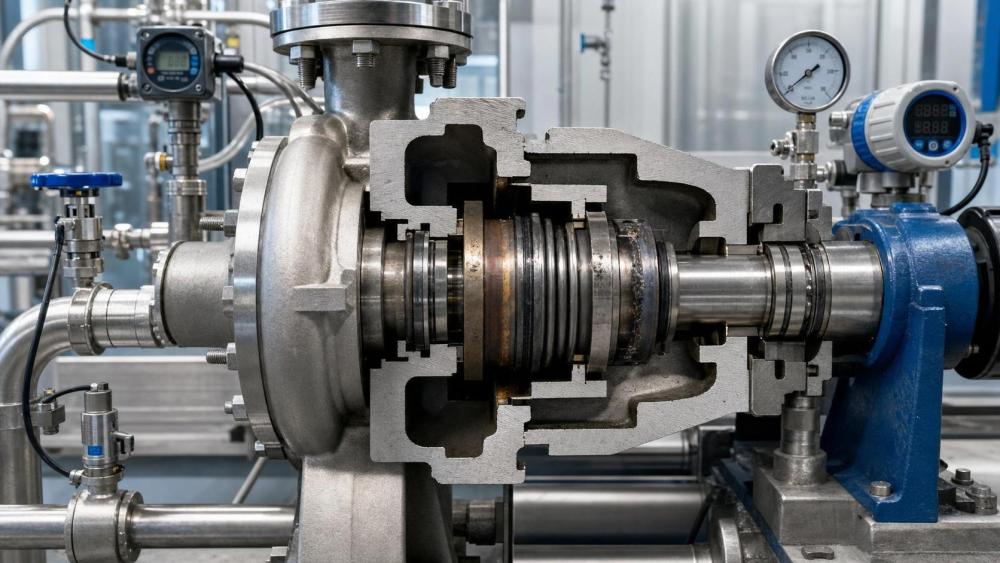
Chemical seal failure analysis matters because most seal breakdowns do not begin with a dramatic leak. They begin with small changes that are easy to dismiss.
A slight odor. A thin residue. Rising pump temperature. Irregular torque. Minor product loss. These signals often appear days or weeks before a shutdown.
For industrial plants, chemical seal failure analysis supports two goals at once: process reliability and risk control. That is why it belongs in both maintenance planning and incident review.
The challenge is that seal damage rarely has one simple cause. Material attack, thermal cycling, shaft movement, pressure spikes, and installation errors can overlap.
In practice, strong chemical seal failure analysis links physical evidence with operating history. Without that link, teams often replace parts but miss the real failure mechanism.
This article explains the most common root causes, what failure patterns look like, and which corrective actions usually deliver the fastest reliability gains.
Why chemical seals fail in real operations
Chemical seals work at the edge of several stresses. They must contain aggressive fluids while tolerating pressure, temperature, motion, and contamination at the same time.
That combination makes chemical seal failure analysis different from a simple visual inspection. The damaged seal is only one part of the evidence chain.
A useful review starts with three questions. What changed? When did it change? Which operating condition moved outside the normal window?
Recent operating changes often explain failure better than part age alone. New cleaning chemicals, faster cycle times, higher viscosity, or altered startup routines can all matter.
Common evidence sources
- Leak pattern around the seal face, gland, or shaft
- Changes in flush flow, barrier fluid, or cooling performance
- Surface condition, swelling, hardening, cracking, or extrusion
- Pressure and temperature history before the event
- Installation records, torque values, and alignment checks
When those data points are reviewed together, chemical seal failure analysis becomes much more accurate and much less speculative.
Root cause 1: Material incompatibility
Material mismatch is one of the most frequent findings in chemical seal failure analysis. It is also one of the most preventable.
Elastomers and seal faces react differently to acids, solvents, hydrocarbons, oxidizers, steam, and cleaning agents. A material that survives one medium may fail quickly in another.
Typical warning signs include swelling, softening, blistering, surface tackiness, shrinkage, and unusual color change. Hardening and embrittlement also appear in high-temperature chemical exposure.
This is where procurement decisions affect reliability. A low-cost substitute seal can introduce major process risk if chemical resistance data are incomplete.
Practical fixes
- Verify fluid composition, concentration, and cleaning chemistry
- Check temperature peaks, not only average operating temperature
- Review compatibility data for elastomers and face materials
- Confirm that replacement parts match the approved specification
- Use failure samples for lab confirmation when attack is unclear
In many cases, chemical seal failure analysis shows that the seal material was acceptable on paper but not under actual process concentration or temperature swings.
Root cause 2: Thermal stress and dry running
Heat is another major driver behind seal damage. Even chemically resistant materials lose performance quickly when thermal control is poor.
Dry running is especially destructive. Without enough lubrication film, friction rises sharply. Seal faces overheat, warp, and wear at an accelerated rate.
Chemical seal failure analysis often connects thermal failure with blocked flush lines, low barrier fluid level, air entrainment, or incorrect startup sequencing.
Visible clues include blueing, carbon tracking, face scoring, brittle elastomers, and deposits baked onto the sealing area.
How to reduce thermal damage
- Confirm flush flow, cooling flow, and barrier pressure before startup.
- Install interlocks for low flow, low level, and high temperature.
- Review transient events such as rapid ramp-up and emergency stops.
- Inspect for vaporization near the seal faces in hot services.
From a risk perspective, thermal events are important because they can turn a minor seal issue into a sudden release event.
Root cause 3: Pressure imbalance and mechanical overload
Pressure-related failures are common in pumps, mixers, reactors, and dosing systems. They are sometimes mistaken for ordinary wear, which delays the real fix.
Chemical seal failure analysis should check whether the seal design matches normal pressure, upset pressure, and pressure cycling frequency.
Excessive differential pressure can distort faces, force elastomers into clearances, and trigger extrusion or rapid deformation. Pulsation can worsen the damage.
Mechanical overload can also come from shaft runout, bearing wear, misalignment, or vibration. In those cases, the seal is reacting to another machine fault.
Inspection points that matter
- Pressure spikes during startup, shutdown, and valve movement
- Runout, concentricity, and shaft sleeve condition
- Bearing looseness and coupling alignment
- Seal support system settings and regulator stability
- Evidence of extrusion, nibbling, or uneven face contact
This is where chemical seal failure analysis overlaps with rotating equipment diagnostics. Treating the seal alone usually leaves the core problem untouched.
Root cause 4: Installation errors and handling damage
A surprisingly large share of failures begin during storage, handling, or assembly. The damage is often small, but the service consequence is not.
Chemical seal failure analysis frequently finds twisted O-rings, scratched faces, contaminated components, incorrect lubrication, and improper compression settings.
Even a clean part can fail early if the installation tool is wrong or if shaft edges are not protected during assembly.
Documentation also matters. If spare parts are mixed across similar models, traceability breaks and failure analysis becomes harder.
Better installation controls
- Use standard work instructions with photos and torque values.
- Protect seal surfaces from dirt, burrs, and sharp shaft edges.
- Verify orientation, compression, and lubrication method.
- Record lot numbers and part codes for traceability.
For quality teams, these controls make chemical seal failure analysis faster because evidence is cleaner and substitution risk is lower.
A practical failure analysis workflow
A disciplined workflow prevents guesswork. It also turns one failure event into a repeatable learning process for future reliability decisions.
The strongest chemical seal failure analysis reports do not stop at the damaged part. They close the loop with data, corrective action, and verification.
How to prevent repeat failures
Prevention starts by treating seal performance as a system issue, not only a spare part issue. That shift usually delivers the biggest reliability improvement.
Use chemical seal failure analysis findings to update approved materials, operating limits, inspection intervals, and installation standards.
It also helps to flag repeat patterns by asset type. If similar failures appear across one production line, the issue may be systemic rather than local.
For safety-sensitive services, trigger review when any of these signals appear:
- Unexplained seal temperature increase
- Frequent top-up of barrier or flush fluid
- Recurring residue near the same equipment
- Unexpected vibration after maintenance work
- Shortened seal life after process changes
In the end, chemical seal failure analysis is most valuable when it drives a better standard, not just a faster replacement. That is how plants reduce leaks, protect uptime, and lower total operating risk.
Want to dive deeper into these market dynamics, or need data-driven support for your next business move? Drop a line below and let the analysts at PCTS provide customized insights.
We respect your privacy. Your information is strictly confidential.
Related News
- 00
0000-00
How to check vibration analysis software for sensor compatibility - 00
0000-00
IndexBox Forecasts 3.8% Annual Growth for Global Radial Seals Market Through 2035 - 00
0000-00
How to assess the chemical compatibility of FFKM sealing sheets - 00
0000-00
IndexBox Forecasts 3.6% Annual Growth for Construction Bearings Market - 00
0000-00
When do hydraulic components require an export license?
Weekly Insights
Stay ahead with our curated technology reports delivered every Monday.