





FFKM seal performance: why the price question is really a risk question
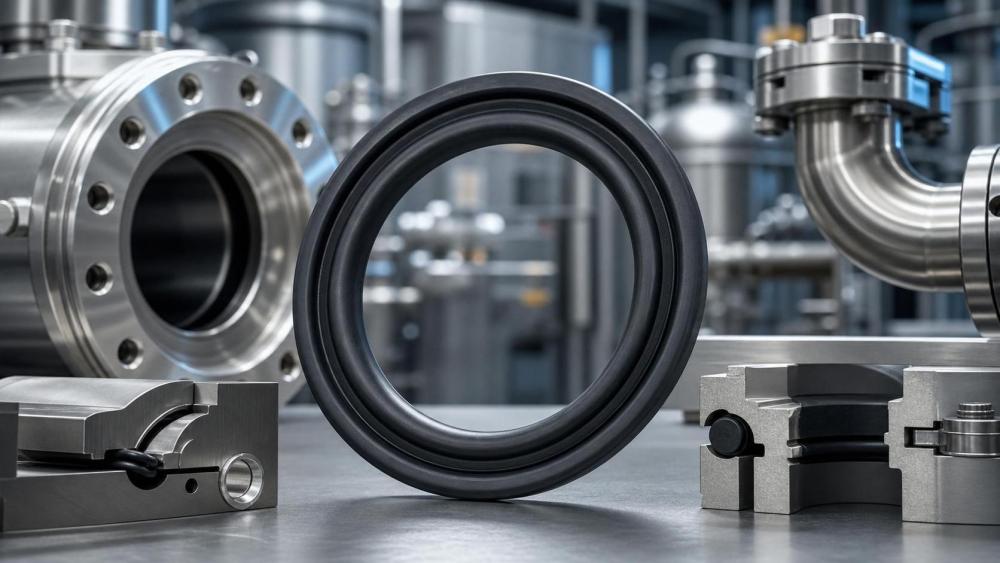
FFKM seal performance usually enters discussion when standard elastomers start failing too often, too early, or too unpredictably.
That is why unit price alone rarely explains the real buying decision.
In high heat, aggressive chemicals, plasma environments, or ultra-clean processes, one seal failure can trigger scrap, contamination, unplanned shutdowns, or repeat maintenance.
Seen from that angle, higher material cost can be justified when it protects process continuity.
Across industrial MRO and precision component markets, this is a common pattern.
Platforms such as PCTS often frame sealing choices through total cost of ownership, not catalog price.
The useful question becomes simpler: when does FFKM seal performance create measurable economic value?
What does strong FFKM seal performance actually mean in practice?
It does not only mean “high-end material” or “better chemical resistance.”
In practical terms, FFKM seal performance means the seal keeps its shape, elasticity, and sealing force under conditions that degrade many other compounds.
Those conditions often include elevated temperature, mixed chemical exposure, vacuum cycling, reactive gases, and strict cleanliness requirements.
A useful way to judge performance is to look beyond initial leakage tests.
More reliable evaluation includes compression set, swell behavior, outgassing, media compatibility, and service stability across shutdown and restart cycles.
This matters because many seal failures are not dramatic at first.
They begin as slow hardening, small dimension changes, or loss of recovery after repeated thermal exposure.
That is often where FFKM seal performance earns its reputation.
It can hold a tighter performance window when process conditions leave little room for variation.
Where does the extra cost usually pay back fastest?
Not every sealing job needs FFKM.
The cost tends to pay back fastest where failure costs are high and replacement access is difficult.
Typical examples include semiconductor tools, chemical processing skids, pharmaceutical systems, high-purity fluid lines, and vacuum equipment.
It also appears in aggressive cleaning cycles, where standard materials survive production but fail during washdown or sterilization.
A quick decision table helps separate real need from over-specification.
In simpler rotating or static systems with mild fluids, the upgrade may not return enough value.
That is why application context matters more than material prestige.
How should FFKM be compared with FKM, EPDM, or PTFE-based options?
This comparison is where many buying mistakes begin.
FFKM is not a universal replacement for every elastomer or polymer seal.
FKM often works well in oils, fuels, and moderate chemical service at a much lower cost.
EPDM can be the better fit for steam, hot water, or selected polar chemicals.
PTFE-based seals can offer excellent chemical resistance, but they do not behave like elastic O-rings under all load conditions.
So the right comparison is not only resistance on paper.
It is resistance plus resilience, sealing recovery, installation tolerance, and actual maintenance interval.
- Choose FKM when heat and media are demanding, but still within proven standard limits.
- Choose EPDM where steam or water chemistry dominates and fluorinated materials are unnecessary.
- Choose PTFE-based designs when chemical resistance is critical and elasticity is less important.
- Choose FFKM when several severe conditions appear together and failure cost is disproportionate.
In other words, FFKM seal performance becomes valuable when one material must survive a complex duty profile without frequent intervention.
What buying signals suggest the higher material cost is worth it?
There are a few signals that usually indicate a real business case.
The first is repeated seal replacement despite correct installation and groove design.
The second is process sensitivity, where even minor leakage or contamination creates quality loss.
The third is unstable operating media.
A line that sees solvents, acids, cleaning agents, and thermal cycling in one service loop is a common example.
A fourth signal is hidden downtime cost.
When seal replacement requires chamber venting, line flushing, or validation work, the seal price becomes a small part of total expense.
In practical sourcing reviews, it helps to score the decision across four points.
- Failure consequence: leakage, scrap, safety exposure, contamination
- Maintenance burden: access difficulty, shutdown time, labor intensity
- Process severity: temperature, chemistry, cycling, cleanliness requirements
- Performance consistency: variation between lots, intervals, and operating phases
If these factors all rank high, FFKM seal performance usually deserves closer evaluation rather than quick rejection on price.
What mistakes lead to overpaying or underbuying?
One common mistake is buying by generic material name only.
FFKM compounds differ in temperature range, chemical resistance profile, plasma behavior, and compression set performance.
Another mistake is assuming the seal caused the failure without checking hardware condition.
Surface finish, groove fill, squeeze, thermal expansion, and assembly damage can all distort the result.
There is also the opposite problem: staying with a cheaper material long after field data shows recurring losses.
That often looks economical in purchasing records while creating avoidable operating cost elsewhere.
A more disciplined evaluation usually includes these checks.
- Review actual media list, including cleaners, purge gases, and upset conditions.
- Check temperature peaks, not only average operating temperature.
- Match compound data to the process, not just the polymer family.
- Ask for service life evidence from similar duty cycles.
- Separate seal material issues from gland or installation issues.
This is the kind of structured comparison that makes supplier evaluation more useful.
It also fits well with the wider PCTS approach to components, reliability, and lifecycle economics.
How can the decision be tested before a full material change?
A pilot approach is usually more effective than broad replacement.
Start with one failure-prone position or one process step where downtime is expensive and measurable.
Track replacement interval, leakage events, maintenance hours, and any process quality changes.
That creates a decision record based on operating evidence, not assumption.
It is also useful to define acceptance criteria before testing starts.
This method keeps the decision grounded.
It also makes later standardization easier if the trial confirms the value of FFKM seal performance.
A practical way to move forward
The strongest case for FFKM seal performance appears when chemistry, heat, cleanliness, and downtime risk interact.
In those settings, the higher upfront price may reduce total operating cost rather than increase it.
The key is not to treat FFKM as a premium default.
Treat it as a targeted solution for applications where material failure is expensive, repetitive, or process-critical.
A sensible next step is to map current seal failures, identify the most costly positions, and compare compounds using real operating conditions.
That turns a difficult price discussion into a clearer decision about service life, risk, and total ownership value.
Want to dive deeper into these market dynamics, or need data-driven support for your next business move? Drop a line below and let the analysts at PCTS provide customized insights.
We respect your privacy. Your information is strictly confidential.
Related News
- 00
0000-00
How sealing technology reduces contamination in semiconductor manufacturing - 00
0000-00
Where to install vibration sensors on rotating machinery - 00
0000-00
NTSB Probe Finds Boeing Warned of MD-11 Engine Bearing Risk Years Earlier - 00
0000-00
How to size pneumatic grippers for packaging system integration - 00
0000-00
How to size alloy steel power transmission chains for heavy loads
Weekly Insights
Stay ahead with our curated technology reports delivered every Monday.