





From July 1, 2026, a new EU restriction under REACH applies a 0.001% (10 ppm) mass concentration limit to PFAS in FFKM O-rings imported into the EU. For the sealing products trade, this is not just a regulatory update: it directly affects customs clearance, product availability, stock handling, and certification timing, with Chinese exporters and overseas distributors among the most exposed business groups.
What the rule now requires
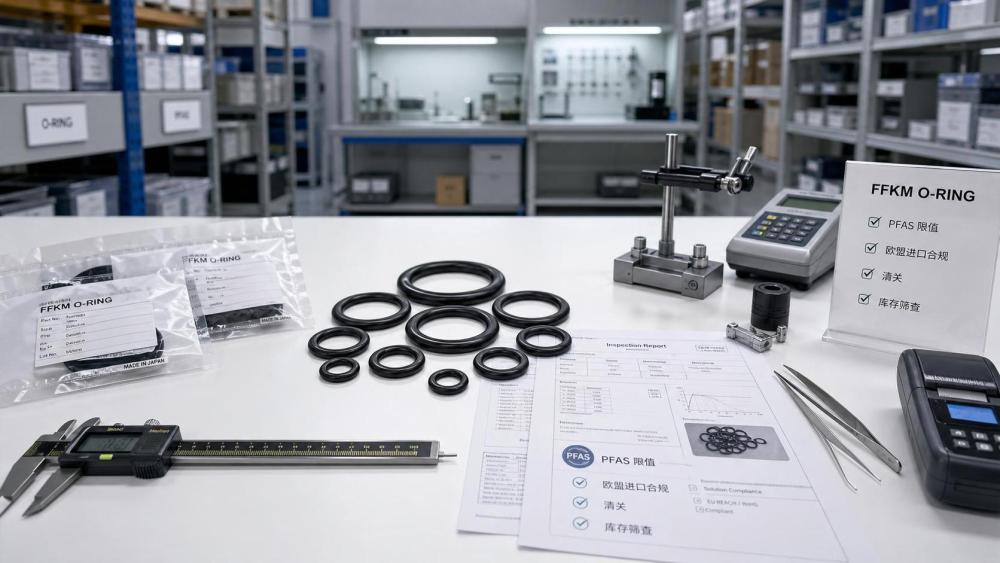
According to the provided information, the EU has added Item 77 to Annex XVII of the REACH Regulation. As of July 1, 2026, FFKM O-rings containing PFAS are subject to a mass concentration limit of 0.001% (10 ppm). The rule applies to all sealing products imported into the EU. Non-compliant products may be refused customs clearance or removed from sale.
Where the pressure is likely to appear first
Export-facing sealing suppliers
From an industry perspective, suppliers shipping sealing products into the EU may face the most immediate operational pressure because market access now depends on whether the imported FFKM O-rings meet the stated PFAS threshold. The main impact is likely to appear in export shipment readiness, compliance review, and product documentation tied to EU-bound orders.
Overseas distributors managing existing inventory
Analysis shows that distributors with stock already positioned for the EU market need to pay close attention to whether the products they hold can remain saleable under the new limit. The practical issue is not only future purchasing but also the pace of inventory screening, listing decisions, and certification updates linked to products already in circulation.
Manufacturing and processing links tied to EU orders
For manufacturers and processors serving EU customers, the impact may center on product qualification and delivery planning. What deserves closer attention is whether compliance confirmation can keep pace with order fulfillment, especially where FFKM O-rings are part of broader sealing product deliveries into the EU market.
Supply chain and trade support functions
Supply chain service providers, including teams handling customs, documents, and shipment coordination, may also be affected because non-compliant goods face the risk of clearance rejection or removal from sale. In business terms, the regulation raises the importance of accurate product information and timing alignment across trade, compliance, and logistics functions.
What companies should focus on now
Separate confirmed legal requirements from internal assumptions
Analysis shows that companies should first anchor their decisions in the confirmed requirement: the 0.001% (10 ppm) PFAS limit for FFKM O-rings imported into the EU from July 1, 2026. Internal interpretations about how this may expand into adjacent categories or processes should be treated as working assumptions, not established facts.
Review product scope and EU-bound inventory together
What deserves closer attention is the connection between product classification and inventory handling. Exporters and distributors should not look only at new production or new purchase orders; they also need to review whether EU-destined stock, pending shipments, and listed products align with the rule now in force.
Watch the timing of certification and document updates
Observably, certification rhythm and document control are now part of the commercial risk. Where products are sold into the EU, companies should focus on whether compliance-related files, customer-facing statements, and shipment documents are current enough to support customs clearance and continued market availability.
Prepare customer and supplier communication around delivery risk
From an industry perspective, communication discipline matters because the consequence of non-compliance is concrete: products may be blocked at the border or removed from sale. That means suppliers, distributors, and buyers should pay attention to delivery schedules, replacement planning, and document consistency in cross-border transactions tied to FFKM O-rings.
Why this matters beyond a single compliance date
This section is an editorial observation. It is more appropriate to understand this development as an immediate compliance change with longer-term signaling value. The immediate part is clear: the limit is in force and linked to customs and sales consequences. The longer-term signal lies in how regulatory enforcement is moving closer to product-level access conditions for imported sealing products. At the same time, any broader conclusion beyond the provided facts still requires continued observation rather than certainty.
How the market is likely to read this update
Based on the confirmed information, this update should be read as a practical market-access issue rather than a routine policy headline. It affects not only legal compliance in theory but also stock decisions, certification timing, and shipment execution in practice. Analysis shows that the most reasonable current interpretation is that this is both a short-term operational requirement and a longer-term signal that compliance readiness will remain central for EU-bound sealing product business.
Basis of this article and points to keep checking
This article is based on the user-provided news title, event date, and event summary. For developments of this type, commonly relevant source categories may include official regulatory notices, company statements, industry association updates, authoritative media reporting, and standards-related documents. A specific official source link was not provided in the input, so the exact underlying publication path still needs to be verified on an ongoing basis. Continued attention should be paid to any official clarifications, implementation wording, and market-side compliance handling related to EU imports of sealing products.
Want to dive deeper into these market dynamics, or need data-driven support for your next business move? Drop a line below and let the analysts at PCTS provide customized insights.
We respect your privacy. Your information is strictly confidential.
Related News
- 00
0000-00
IndexBox Forecasts 3.8% Annual Growth for Global Radial Seals Market Through 2035 - 00
0000-00
How to assess the chemical compatibility of FFKM sealing sheets - 00
0000-00
IndexBox Forecasts 3.6% Annual Growth for Construction Bearings Market - 00
0000-00
When do hydraulic components require an export license? - 00
0000-00
How to size modular pneumatic valve systems for adequate airflow
Weekly Insights
Stay ahead with our curated technology reports delivered every Monday.