





On June 29, 2026, the U.S. Department of Commerce expanded export controls affecting key hydraulic system components shipped to China. The update matters not only to exporters of high-end hydraulic equipment, but also to OEM supply programs, maintenance and repair operations, and buyers that depend on stable spare-parts availability. For the industry, the immediate issue is not only compliance, but also the likely extension of delivery cycles and the added uncertainty around aftersales supply continuity.
What the BIS Update Actually Covers
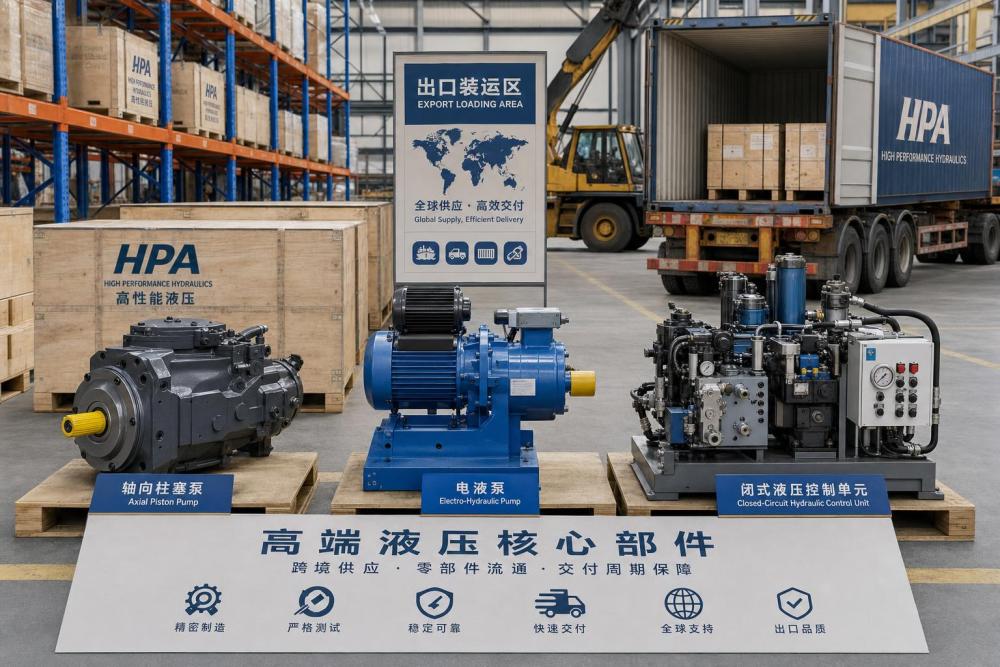
According to the information provided, the Bureau of Industry and Security (BIS) updated the Export Administration Regulations (EAR) on June 29, 2026. Axial Piston Pumps, Electro-hydraulic Pumps, and Closed-loop Hydraulics control units were added to the new ECCN 2A299 list. Exports of these items to China now require case-by-case license applications.
The confirmed change is therefore twofold: the product scope now explicitly includes several critical hydraulic components and control units, and exports to China are no longer handled as routine shipments for these items, but are subject to individual licensing review.
Where the Pressure May Show Up First
OEM programs may face longer component lead times
From an industry perspective, OEM-linked supply chains are among the most exposed because these controlled items are tied to complete hydraulic system integration. If each export requires a separate license application, the impact may appear first in project scheduling, parts coordination, and delivery planning. What deserves closer attention is whether procurement and production timelines begin to absorb longer approval-related delays.
MRO and spare-parts support may become less predictable
Observably, the summary provided already points to pressure on aftermarket MRO supply stability. For service providers and equipment operators, that means the issue is not limited to new equipment shipments. It may also affect replacement cycles for critical spare parts, maintenance planning, and the ability to respond quickly to breakdown-related parts demand.
Trading and distribution functions may see a heavier documentation burden
Companies involved in direct trade, distribution, and cross-border supply coordination may be affected because the rule change introduces a licensing requirement on covered exports to China. Analysis shows that the operational impact may include closer review of product classification, shipment documentation, order timing, and customer communication around expected fulfillment windows.
What Companies Should Watch Now
Track whether official wording or implementation guidance changes
The current confirmed fact is the addition of the listed items to ECCN 2A299 and the requirement for case-by-case licensing for exports to China. What deserves closer attention is whether subsequent official clarification changes how companies interpret product scope, review procedures, or practical filing requirements. The policy text and the way it is enforced in actual transactions are not always the same question.
Want to dive deeper into these market dynamics, or need data-driven support for your next business move? Drop a line below and let the analysts at PCTS provide customized insights.
We respect your privacy. Your information is strictly confidential.
Related News
- 00
0000-00
How sealing technology reduces contamination in semiconductor manufacturing - 00
0000-00
Where to install vibration sensors on rotating machinery - 00
0000-00
NTSB Probe Finds Boeing Warned of MD-11 Engine Bearing Risk Years Earlier - 00
0000-00
How to size pneumatic grippers for packaging system integration - 00
0000-00
How to size alloy steel power transmission chains for heavy loads
Weekly Insights
Stay ahead with our curated technology reports delivered every Monday.