





How to Compare Vane Hydraulic Pumps for Stable Flow and Lower Wear
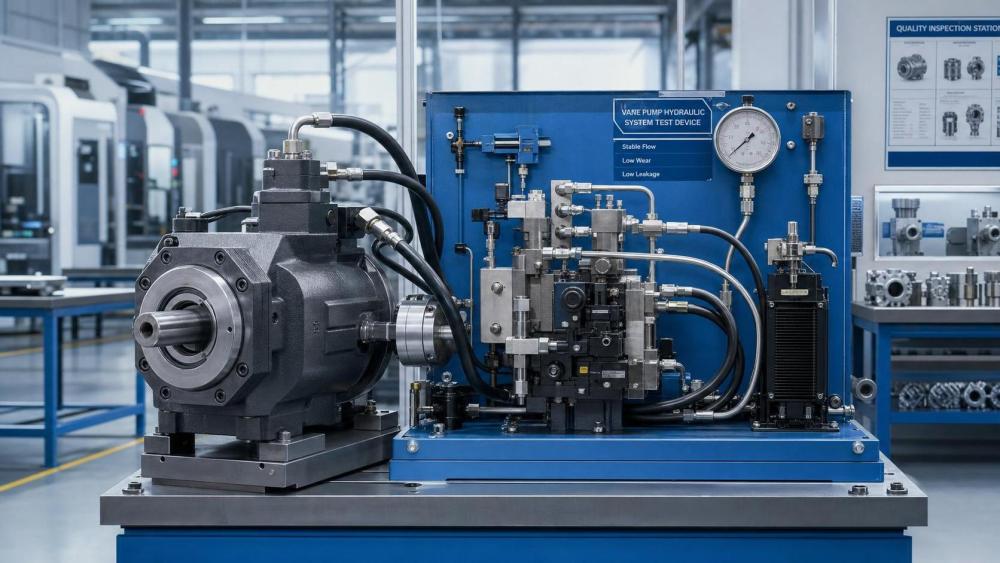
Selecting vane hydraulic pumps is rarely about nameplate pressure alone. Stable flow, wear behavior, and continuous-duty reliability usually matter more in real operations.
That is especially true when downtime costs more than the pump itself. A cheaper unit can become expensive once leakage, noise, and frequent replacement enter the picture.
A sound comparison method looks at internal design, material quality, contamination tolerance, and service conditions together. This gives a clearer picture of life-cycle value.
In practice, vane hydraulic pumps are chosen for machine tools, die-casting equipment, plastics machinery, mobile equipment, and many industrial power units.
Their appeal is straightforward: smooth output, compact size, and relatively low noise. But those advantages depend heavily on how the pump is designed and manufactured.
Start with Flow Stability, Not Just Rated Output
When comparing vane hydraulic pumps, first examine how steadily they deliver oil across the full operating range. Rated flow at one test point tells only part of the story.
Flow stability affects actuator smoothness, pressure control, surface finish, and heat generation. In systems with proportional valves, unstable pump delivery can also reduce control accuracy.
Look for performance data covering cold start, normal temperature, and extended duty. A pump that holds stable output after oil warms up is usually the more dependable choice.
Pay attention to these points during comparison:
- Volumetric efficiency across low, medium, and high pressure.
- Flow ripple under steady speed.
- Output consistency during temperature rise.
- Sensitivity to viscosity changes.
If suppliers only provide nominal displacement, ask for efficiency curves. Stable vane hydraulic pumps should show predictable behavior rather than sharp performance drop under load.
Check the Wear Mechanism Behind the Design
Lower wear comes from more than hard materials. It depends on vane tip contact, side plate finish, rotor balance, lubrication film formation, and pressure loading.
In vane hydraulic pumps, the vane slides continuously. That sliding contact makes surface treatment and dimensional precision critical to service life.
A useful comparison starts with cartridge or internal set design. Well-built units usually maintain better tip sealing while reducing uneven contact stress.
Ask suppliers about:
- Vane material and heat treatment method.
- Cam ring hardness and surface roughness.
- Side plate material pairings.
- Pressure balance design.
- Expected wear pattern after endurance testing.
More importantly, ask what tends to fail first. The answer often reveals whether the supplier understands real field wear or only bench specifications.
From a risk standpoint, vane edge chipping, ring scoring, and side plate abrasion are stronger warning signals than a small difference in catalog pressure rating.
Compare Materials and Manufacturing Discipline
Two vane hydraulic pumps can look almost identical outside. Their durability may still differ sharply because of machining accuracy, metallurgy, and process control.
This is where technical evaluation becomes more meaningful. Better material discipline usually shows up in lower internal leakage, steadier pressure response, and longer cartridge life.
Review whether the supplier can explain:
- Tolerance control for rotor slots and vane clearance.
- Surface finishing process for cam ring and plates.
- Cleanliness control during assembly.
- Traceability for heat treatment and raw materials.
- Inspection method for leakage and noise.
If possible, compare endurance data from the same oil cleanliness level. Dirty test conditions can hide the true difference between well-made and poorly made vane hydraulic pumps.
Another practical sign is consistency between batches. One good sample means little if production variation causes unstable field performance six months later.
Evaluate Operating Range and Application Fit
The best vane hydraulic pumps are not always the highest rated ones. They are the pumps that match the actual duty cycle, oil condition, speed window, and control strategy.
For example, a pump that performs well in intermittent service may wear faster in three-shift operation. A unit optimized for clean indoor systems may struggle in harsher environments.
Check the real application envelope:
This step prevents a common sourcing error: comparing vane hydraulic pumps in isolation instead of comparing them against the machine’s true operating profile.
Look Beyond Efficiency to Noise, Heat, and Leakage
Stable flow and lower wear usually show up indirectly in other signals. Noise, casing temperature, and leakage often reveal performance limits earlier than formal failure.
When vane hydraulic pumps begin wearing unevenly, flow ripple often increases first. Then heat rises, internal leakage grows, and pressure holding becomes less stable.
During comparison, ask for measured data on:
- Noise level at rated pressure and speed.
- Case drain or internal leakage trend over time.
- Temperature rise in continuous operation.
- Pressure pulsation behavior.
These indicators matter because they connect directly to maintenance cost. Lower heat means better energy behavior, while lower leakage usually points to healthier internal surfaces.
In actual procurement reviews, this is often where a premium pump starts to justify its price difference.
Assess Serviceability and Supply Risk Early
Even strong vane hydraulic pumps can become weak choices if replacement parts are slow, cartridge kits are inconsistent, or technical support is shallow.
A durable pump should also be maintainable. That means predictable lead times, clear part coding, seal compatibility, and practical repair guidance.
Review these procurement-side questions:
- Are cartridge kits standardized and easy to source?
- Can the supplier confirm interchangeability details?
- Is failure analysis support available after installation?
- Are warranty terms tied to realistic filtration requirements?
- Is there regional stock for urgent maintenance?
This matters more than it seems. A moderate technical advantage disappears quickly when spare parts delays keep machines offline.
A Practical Comparison Framework for Better Decisions
To compare vane hydraulic pumps effectively, score each option across both engineering and supply criteria. This keeps decisions grounded in performance, not just catalog claims.
A simple framework can include five weighted areas:
- Flow stability and volumetric efficiency.
- Wear resistance and material design.
- Application fit under real duty conditions.
- Noise, heat, and leakage behavior.
- Serviceability, parts availability, and supplier reliability.
This approach usually exposes hidden risk faster than comparing only pressure, flow, and price. It also supports stronger internal justification during sourcing approval.
In the end, the best vane hydraulic pumps are the ones that keep flow smooth, wear controlled, and maintenance predictable under your real operating conditions.
Use supplier data, field feedback, and test evidence together. That combination leads to a more reliable decision and a lower total cost of ownership.
Want to dive deeper into these market dynamics, or need data-driven support for your next business move? Drop a line below and let the analysts at PCTS provide customized insights.
We respect your privacy. Your information is strictly confidential.
Related News
- 00
0000-00
How sealing technology reduces contamination in semiconductor manufacturing - 00
0000-00
Where to install vibration sensors on rotating machinery - 00
0000-00
NTSB Probe Finds Boeing Warned of MD-11 Engine Bearing Risk Years Earlier - 00
0000-00
How to size pneumatic grippers for packaging system integration - 00
0000-00
How to size alloy steel power transmission chains for heavy loads
Weekly Insights
Stay ahead with our curated technology reports delivered every Monday.