





How to Choose High Pressure Hydraulic Power Units for Demanding Duty Cycles
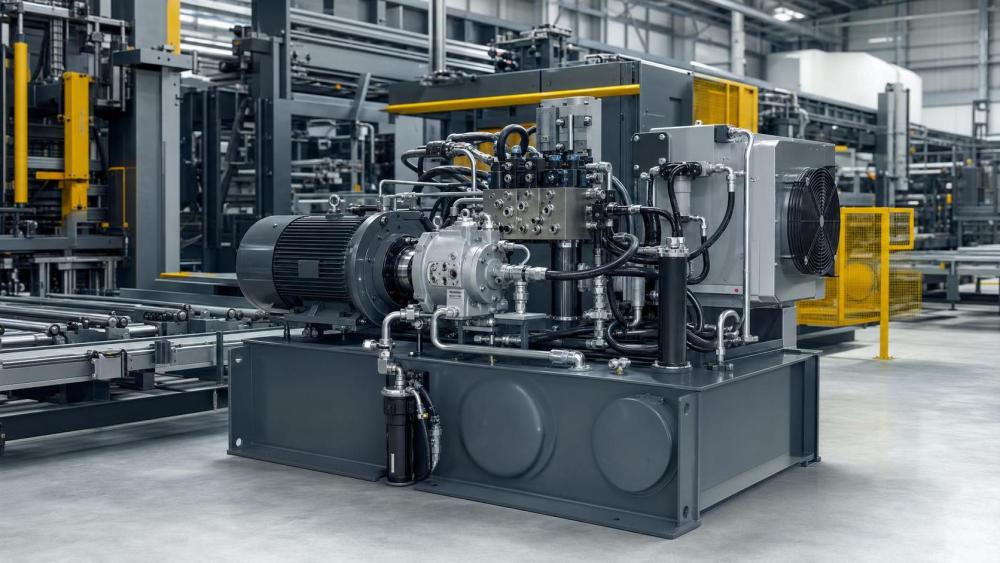
Selecting high pressure hydraulic power units for demanding duty cycles takes more than checking maximum pressure on a datasheet.
In real operating conditions, pressure is only one part of the reliability equation.
Flow stability, heat control, contamination resistance, and service access often decide whether a unit performs well or becomes a chronic maintenance problem.
That matters even more in steel processing, marine systems, mining equipment, injection molding, offshore tools, and heavy automation lines.
These applications push high pressure hydraulic power units through long shifts, frequent load changes, shock loads, and harsh ambient conditions.
A sound selection process should connect performance targets with duty cycle realities, maintenance limits, and total cost of ownership.
This guide breaks down the practical criteria that support better comparison and lower operating risk.
Start with the Real Duty Cycle, Not the Peak Number
Many evaluations fail because the unit is sized around peak pressure instead of the full work profile.
For high pressure hydraulic power units, duty cycle defines how often pressure builds, how long it holds, and how quickly demand changes.
A system running at 350 bar for ten seconds behaves very differently from one holding 350 bar for hours.
That difference affects motor sizing, cooling, pump choice, reservoir volume, and seal life.
Before comparing suppliers, define the operating pattern in practical terms:
- Normal operating pressure and maximum pressure
- Required flow at each pressure level
- Cycle frequency per hour or shift
- Pressure holding time and idle time
- Ambient temperature and contamination exposure
- Expected daily runtime and annual utilization
This baseline makes high pressure hydraulic power units easier to compare on engineering terms instead of marketing claims.
Match Pump Architecture to Load Behavior
Pump design strongly shapes how high pressure hydraulic power units perform under demanding duty cycles.
For high-pressure applications, piston pumps are usually the preferred option because they handle pressure efficiently and maintain better volumetric performance.
Still, not every piston pump configuration suits every duty pattern.
Fixed Displacement vs Variable Displacement
Fixed displacement designs are simpler and often lower in upfront cost.
They can work well when flow demand stays predictable and pressure spikes are short.
Variable displacement pumps fit better when the process shifts between low flow, high flow, standby, and pressure hold phases.
In those cases, they reduce heat generation and improve energy efficiency.
Pressure Compensation and Control Logic
High pressure hydraulic power units should also be reviewed for pressure compensation strategy.
Poor control tuning can create oscillation, pressure overshoot, and unnecessary wear on valves, hoses, and actuators.
Ask how the unit responds during rapid demand changes, not only at steady-state conditions.
Check Flow Stability and Response Under Load
Demanding duty cycles rarely stay smooth for long.
A press line may hit repeated shock loads.
A clamping system may need fast approach, controlled force, then stable holding pressure.
In these settings, high pressure hydraulic power units need stable flow across changing loads.
Pay attention to response time, pressure ripple, and repeatability across full operating ranges.
This is especially important where product quality depends on motion consistency or force accuracy.
Useful supplier questions include:
- How quickly does the unit recover after a sudden load change?
- What is the measured pressure ripple at rated conditions?
- Can the control package support proportional or closed-loop operation?
- What field data supports repeatability claims?
These answers reveal whether the high pressure hydraulic power units are ready for precision work or only for basic force generation.
Treat Thermal Control as a Core Selection Factor
Heat is one of the fastest ways to shorten the life of high pressure hydraulic power units.
When systems run at high pressure for long periods, internal leakage and energy loss turn directly into temperature rise.
If cooling is undersized, viscosity drops, seals harden, oxidation accelerates, and pump wear increases.
That is why thermal balance deserves equal weight with pressure capability.
What to Review
- Cooler capacity at full duty cycle
- Reservoir design and dwell time
- Expected oil temperature range
- Ambient heat load near furnaces or enclosed machinery
- Alarm and shutdown logic for overheating
In practical terms, reliable high pressure hydraulic power units control heat before it starts, not after problems appear.
Look Closely at Filtration and Contamination Protection
High-pressure hydraulic systems are highly sensitive to contamination.
Small particles can damage pump surfaces, spool valves, servo controls, and sealing interfaces.
For high pressure hydraulic power units, contamination control should be reviewed as a system, not a filter catalog item.
Check filter placement, beta rating, bypass settings, indicator visibility, breather protection, and reservoir cleanliness design.
This matters even more in dusty plants, mobile equipment, or sites with inconsistent maintenance routines.
A lower-cost unit may look competitive at purchase time, then become expensive through shortened component life and repeat oil service.
Evaluate Durability at the Component Level
Not all high pressure hydraulic power units are built around the same component quality.
Two units can share similar ratings while delivering very different service life.
Durability depends on the full bill of materials, assembly quality, and validation history.
Review the major wear and failure points:
- Pump bearing and rotating group design
- Seal material compatibility with fluid and temperature
- Valve block machining quality and pressure integrity
- Hose, fitting, and manifold pressure margins
- Motor starting performance under repeated load
- Vibration isolation and structural frame rigidity
For demanding duty cycles, proven life testing and field references are more useful than broad durability claims.
Compare Serviceability and Monitoring Features
Service access shapes downtime just as much as component quality.
If filters, valves, sensors, or drain points are hard to reach, routine work takes longer and gets postponed.
Well-designed high pressure hydraulic power units support maintenance teams with practical layout decisions.
Useful features include accessible gauges, differential pressure indicators, oil level visibility, temperature monitoring, and diagnostic ports.
From a lifecycle perspective, condition monitoring can be a strong differentiator.
Pressure trend data, temperature alarms, and contamination indicators help detect efficiency loss before a failure event stops production.
Use Total Cost of Ownership to Break Close Decisions
When several high pressure hydraulic power units appear technically acceptable, total cost of ownership becomes the right filter.
The lowest purchase price may still produce the highest long-term cost.
A realistic comparison should include energy use, oil life, filter consumption, planned maintenance hours, spare parts availability, and expected downtime exposure.
It also helps to ask whether the supplier can support commissioning, tuning, and after-sales troubleshooting in the target region.
A Practical Shortlist for Better Selection
The best high pressure hydraulic power units are selected through operating evidence, not headline specifications alone.
In practical evaluation work, a disciplined shortlist usually gives the clearest result.
- Define the exact duty cycle, including load changes and hold times.
- Confirm pump type, control strategy, and pressure stability.
- Check thermal balance at real ambient conditions.
- Review filtration, cleanliness targets, and contamination safeguards.
- Examine component durability and pressure margin across the assembly.
- Compare serviceability, diagnostics, and regional support.
- Use lifecycle cost to separate close technical options.
That approach makes high pressure hydraulic power units easier to judge with less uncertainty and fewer hidden costs.
For industrial buyers and engineering teams, the goal is simple: choose a unit that stays stable, clean, cool, and serviceable throughout its real workload.
When that standard is applied consistently, supplier discussions become sharper, decisions become faster, and long-term operational risk drops in a measurable way.
Related News
- 00
0000-00
How does seal service life affect the total cost of ownership? - 00
0000-00
Schaeffler to Cut 3,460 Jobs and Close Five European Plants - 00
0000-00
How does system size affect the price of a belt drive system? - 00
0000-00
2026 Hannover Shanghai Industrial Fair and PTC ASIA Open in Shanghai - 00
0000-00
Why do roller bearings fail prematurely in wind turbines?
Weekly Insights
Stay ahead with our curated technology reports delivered every Monday.