





Where electrohydraulic systems fail first in real operating conditions
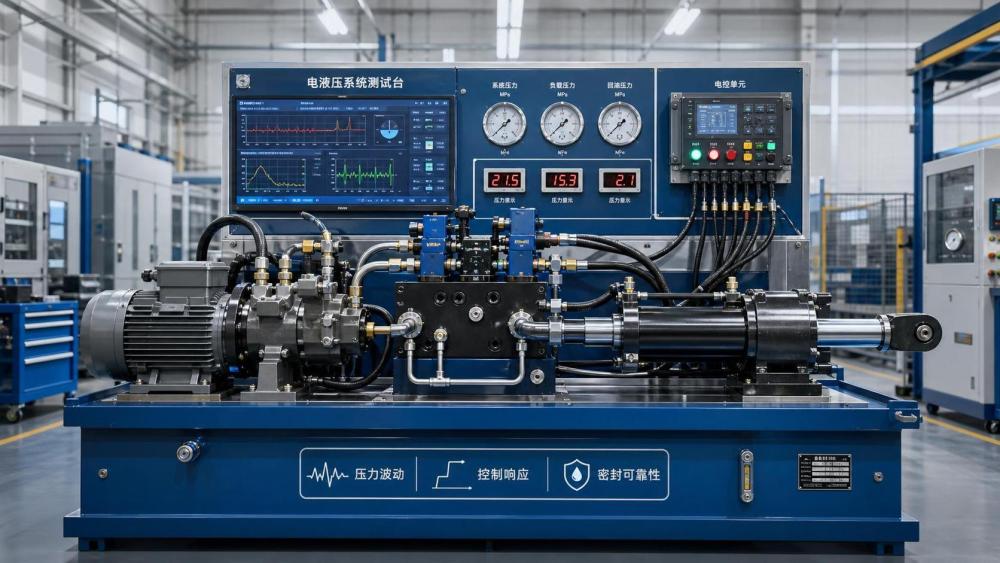
Electrohydraulic systems sit at the intersection of fluid power, control logic, sealing, and mechanical motion.
That mix gives them precise force and fast response, yet it also creates failure paths that spread quickly across connected components.
A small wiring fault may look electrical at first.
In practice, it can trigger valve instability, pressure spikes, seal wear, and repeated service calls.
This is why electrohydraulic systems deserve a broader diagnostic view than standard hydraulic assemblies.
On platforms that track bearings, pumps, seals, transmission parts, and MRO reliability, the pattern is consistent.
Failures rarely come from one isolated part alone.
They usually come from mismatch between duty cycle, contamination level, control sensitivity, and maintenance discipline.
In actual applications, the right fix depends less on the symptom name and more on the operating scene behind it.
Different applications create different stress points
Not every electrohydraulic system fails for the same reason, even when motion becomes erratic or pressure drops.
A mobile lifting unit faces vibration, shock loads, and weather exposure.
A factory press sees repeated pressure peaks and thermal buildup.
An automated production line may run cleaner oil, yet tolerate almost no control lag.
Because of that, risk assessment for electrohydraulic systems should start with three questions.
- Is the dominant stress contamination, heat, load shock, or signal instability?
- Does the application punish leakage more than positioning error, or the reverse?
- Will failure appear suddenly, or as slow efficiency loss over many cycles?
That framing helps separate root causes from surface symptoms.
It also prevents replacing pumps, valves, or seals before confirming the actual trigger.
When heavy-duty motion and shock loads dominate
In lifting, clamping, forming, and rugged handling equipment, electrohydraulic systems often work under abrupt load changes.
Here, the common failure chain begins with pressure transients.
Those spikes stress hoses, fittings, manifolds, valve seats, and cylinder seals at the same time.
The early sign is not always a major leak.
More often, the machine shows drift after holding position, slow retraction, or chatter during direction change.
In this scene, pressure readings alone are not enough.
The better judgment point is how pressure behaves during transition, not only at steady state.
Fix priorities in shock-load service
- Check relief valve response time, not just relief setting.
- Inspect cylinder rod seals and static seals for extrusion or hardening.
- Review hose routing and clamp support where pulsation amplifies vibration.
- Compare commanded motion with actual spool movement and load reaction.
A frequent misjudgment is blaming the pump because peak pressure still looks normal.
In many electrohydraulic systems, the real issue is delayed control response combined with seal fatigue.
High-cycle automation usually exposes control-side weaknesses earlier
On packaging lines, robotic fixtures, machine tools, and test rigs, electrohydraulic systems operate with tighter repeatability requirements.
The oil may stay cleaner than in outdoor equipment, yet tolerance for drift is much lower.
That changes the failure pattern.
Instead of obvious leakage, teams often see unstable positioning, overshoot, hunting, or inconsistent cycle times.
Servo valves, proportional valves, feedback devices, and connectors become critical points.
Even slight varnish buildup or signal noise can shift system behavior enough to affect output quality.
The more useful troubleshooting path is to compare three layers together.
- Electronic command quality and grounding stability.
- Valve cleanliness, spool condition, and hysteresis.
- Actuator friction, side load, and internal bypass behavior.
This is where electrohydraulic systems differ from simpler hydraulic circuits.
The fault may look mechanical, but the trigger may sit in the control layer.
Hot, dirty, or corrosive environments change the repair logic
Steel processing, mining support, marine machinery, and chemical handling create a different service environment.
In these settings, electrohydraulic systems face external contamination and fluid degradation at the same time.
A fix that works in a clean indoor line may fail quickly here.
Temperature shifts change oil viscosity.
Water ingress reduces lubrication film strength.
Aggressive media or washdown exposure can shorten the life of seals, cable jackets, and connectors.
The practical response is not only to replace failed parts.
It is to verify material compatibility, filtration rating, breather performance, and enclosure sealing together.
In these scenarios, electrohydraulic systems should be judged as an integrated reliability package, not a collection of separate components.
The common risks that get overlooked between components
Cross-component interaction is where many repeat failures begin.
A worn coupling may transmit vibration into the pump.
A misaligned cylinder can overload seals and distort position feedback.
Poor bearing condition upstream may change motor behavior and heat generation.
This matters on broad industrial platforms because electrohydraulic systems do not operate in isolation from transmission parts, seals, and condition monitoring devices.
When symptoms repeat after part replacement, look for these overlooked links.
- Pump inlet restriction causing cavitation that mimics valve instability.
- Seal selection based on pressure rating, while ignoring temperature and media exposure.
- Electrical noise from nearby drives affecting proportional control signals.
- Rod side loading creating stick-slip that appears to be a tuning problem.
- Filter replacement intervals based on calendar time rather than contamination load.
More often than not, the expensive mistake is treating similar symptoms as identical failures.
How to choose fix strategies that hold after restart
Durable fixes for electrohydraulic systems usually combine immediate correction with operating condition review.
If the machine must return quickly, it is tempting to stop at component swap-out.
That works only when the failed part is truly the origin.
A stronger repair approach uses layered verification.
A practical sequence for electrohydraulic systems
- Confirm the symptom under load, not only during unloaded test movement.
- Record pressure, temperature, current, and response timing together.
- Inspect fluid condition before opening major components.
- Check seals, connectors, and feedback devices around the suspected failure point.
- Retune or recalibrate only after mechanical drag and internal leakage are excluded.
- Review restart conditions to ensure the same overload or contamination event will not recur.
This sequence saves time because it matches the way electrohydraulic systems actually fail in the field.
It also aligns with lifecycle thinking, where fluid health, sealing performance, and motion accuracy affect total ownership cost together.
Before the next failure, tighten the scene-based standard
The best improvement step is not a generic checklist.
It is a scene-based standard for electrohydraulic systems used in each equipment family.
That standard should define normal contamination limits, expected response time, acceptable drift, seal life assumptions, and shutdown triggers.
It should also connect failure records with operating context.
A cylinder leak during high heat is not the same event as a cylinder leak after shock loading.
The next useful step is to map where electrohydraulic systems in service face the biggest mismatch.
Compare load pattern, control precision, fluid condition, sealing materials, and surrounding mechanical interfaces.
That comparison usually shows whether the priority is filtration, tuning, cooling, component compatibility, or maintenance interval redesign.
When those conditions are clarified early, troubleshooting becomes faster and repeat faults become much easier to prevent.
Related News
- 00
0000-00
Where are axial piston pumps used in mining equipment? - 00
0000-00
Embodied AI Robotics and Drive Control Forum Held in Shanghai - 00
0000-00
How does seal service life affect the total cost of ownership? - 00
0000-00
Schaeffler to Cut 3,460 Jobs and Close Five European Plants - 00
0000-00
How does system size affect the price of a belt drive system?
Weekly Insights
Stay ahead with our curated technology reports delivered every Monday.