





Electrohydraulic System Design: Key Risks, Controls, and Efficiency Gains
Electrohydraulic system design directly shapes machine reliability, response quality, and project cost.
In industrial equipment, design choices made early often decide later maintenance pressure.
That matters even more when schedules are tight and operating loads are harsh.
A strong electrohydraulic system design balances control accuracy, energy use, safety margins, and serviceability.
The goal is not only motion.
It is predictable motion under changing pressure, temperature, contamination, and duty cycles.
Why Electrohydraulic System Design Becomes a Project Risk Multiplier
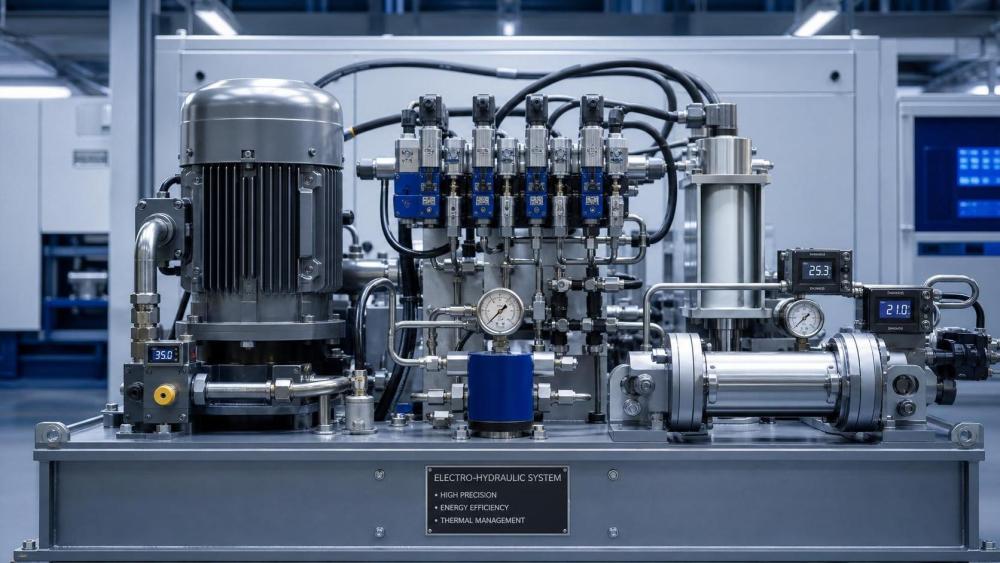
Many failures blamed on components actually begin with weak electrohydraulic system design decisions.
Sizing errors, unstable controls, and poor contamination planning can quietly compound across the project lifecycle.
From a management view, these issues rarely stay technical for long.
They turn into late commissioning, warranty claims, excess heat, leakage events, and difficult vendor disputes.
A practical electrohydraulic system design review should therefore start before procurement is locked.
This is where risk is still cheap to remove.
Three signals usually deserve attention early.
- Duty cycles are estimated roughly, not measured from real operating profiles.
- Control logic is defined separately from hydraulic dynamics.
- Service conditions are simplified, especially fluid cleanliness and ambient heat.
When those signals appear together, electrohydraulic system design risk climbs fast.
The system may still run in testing.
It just may not run consistently in the field.
Core Failure Points in Electrohydraulic System Design
Most failure patterns follow a few repeatable paths.
Understanding them helps teams prioritize design controls where they pay back fastest.
1. Mismatched Power and Motion Requirements
A common electrohydraulic system design mistake is selecting pump flow and actuator size from peak force only.
That ignores acceleration, holding behavior, speed transitions, and return conditions.
The result can be sluggish motion or excessive throttling losses.
2. Poor Thermal Management
Heat is often treated as an afterthought.
In reality, thermal stability is central to electrohydraulic system design performance.
Higher oil temperature changes viscosity, leakage rates, seal behavior, and sensor drift.
3. Contamination and Fluid Neglect
Servo valves, proportional valves, and tight-clearance pumps are highly contamination sensitive.
If electrohydraulic system design does not define filtration targets, reliability drops quickly.
Small particles can create unstable control long before visible failure appears.
4. Weak Integration Between Electrical and Hydraulic Controls
This is where many commissioning delays begin.
Control loops may look correct in software but fail against hydraulic lag, compressibility, and load variation.
Effective electrohydraulic system design must treat mechanics, hydraulics, and control logic as one system.
Control Strategies That Reduce Design and Commissioning Risk
Good controls start with better assumptions, not only better hardware.
In practice, the most effective electrohydraulic system design teams focus on measurable guardrails.
- Build load cases from real motion sequences, including startup, stall, shock, and recovery.
- Set pressure, flow, and temperature envelopes before choosing pumps, valves, and cylinders.
- Define cleanliness targets using component sensitivity, not generic filter habits.
- Model control response with hydraulic delays, fluid compressibility, and line losses included.
- Create fault logic for sensor failure, pressure spikes, overheating, and leakage alarms.
These controls improve electrohydraulic system design quality without adding unnecessary complexity.
They also make supplier discussions more objective.
Teams can compare options against required system behavior, not sales language.
Standards and Documentation Matter
A disciplined electrohydraulic system design process usually references ISO, IEC, and functional safety expectations.
Exact standards vary by machine type and region.
Still, the pattern is consistent.
Document pressure classes, fail-safe positions, emergency stops, and verification criteria clearly from the start.
Where Efficiency Gains Usually Come From
Efficiency is not only about lowering power draw.
In electrohydraulic system design, efficiency also means stable output with less waste, heat, and maintenance interruption.
The biggest gains often come from four areas.
- Variable-speed drives that match motor power to actual demand.
- Load-sensing or pressure-compensated architectures that reduce throttling losses.
- Lower leakage paths through better valve selection, seals, and temperature control.
- Shorter, cleaner fluid paths that reduce pressure drop and contamination exposure.
From a business angle, efficient electrohydraulic system design reduces more than electricity bills.
It can shrink cooler size, fluid oxidation rate, seal wear, and unplanned downtime.
That creates a stronger total cost of ownership case.
A Quick Comparison of Design Priorities
How to Evaluate Electrohydraulic System Design Before Final Approval
Before final signoff, a short review can prevent expensive surprises.
The review should test whether electrohydraulic system design assumptions hold under actual operating variability.
- Are peak, average, and transient loads defined from real use cases?
- Are control response targets linked to hydraulic behavior, not software targets alone?
- Are seals, hoses, and filtration specified for pressure pulses and contamination risk?
- Is heat rejection calculated for worst-case duty, not nominal output?
- Is maintenance access considered for filters, sensors, and leak inspection points?
- Are component suppliers aligned on cleanliness, testing, and acceptance criteria?
If several answers remain unclear, electrohydraulic system design is not ready for low-risk execution.
That does not always require a full redesign.
Often it requires sharper validation, clearer documentation, and better cross-functional review.
Final Takeaway
Strong electrohydraulic system design is a risk-control discipline as much as an engineering task.
It connects hydraulic power, electronic control, reliability planning, and lifecycle economics into one decision framework.
The most effective projects do not chase performance in isolation.
They build electrohydraulic system design around measurable loads, contamination control, thermal stability, and maintainable architecture.
That approach supports safer approvals, smoother commissioning, and stronger efficiency gains over the full operating life.
When reviewing the next system, start with the real duty profile and the real failure modes.
That is usually where the best electrohydraulic system design decisions begin.
Want to dive deeper into these market dynamics, or need data-driven support for your next business move? Drop a line below and let the analysts at PCTS provide customized insights.
We respect your privacy. Your information is strictly confidential.
Related News
- 00
0000-00
How to check vibration analysis software for sensor compatibility - 00
0000-00
IndexBox Forecasts 3.8% Annual Growth for Global Radial Seals Market Through 2035 - 00
0000-00
How to assess the chemical compatibility of FFKM sealing sheets - 00
0000-00
IndexBox Forecasts 3.6% Annual Growth for Construction Bearings Market - 00
0000-00
When do hydraulic components require an export license?
Weekly Insights
Stay ahead with our curated technology reports delivered every Monday.