





Starting on July 10, 2026, the U.S. Customs and Border Protection (CBP) will impose a pre-clearance compliance surcharge mechanism on imported electro-hydraulic pumps under HTS 8481.20.00. The change combines a new document submission deadline with a 3% added clearance cost, bringing customs timing, technical documentation, and landed-cost planning into the same compliance issue. For importers, distributors, exporters, and certification-related service providers, this is worth close attention because it affects not only border entry procedures but also purchasing rhythm, total cost calculations, and the readiness of export document packages.
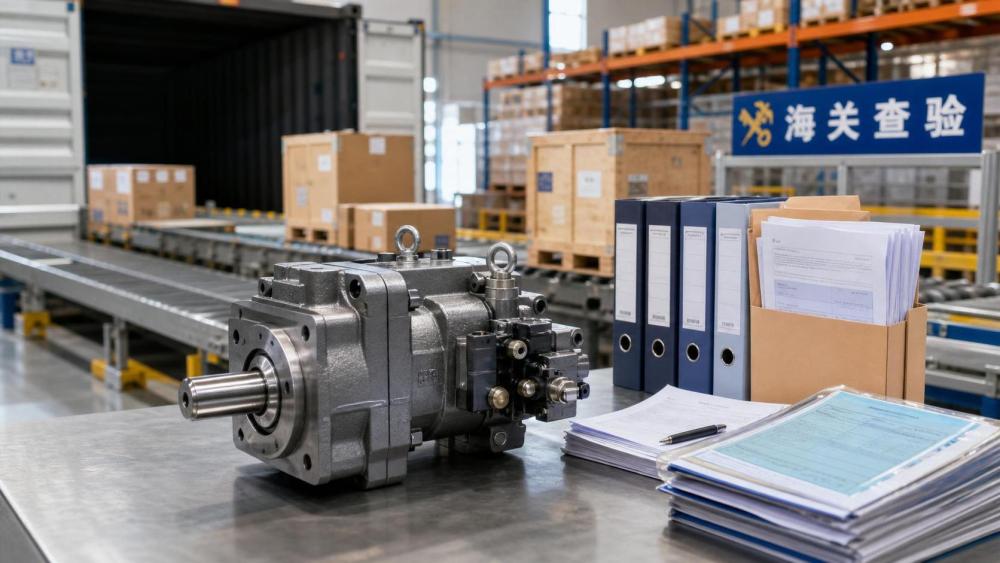
What the new CBP requirement confirms
According to the provided event summary, CBP will enforce the new mechanism from 00:00 on July 10, 2026 for all imported electro-hydraulic pumps classified under 8481.20.00.
Under this arrangement, importers must submit declarations of conformity for UL 61800-5, IEC 60034-30-2 energy efficiency, and EMC no later than 72 hours before customs declaration.
The same measure also requires payment of a 3% surcharge. The input specifies that this surcharge is not a tariff, but it will be counted as part of customs clearance cost.
The provided summary further states that the measure materially affects procurement timing for North American distributors and total cost of ownership (TCO) calculations, while Chinese suppliers need to upgrade their export technical documentation packages accordingly.
Where the pressure is likely to appear first
Import-side planning moves earlier
From an industry perspective, importers and direct trading companies are likely to feel the change first because the rule introduces a mandatory 72-hour pre-declaration document step. That means compliance preparation is no longer limited to the point of customs filing. The immediate business impact is likely to fall on shipment scheduling, document completeness checks, and internal coordination between sourcing, logistics, and customs teams.
What deserves closer attention is whether each shipment can be supported by a complete and consistent set of conformity declarations before the filing window begins. Even without additional facts on enforcement practice, the rule change clearly shifts part of customs readiness to an earlier stage in the transaction cycle.
Distributors and buyers face a different cost model
Observably, North American distributors and procurement teams may need to reassess how they calculate purchase timing and ownership cost. The provided information already indicates an effect on TCO, and the reason is straightforward: the 3% surcharge is described as non-tariff but still part of clearance cost, so it enters the commercial equation even if it does not change tariff treatment.
For buyers, the practical issue is not only higher import-side cost. It is also the possibility that supplier selection, order timing, and replenishment planning will increasingly depend on the supplier's ability to deliver compliant technical files on time.
Export suppliers will be judged on document readiness
For exporting manufacturers and trading suppliers, the rule change appears less like a pure customs issue and more like a technical documentation issue tied directly to shipment execution. The event summary specifically notes that Chinese suppliers need to upgrade their export technical document packages.
Analysis shows that suppliers serving this product category should pay close attention to whether their conformity declarations for UL 61800-5, IEC 60034-30-2, and EMC are organized in a form that can support a pre-clearance review timeline. In practice, the pressure point is likely to be the handoff between engineering, quality, sales, and export documentation teams.
Service firms around compliance may see tighter timelines
Certification-related companies, testing service providers, and supply chain service firms may also be affected because the measure links technical evidence to a fixed customs timetable. Even though the input does not provide operational detail on verification procedures, the need for earlier document submission suggests that supporting services may need to align more closely with shipment milestones and buyer booking schedules.
What companies should watch now
Check whether technical files are submission-ready
Analysis shows that the most immediate task is to verify whether existing export files can support the stated 72-hour pre-declaration requirement. Companies should focus on the availability, consistency, and retrievability of declarations related to UL 61800-5, IEC 60034-30-2 energy efficiency, and EMC, because those items are explicitly named in the provided event summary.
Recalculate pricing and TCO assumptions
What deserves closer attention is how the 3% surcharge is treated inside quotations, import budgeting, distributor margin planning, and customer-side TCO models. Since the input describes the charge as non-tariff but part of clearance cost, companies involved in pricing and procurement should review whether current commercial assumptions still reflect the full landed-cost picture.
Review delivery schedules against the earlier compliance gate
Observably, the timing requirement may affect order confirmation, booking coordination, and shipment release sequencing. Businesses handling this product category should pay attention to whether delivery commitments, purchasing plans, and supplier onboarding processes leave enough time for the required declarations to be assembled and submitted before customs filing.
Keep watching for execution detail and document expectations
The provided information confirms the rule and its core requirements, but it does not include further detail on operational interpretation. For that reason, companies should continue monitoring later official wording, practical documentation expectations, and any downstream changes in tender files, procurement specifications, or customer compliance checklists. This should be treated as a current compliance priority, but not as a fully exhausted rule picture.
Why this looks like an execution signal, not a distant policy notice
Analysis shows that this development is better understood as an implemented trade-compliance measure rather than a broad policy discussion point. The event summary gives a clear effective time, identifies a specific product classification, names the required conformity declarations, and states that the 3% surcharge will be enforced as part of clearance cost.
At the same time, it is still appropriate to keep a distinction between confirmed requirements and broader market interpretation. Observably, the rule has already crossed from abstract compliance language into shipment-facing execution, but the market will still need to watch how consistently the requirement is applied in practice and how buyers and suppliers adjust their documentation workflows.
How the market is likely to read this change
From an industry perspective, the significance of this measure lies in the way customs procedure, technical compliance, and commercial cost are now more tightly connected for electro-hydraulic pumps under 8481.20.00. The change does not merely add another reference standard to watch; it introduces an earlier compliance checkpoint and a defined extra clearance cost.
It is more appropriate to understand this as a landed rule change with immediate operational relevance, while still recognizing that the finer points of implementation and market response remain worth tracking. For companies exposed to this product line, the key issue is disciplined preparation rather than speculation.
Basis of this article and what still needs verification
This article is based on the user-provided news title, event date, and event summary. In reporting on developments of this type, relevant source categories would typically include official notices, releases from regulatory authorities, customs or trade administration information, industry association updates, standard-setting organization documents, and reporting by authoritative trade media.
No specific official source link was provided in the input, so the exact official publication path remains to be verified on an ongoing basis. Further observation is still needed regarding detailed implementation language, certification interpretation, possible changes in tender or procurement documents, industry feedback, and how affected companies carry out the requirement in practice.
Want to dive deeper into these market dynamics, or need data-driven support for your next business move? Drop a line below and let the analysts at PCTS provide customized insights.
We respect your privacy. Your information is strictly confidential.
Related News
- 00
0000-00
How sealing technology reduces contamination in semiconductor manufacturing - 00
0000-00
Where to install vibration sensors on rotating machinery - 00
0000-00
NTSB Probe Finds Boeing Warned of MD-11 Engine Bearing Risk Years Earlier - 00
0000-00
How to size pneumatic grippers for packaging system integration - 00
0000-00
How to size alloy steel power transmission chains for heavy loads
Weekly Insights
Stay ahead with our curated technology reports delivered every Monday.