





Load Sensing Hydraulic Systems: Efficiency Gains and Control Trade-Offs
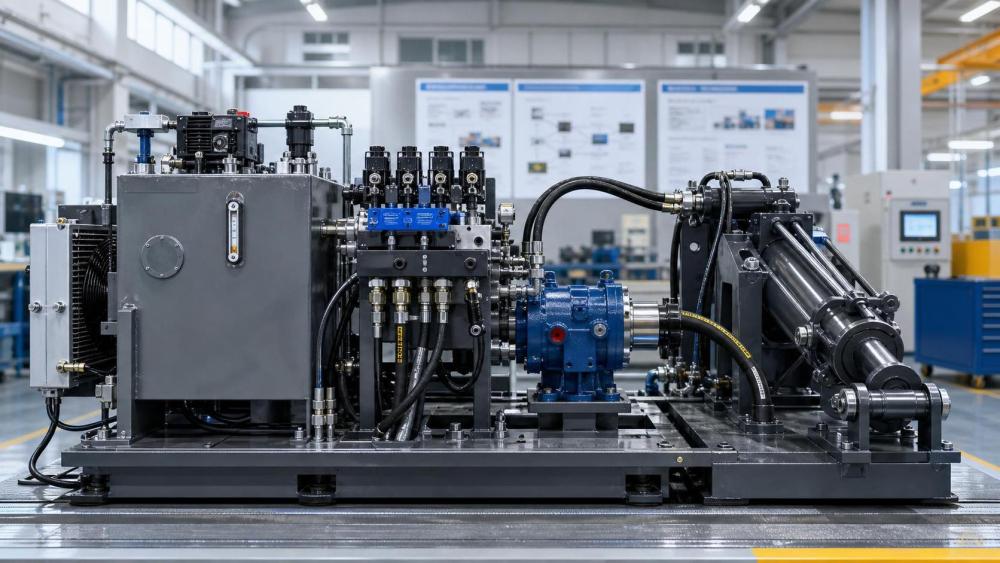
Load sensing hydraulic systems are designed to deliver only the flow and pressure a machine actually needs.
That core idea sounds simple, but the engineering consequences are not.
Compared with fixed-displacement or constant-pressure layouts, load sensing hydraulic systems can reduce wasted energy, lower oil temperature, and improve fuel economy.
They are widely used in mobile equipment, lifting machinery, forestry machines, agricultural platforms, and advanced industrial power units.
Still, efficiency gains do not come free.
Load sensing hydraulic systems add control complexity, tuning sensitivity, and more demanding component matching.
This matters when comparing architectures for OEM platforms, retrofits, or high-duty MRO decisions.
A useful evaluation starts with one question: where is power being wasted today, and what trade-offs are acceptable to remove that waste?
How Load Sensing Hydraulic Systems Work
In a standard load sensing circuit, the pump does not run at maximum output all the time.
Instead, it receives a signal from the valve section that reflects the highest active load.
The pump controller then maintains a small pressure margin above that load.
This margin is often called standby differential pressure or delta P.
As actuators move or external resistance changes, pump displacement shifts in real time.
That is the main reason load sensing hydraulic systems can outperform open-center or simple pressure-compensated systems in variable-duty machines.
Main Functional Elements
- Variable-displacement pump with load sensing control.
- Directional control valve bank with load signal routing.
- Pressure compensators or flow-sharing elements.
- Load sensing line, shuttle logic, and damping orifices.
- Actuators such as cylinders or motors.
- Relief, anti-cavitation, and thermal management devices.
In practical terms, the system is always negotiating between demand, pressure margin, and stability.
That negotiation is where both the value and the risk of load sensing hydraulic systems appear.
Where The Efficiency Gains Come From
The strongest case for load sensing hydraulic systems is reduced throttling and standby loss.
A fixed pump can circulate excess flow even when the work function barely needs it.
That excess becomes heat, noise, and fuel burn.
By contrast, load sensing hydraulic systems trim flow at the source.
This is especially valuable in machines with intermittent motion, partial loads, or frequent multi-function operation.
Typical Efficiency Benefits
- Lower engine power draw during light or moderate duty.
- Reduced heat generation in the reservoir.
- Smaller cooling demand in many duty cycles.
- Potentially longer oil life from lower thermal stress.
- Better overall efficiency in variable-speed applications.
From a total cost perspective, those gains can matter more than the pump itself.
Lower heat load affects tank size, cooler size, hose life, seal aging, and maintenance intervals.
In mobile fleets, the most visible result is often reduced fuel use per operating hour.
In industrial plants, the visible result may be lower electric consumption and more stable thermal behavior.
Why Control Trade-Offs Need Close Attention
Efficiency is only one part of hydraulic performance.
The other part is control quality under changing load and operator input.
Load sensing hydraulic systems can feel precise and smooth, but only when the loop is well tuned.
Poorly matched pumps, valves, and compensators can create lag, hunting, pressure spikes, or unpredictable function priority.
Common Control Trade-Offs
- Response delay: the pump must react to the signal before full flow arrives.
- Signal sensitivity: contamination, leakage, or damping errors can distort the load signal.
- Stability risk: rapid load changes can trigger oscillation in the control loop.
- Flow sharing limits: simultaneous functions may not behave equally without dedicated flow-sharing design.
- Low-speed metering challenges: fine motion may require careful spool geometry and pump tuning.
These trade-offs are not theoretical.
They show up during boom lowering, steering overlap, swing control, clamp handling, and any function needing repeatable micro-motion.
That is why load sensing hydraulic systems should be evaluated as complete control architectures, not just pump upgrades.
Application Fit: When Load Sensing Hydraulic Systems Make Sense
Not every machine benefits equally from load sensing hydraulic systems.
The best candidates usually have variable duty, long idle segments, or frequent partial-load operation.
Machines with multi-actuator coordination also gain more from flow matching.
Strong Use Cases
- Excavators, loaders, and telehandlers.
- Aerial work platforms and truck-mounted cranes.
- Forestry harvesters and agricultural sprayers.
- Industrial presses with varied cycle demand.
- Material handling systems with mixed-speed motion.
The value is usually weaker in simple systems with one constant-duty actuator.
In those cases, the added control layer may not justify cost or troubleshooting effort.
This is where system duty-cycle mapping becomes more useful than catalog comparison.
Key Evaluation Criteria For Technical Comparison
When reviewing load sensing hydraulic systems, performance data should be read in context.
A low standby pressure is good, but not if response becomes unacceptable.
A very fast pump controller looks attractive, but not if the loop becomes unstable under shock loads.
It also helps to request duty-cycle test data rather than isolated bench numbers.
For load sensing hydraulic systems, field behavior often matters more than peak specification values.
Risk Areas In Design, Commissioning, and MRO
Load sensing hydraulic systems reward careful integration and punish shortcuts.
Many field complaints come from setup details rather than from the concept itself.
Frequent Failure Or Performance Traps
- Incorrect differential pressure setting.
- Oversized expectations from undersized pumps.
- Signal line leakage or blocked orifices.
- Spool wear affecting load signal accuracy.
- Poor filtration strategy for precision control passages.
- Ignoring temperature-driven viscosity changes during tuning.
Commissioning should therefore include hot-oil testing, multi-function testing, and transient load checks.
For MRO teams, early warning signals include slow actuation, unstable motion, hotter oil, and inconsistent behavior between repeated cycles.
Those symptoms often point to control degradation before a major failure occurs.
A Practical Decision Framework
A disciplined decision on load sensing hydraulic systems should balance efficiency, controllability, serviceability, and lifecycle cost.
That balance is rarely visible in a single brochure or pressure-flow chart.
A better approach is to compare the real operating profile of the machine against the real behavior of the hydraulic architecture.
- Map the duty cycle, including idle time, partial loads, and simultaneous functions.
- Estimate present energy loss from excess flow, throttling, and cooling demand.
- Review control sensitivity requirements for fine motion and rapid transients.
- Check component compatibility across pump, valve bank, actuator, and filtration design.
- Validate performance with hot conditions and real application loads.
When that process is followed, load sensing hydraulic systems can deliver measurable value.
They reduce wasted power, cut heat, and support more refined machine behavior.
At the same time, they require sharper attention to tuning, contamination control, and system interaction.
The practical conclusion is straightforward.
Choose load sensing hydraulic systems when the duty cycle can repay the added complexity, and verify that the control trade-offs stay inside the machine’s real performance window.
Want to dive deeper into these market dynamics, or need data-driven support for your next business move? Drop a line below and let the analysts at PCTS provide customized insights.
We respect your privacy. Your information is strictly confidential.
Related News
- 00
0000-00
How to check vibration analysis software for sensor compatibility - 00
0000-00
IndexBox Forecasts 3.8% Annual Growth for Global Radial Seals Market Through 2035 - 00
0000-00
How to assess the chemical compatibility of FFKM sealing sheets - 00
0000-00
IndexBox Forecasts 3.6% Annual Growth for Construction Bearings Market - 00
0000-00
When do hydraulic components require an export license?
Weekly Insights
Stay ahead with our curated technology reports delivered every Monday.