





Load Sensing Construction Hydraulics: When Efficiency Gains Pay Off
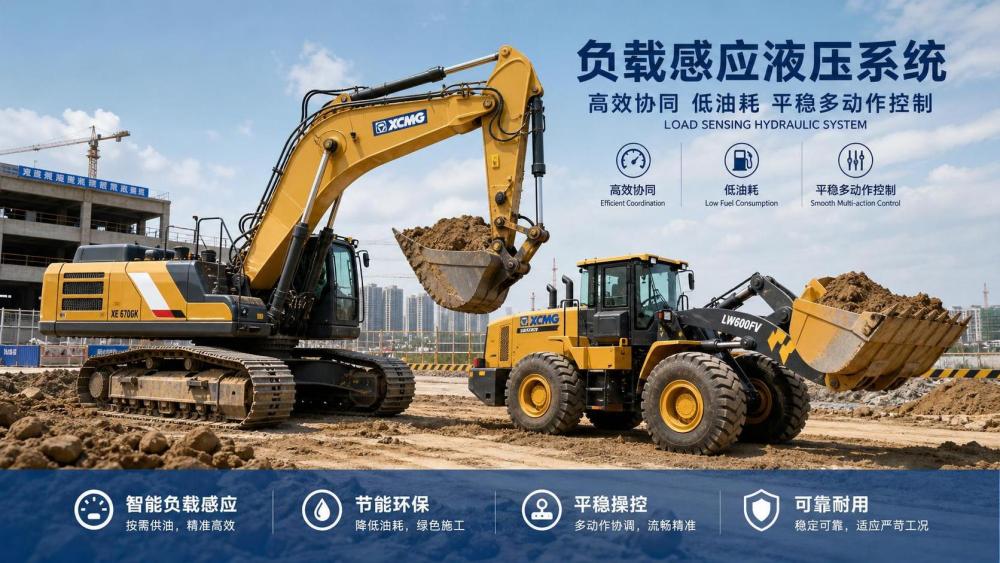
For fleets under pressure to cut fuel use and keep schedules tight, load sensing construction hydraulics have moved from a premium feature to a serious buying question.
The core idea is simple. Hydraulic flow and pressure rise only when the machine actually needs them.
That sounds technical, but the business impact is practical. Less wasted energy often means lower fuel burn, smoother functions, and less heat stress.
Still, not every machine or jobsite sees the same return. The real question is when load sensing construction hydraulics pay off fast enough to justify procurement cost.
In construction equipment, that answer depends on duty cycle, operator behavior, attachment mix, maintenance discipline, and how expensive downtime is on the project.
From a procurement and cost view, the best decisions come from matching hydraulic architecture to real operating patterns, not brochure claims.
What makes load sensing construction hydraulics different
Traditional open-center or constant-flow systems keep pumping at levels that may exceed actual demand. That excess turns into heat, noise, and avoidable fuel use.
Load sensing construction hydraulics use control logic and variable displacement pumps to match output with the heaviest active load.
In plain terms, the system listens before it works. That improves efficiency especially when multiple functions operate at once.
This matters on excavators, wheel loaders, telehandlers, graders, and crane-related equipment where movements change constantly throughout the day.
The benefit is not only fuel savings. Better controllability can reduce rework, speed cycle completion, and make attachment handling more predictable.
- Lower parasitic hydraulic losses during partial-load operation
- Reduced oil heating and possible cooling-system burden
- More precise metering for combined machine motions
- Potentially longer component life under better thermal control
Where the return appears fastest
The strongest payback from load sensing construction hydraulics usually comes in variable-duty applications rather than steady, repetitive tasks.
Excavation is a good example. Digging, swinging, grading, and tracking create shifting hydraulic demand almost every minute.
Wheel loaders also benefit when they alternate between travel, lift, tilt, and attachment work under changing payloads.
Telehandlers see value when precision placement matters. Smooth flow response supports safer positioning and faster load handling around crews and structures.
The payoff grows when fuel prices are high, idle times are monitored, and machines operate long shifts.
Another clear signal is attachment diversity. Hydraulic breakers, grapples, augers, compactors, and tiltrotators increase the value of adaptive flow control.
In actual procurement reviews, three situations often justify the premium sooner than expected:
- High annual operating hours across multi-shift jobs
- Machines with frequent multi-function movements
- Projects where fuel, uptime, and operator productivity are tightly measured
How to calculate whether the savings are real
A smart purchasing decision starts with total cost of ownership, not purchase price alone. That is where load sensing construction hydraulics should be evaluated.
Begin with annual fuel spend per machine. Even moderate percentage savings can be meaningful on high-hour equipment.
Then look at cycle-time improvement. A small productivity gain can matter more than fuel savings if project delays carry penalties.
Maintenance cost is the third lever. Lower heat and smoother operation may reduce hose stress, oil degradation, and strain on pumps and valves.
Use a simple decision model built around site data:
If possible, compare similar machines on the same site. That gives a cleaner view than relying on laboratory efficiency figures.
When load sensing construction hydraulics may not be the best buy
There are cases where load sensing construction hydraulics offer only limited economic value. Low-utilization fleets are one of them.
If a machine runs only a few hundred hours each year, savings may take too long to recover the premium.
The same caution applies to applications with nearly constant hydraulic demand and minimal multi-function operation.
Another risk is poor maintenance execution. A sophisticated hydraulic system still depends on clean oil, proper filtration, and trained diagnostics.
If service support is weak, the efficiency advantage can be diluted by troubleshooting delays or incorrect setup.
This is why supplier evaluation matters as much as machine specification.
- Check pump, valve, and sensor reliability records
- Verify spare parts lead times for hydraulic components
- Confirm field service capability and diagnostic tools
- Review operator training and commissioning support
Procurement questions that improve decision quality
When comparing OEMs or hydraulic package options, a few direct questions quickly separate marketing claims from usable value.
Ask for measured fuel data by operating mode, not just average efficiency statements. Site-specific duty patterns matter.
Ask how the load sensing construction hydraulics perform with your most common attachments. Auxiliary circuits can change the result significantly.
Request service intervals, oil cleanliness requirements, and expected temperature behavior under heavy use.
Also ask whether telematics can report fuel burn, hydraulic load, idle time, and fault events. That data supports future procurement decisions.
- What is the expected fuel reduction in comparable field conditions?
- How does the system behave during simultaneous functions?
- Which hydraulic components are most service-sensitive?
- What training is included for operators and technicians?
- Can the supplier support fast parts replacement regionally?
Why the value extends beyond fuel savings
Fuel often gets the headline, but load sensing construction hydraulics can create value in less obvious ways.
Better controllability can reduce operator fatigue during long shifts. That can improve consistency and lower the chance of rough handling.
Smoother hydraulic response may also help protect structures, trench edges, and finished surfaces during precise work.
On rental-heavy projects, a more intuitive machine can shorten the adjustment period for changing operators.
There is also a strategic angle. Lower energy waste supports sustainability targets and can strengthen the business case for modern fleet upgrades.
For organizations managing mixed equipment, that broader value sometimes tips the balance even when pure payback looks only moderate.
A practical buying conclusion
Load sensing construction hydraulics usually pay off when machines run hard, hydraulic demand changes frequently, and downtime carries real project cost.
They tend to deliver the best return on excavators, loaders, telehandlers, and attachment-driven equipment with high annual utilization.
They are less compelling when usage is low, service support is weak, or the application is too simple to exploit adaptive flow control.
The safest procurement path is straightforward. Measure current fuel use, study duty cycles, compare field data, and pressure-test supplier support.
If those checks are done well, load sensing construction hydraulics become less of a technical gamble and more of a disciplined cost decision.
That is usually when efficiency gains stop being theoretical and start showing up in budget control, machine output, and project reliability.
Want to dive deeper into these market dynamics, or need data-driven support for your next business move? Drop a line below and let the analysts at PCTS provide customized insights.
We respect your privacy. Your information is strictly confidential.
Related News
- 00
0000-00
How to check vibration analysis software for sensor compatibility - 00
0000-00
IndexBox Forecasts 3.8% Annual Growth for Global Radial Seals Market Through 2035 - 00
0000-00
How to assess the chemical compatibility of FFKM sealing sheets - 00
0000-00
IndexBox Forecasts 3.6% Annual Growth for Construction Bearings Market - 00
0000-00
When do hydraulic components require an export license?
Weekly Insights
Stay ahead with our curated technology reports delivered every Monday.